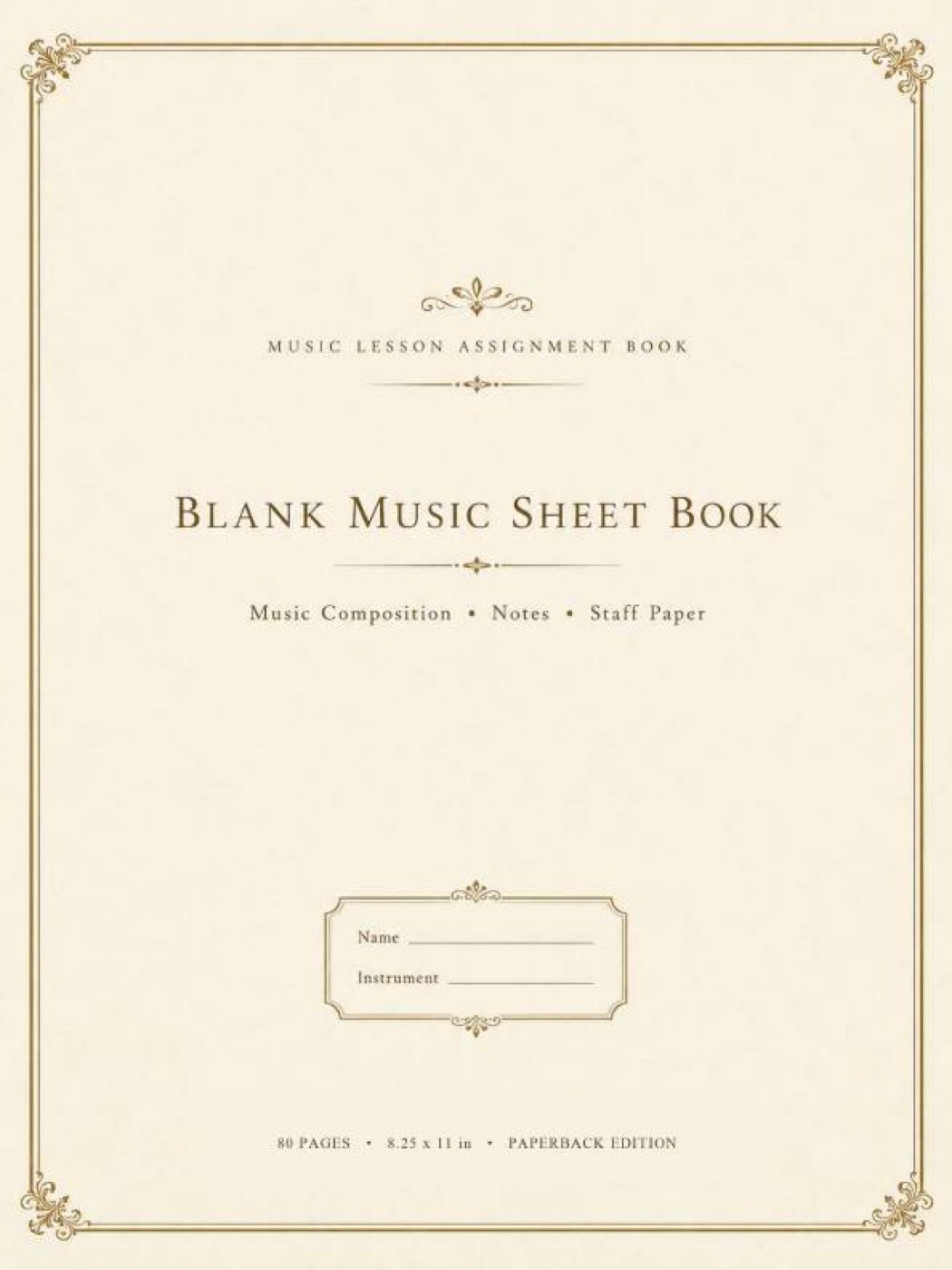
Current Amazon print
8.25 × 11 in · 80 black-and-white pages. This is already an A4-class manuscript-paper size.
Music practice · Complete guide
Open notation and composition
Open to a clean page and start writing music without a preprinted exercise deciding the purpose.
Roomy manuscript paper for composition, theory work, lesson examples, arranging, and handwritten notation.
Featured: English · Black & white · Paperback · 8.25 × 11 in · 80 pages. Paid Amazon Associate link.
Print facts
A4 is 8.27 × 11.69 in. We call 8.5 × 11 and 8.25 × 11 books A4-class, but they are not exact A4 sheets.
8.25 × 11 in · 80 black-and-white pages. This is already an A4-class manuscript-paper size.
Size, page count, and price belong to the exact edition shown. A review file or planned edition is not the book supplied by an existing Amazon purchase link.
Before you buy
Use these three checks to choose by purpose, not only by the cover.
How it works
Use one page for a complete idea or continue across several pages. The header stays flexible so the same book can serve composition, theory, lessons, and arranging.
Look inside
See the cover, welcome page, and selected interior details before choosing a live edition.
Selected interior pages are shown for a closer look.
Ready to choose?
Open the featured edition now, or compare every live language and format below.
Page by page
Follow the printed order the first few times. Once the flow feels familiar, use the parts that are most useful that day.
Use the short No. line for an exercise, composition, lesson, or page reference number.
Use the centered line for the piece, exercise, topic, or section name.
Use the right-hand line for date, composer, arranger, tempo, instrument, or any label you need.
Write notation across the roomy systems. Start a new phrase, part, or exercise on any system.
Use pages for melody, harmony, counterpoint, rhythm, dictation, theory examples, or lesson demonstrations.
A simple routine
About 3-8 minutes. Stop when the useful thought is clear; completing every line is never the goal.
Open the book during the lesson or immediately afterward while instructions are still clear.
Record the most important assignment, example, question, or practice focus in the matching space.
Keep the book with the instrument and check the page during practice before the next lesson.
Lightly plan bar lines before writing dense notation. The consistent line weight keeps every staff equally readable.
Live Amazon editions
Check the language, interior style, format, and trim size before ordering. Amazon shows the current price and delivery estimate.
B0H8KKJDD5View on Amazon Paid linkThese books can make useful gifts for students, teachers, families, and thoughtful journal keepers. Verified edition prices are shown in USD and may change on Amazon. Explore the protected interior pages and full use guide here on JINUINU.com before choosing.