Current Amazon print · purchase guidance paused
8.25 × 11 in · 182 standard-color pages. This is already an A4-class writing area.
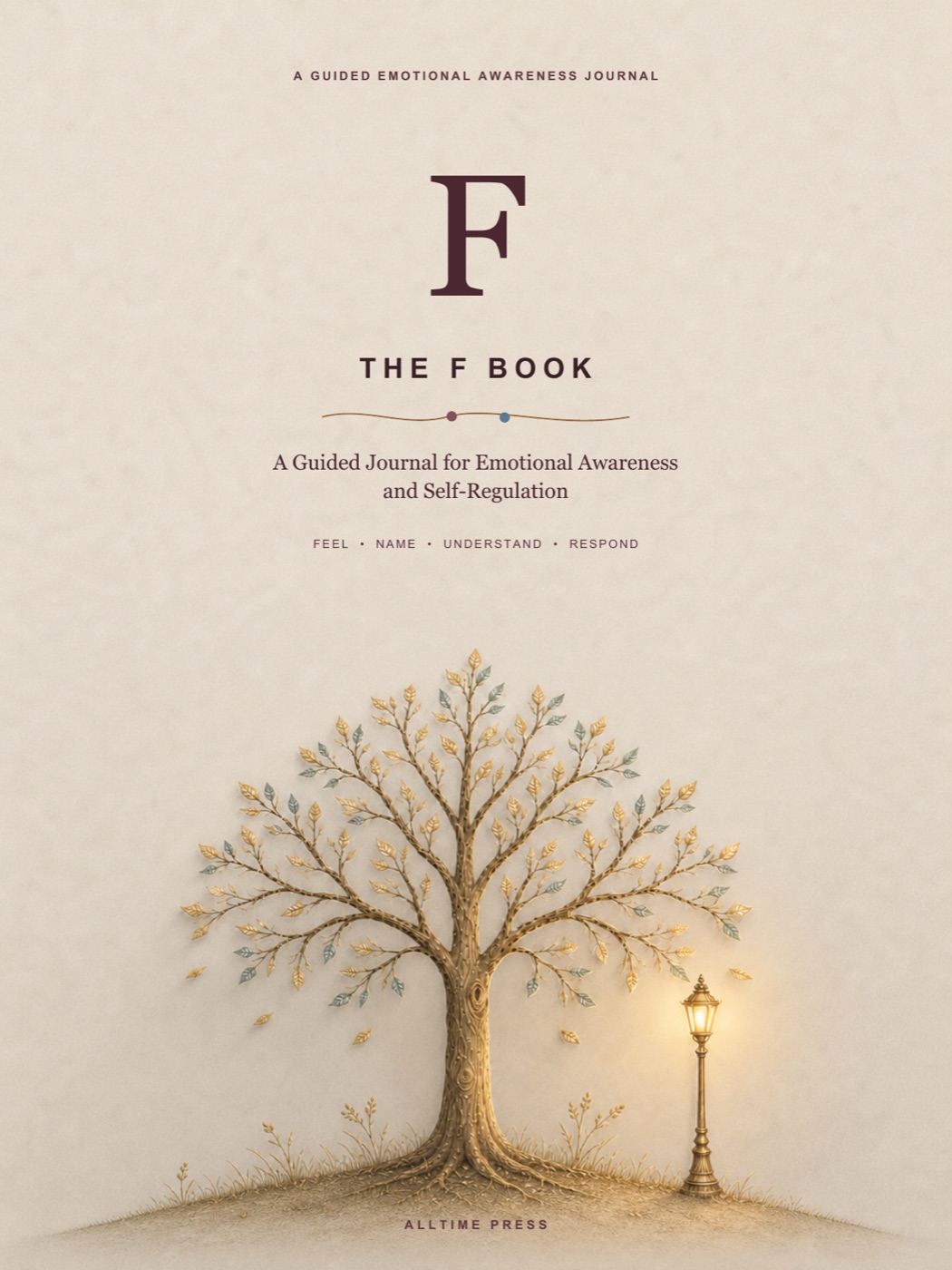
182 standard-color pages · 90 undated two-page entries · 8.25 × 11 in
Guided journals · Complete guide
Mixed-feeling awareness & regulation
Turn a hard-to-name mix of feelings into one clear, manageable next step.
Feelings can arrive together: upset and relieved, excited and worried. The F Book helps you name what you feel, choose something that may help, and look back at what happened.
Purchase guidance is paused while The F Book is being revised. The current Amazon paperback has 182 pages; a 120-page revision is planned, not yet published.
The idea behind this book
Metacognition also includes noticing the feelings and conditions that shape a response. The goal is not to label one feeling as good or bad, but to see what is happening before choosing what to do.
Print facts
A4 is 8.27 × 11.69 in. We call 8.5 × 11 and 8.25 × 11 books A4-class, but they are not exact A4 sheets.
8.25 × 11 in · 182 standard-color pages. This is already an A4-class writing area.
A 120-page physical revision is planned but has not been published. The existing Amazon edition remains 182 pages; do not mistake it for the planned revision.
Size, page count, and price belong to the exact edition shown. A review file or planned edition is not the book supplied by an existing Amazon purchase link.
Before you buy
Use these three checks to choose by purpose, not only by the cover.
How it works
Use one two-page entry for a moment, activity, thought, or part of the day. The F Book differs most on page one: it helps you sort mixed feelings before choosing a response. Page two then uses a try-and-look-back learning cycle.
Look inside
See the cover, welcome page, and selected interior details before choosing a live edition.
Purchase guidance is paused while The F Book is being revised. The current Amazon paperback has 182 pages; a 120-page revision is planned, not yet published.
Selected interior pages are shown for a closer look.
Availability update
Purchase guidance is temporarily paused. The current Amazon paperback has 182 pages. A 120-page revision is planned but is not yet available.
Page by page
Follow the printed order the first few times. Once the flow feels familiar, use the parts that are most useful that day.
Name the moment or part of your day you want to understand. It can be small.
Mark every feeling that fits. Mixed feelings are allowed, so do not force one answer.
Write the strongest feeling and rate how intense it feels right now.
Mark whether you need a pause, can try one step, or feel ready to move forward.
Choose the need that fits: calm, understanding, a restart, help, a break, or your own answer.
Pick a practical action to try. More choices are not always more helpful.
Before acting, estimate how much the response may help.
On page two, write the response you actually chose.
Write the first step, the next step, what to do if needed, and who could help.
Rate what actually happened and add a short factual summary.
Notice whether the result was close to your prediction or different.
Decide whether this response worked for you, partly worked, or needs replacing.
Keep the method, adjust it slightly, or try a different way next time.
Use the final space for anything that did not fit the checkboxes or short prompts.
A simple routine
About 10-15 minutes. Stop when the useful thought is clear; completing every line is never the goal.
Choose one specific moment, session, task, or thought instead of reviewing everything at once.
Follow the printed order. Short, truthful answers are more useful than filling every line.
End by naming one thing you understand better and one useful next step or reminder.
You do not need to fill every line. Honest marks and a few clear words are enough to reveal a pattern over time.
Purchase guidance paused
Purchase guidance is temporarily paused. The current Amazon paperback has 182 pages. A 120-page revision is planned but is not yet available.
B0HCNMH49VPurchase guidance pausedPurchase guidance is temporarily paused. The current Amazon paperback has 182 pages. A 120-page revision is planned but is not yet available.
Purchase guidance is temporarily paused. The current Amazon paperback has 182 pages. A 120-page revision is planned but is not yet available.