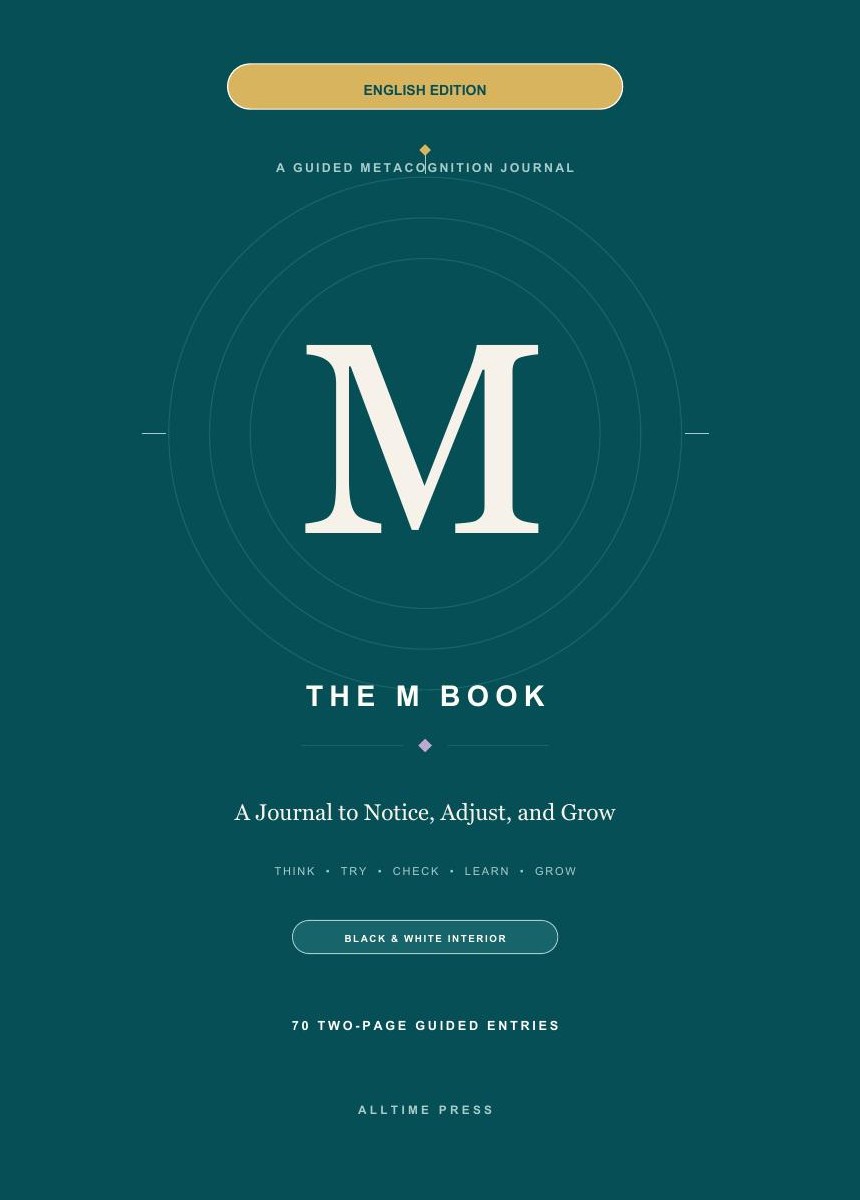
English
Paperback · 8 × 11 in · 146 pages · 70 entries
Open this edition on Amazon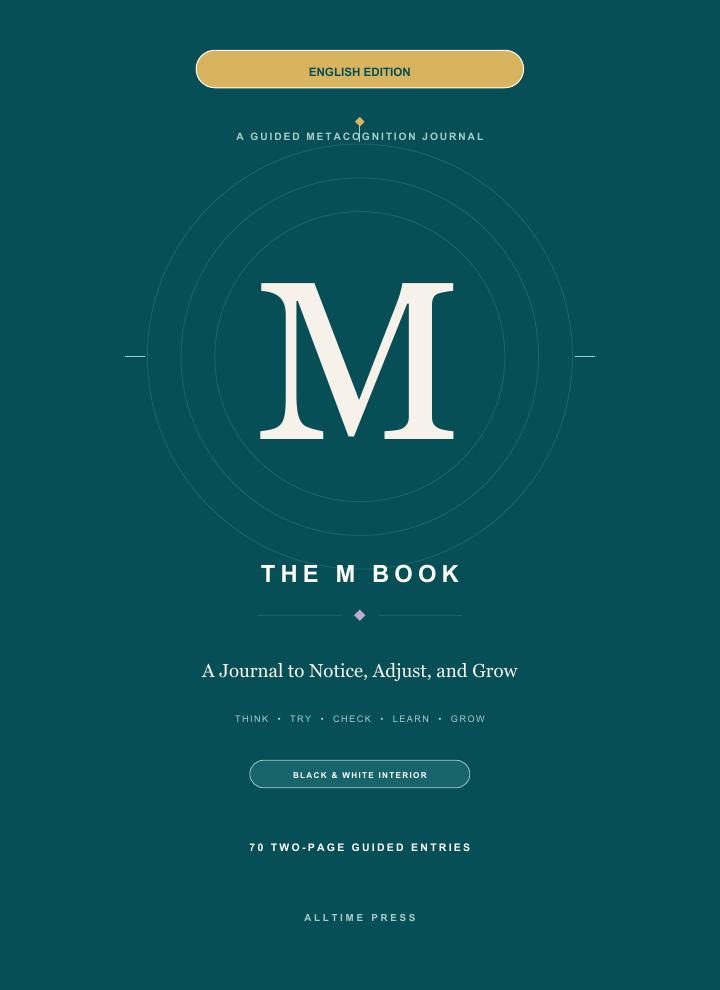
146 pages · 70 two-page entries · 8 × 11 in · black-and-white interior
Use the Amazon button for the English listing. Other editions are below.
Guided journals · Complete guide
Fact-first metacognition & reflection
One experience. One clear takeaway.
Notice what happened. Choose what comes next. 70 guided entries give you room to record the facts, separate interpretation, and keep one useful lesson from study, work, practice, conversations, and everyday life.
The English cover and overview shown here represent the latest 70-entry layout. Choose the language edition that fits you below.
Featured: English · Paperback · 8 × 11 in · 146 pages · 70 entries. Paid Amazon Associate link.
Choose the exact edition
Each button opens the paperback shown beside it. As an Amazon Associate, we may earn from qualifying purchases.
Paperback · 8 × 11 in · 146 pages · 70 entries
Open this edition on Amazon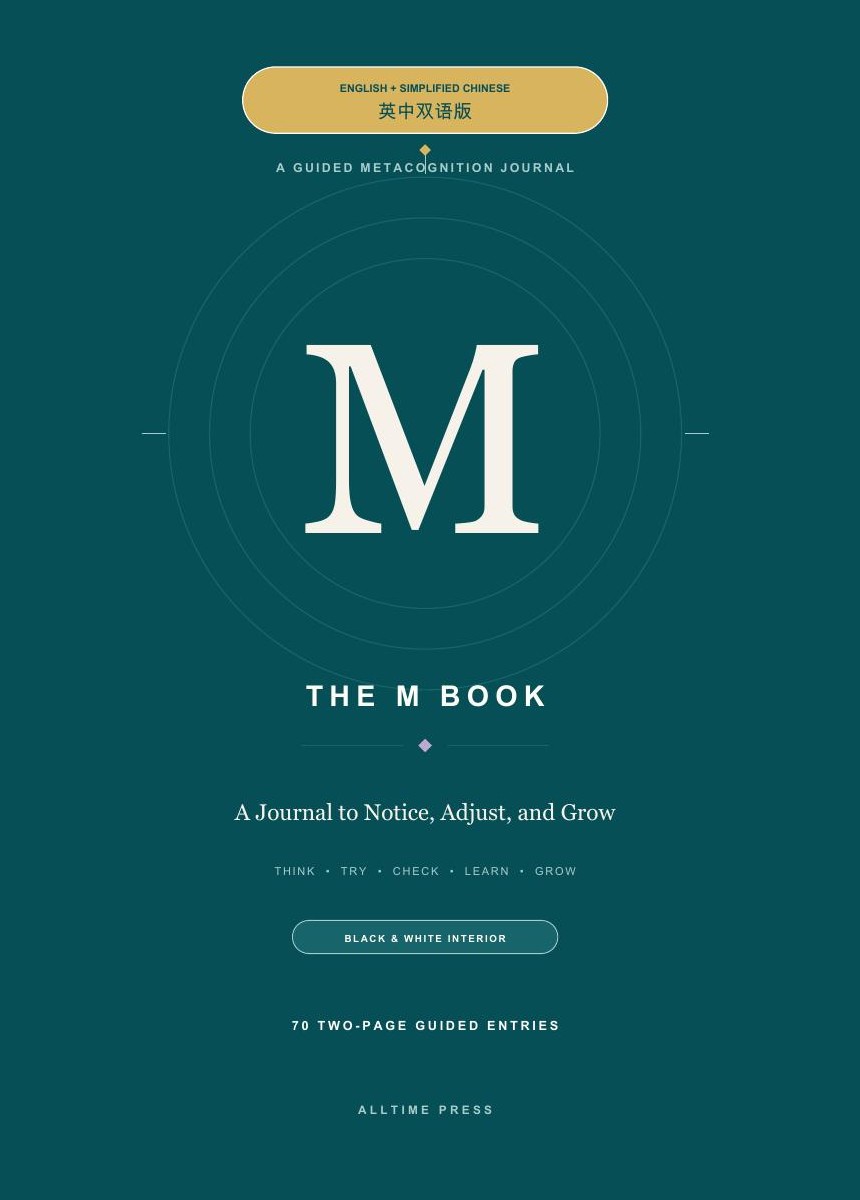
Bilingual paperback · 8 × 11 in · 146 pages · 70 entries
Open this edition on Amazon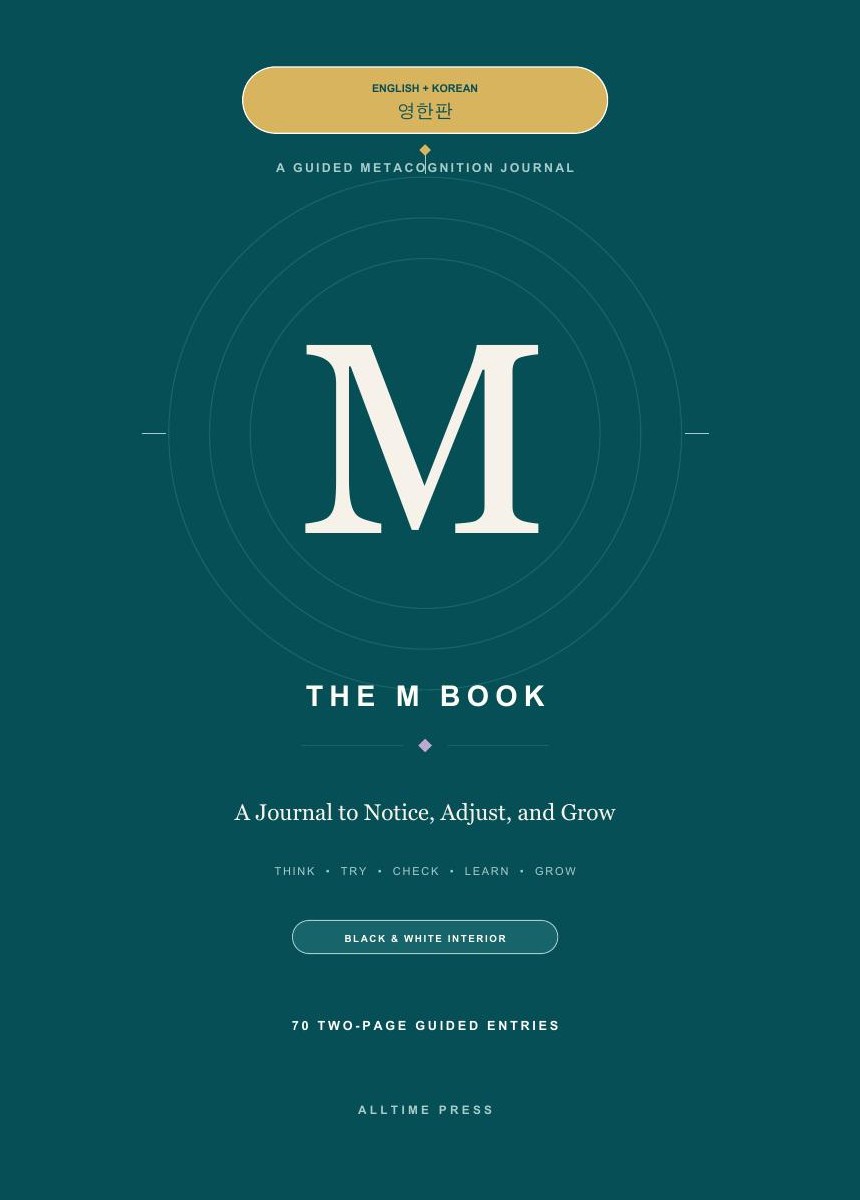
Bilingual paperback · 8 × 11 in · 146 pages · 70 entries
Open this edition on Amazon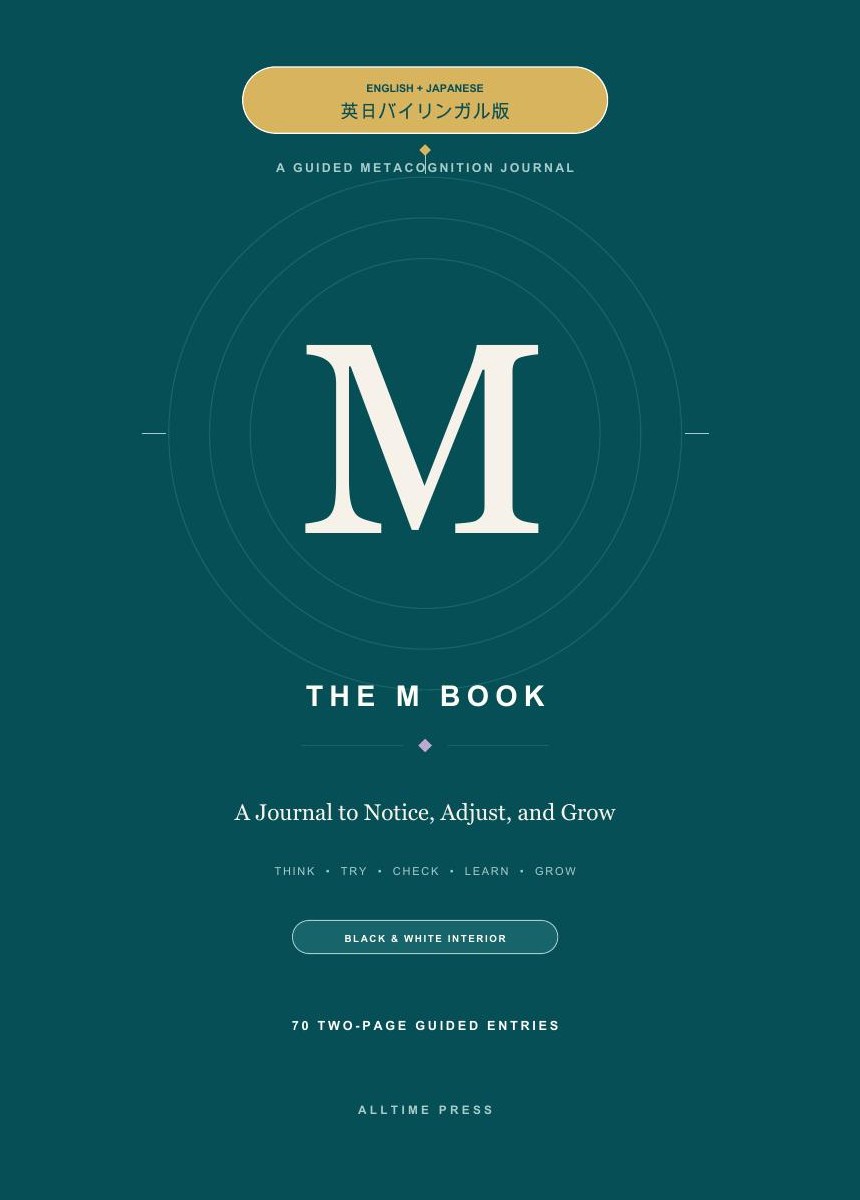
Bilingual paperback · 8 × 11 in · 146 pages · 70 entries
Open this edition on AmazonThe idea behind this book
Metacognition means noticing how you think, learn, decide, and respond. Then you use what you noticed to choose a clearer approach the next time.
Print facts
A4 is 8.27 × 11.69 in. We call 8.5 × 11 and 8.25 × 11 books A4-class, but they are not exact A4 sheets.
English, English + Korean, English + Japanese, and English + Simplified Chinese are available on Amazon. Each edition contains 70 complete two-page entries in a 146-page, 8 × 11 inch paperback. Listed price: $24.99 each.
The latest English + Spanish edition is still under Amazon review. A purchase link will be added after it is available.
Size, page count, and price belong to the exact edition shown. A review file or planned edition is not the book supplied by an existing Amazon purchase link.
Before you buy
Use these three checks to choose by purpose, not only by the cover.
How it works
Use one complete two-page entry after a day, study session, work task, practice, project, conversation, or event. The left page records facts and separates interpretation; the right page rewrites one detail, notices patterns, and carries one useful lesson forward.
Inside The M Book
Ask two questions: Is this important to my goals, responsibilities, health, or relationships? Does it need doing now? Something can feel urgent when you are worried, so check when it really needs to be done.
It matters and needs doing now. Write the first thing you can do.
It matters, but it can wait. Choose when you will do it.
It needs doing soon, but you may not need to do all of it yourself. Ask for help or make the job smaller.
It does not need your attention now. Leave it for later, or decide not to do it.
The matrix is a thinking tool, not a judgment. Re-sort when goals, facts, deadlines, or responsibilities change.
Look inside
See the latest cover, format, and reflection flow before choosing your language edition.
The English cover and overview shown here represent the latest 70-entry layout. Choose the language edition that fits you below.
Overview of the latest 70-entry edition.
Ready to choose?
Open the featured edition now, or compare every live language and format below.
Page by page
Follow the printed order the first few times. Once the flow feels familiar, use the parts that are most useful that day.
Before Entry 01, use the two-page Important × Urgent matrix. Important means real impact on a goal, responsibility, health, relationship, or person depending on you. Urgent means a real near deadline or immediate consequence, not an anxious feeling.
Name one completed day, task, study session, practice, project, conversation, or event. Keep it specific enough to describe.
Write when, where, who, what, how, and why or purpose. Leave an unknown blank or write that you do not know yet.
List only facts you could verify. This keeps memory and explanation from blending together.
Write the meaning, motive, or explanation you added. An interpretation can be useful without being a confirmed fact.
Name one time or scene you would return to, then write why that moment matters.
Rewrite one part with a different choice, condition, or response and consider what might have changed.
Mark what you learned about how you think, learn, or work, including goals, plans, attention, methods, and support.
Write what you would teach or advise someone facing the same situation, based on what you learned.
Record the practical reminder that matters for the next day.
Write one lesson, method, or adjustment worth carrying into another experience.
Use the open space for context, questions, details, or thoughts that did not fit the structured prompts.
Name one person, moment, effort, place, or small thing you appreciated.
After completing the journal, review repeated topics, priority choices, facts versus stories, useful patterns, memorable moments, and recurring gratitude.
A simple routine
About 10-15 minutes. Stop when the useful thought is clear; completing every line is never the goal.
Choose one specific moment, session, task, or thought instead of reviewing everything at once.
Follow the printed order. Short, truthful answers are more useful than filling every line.
End by naming one thing you understand better and one useful next step or reminder.
You do not need to fill every line. The structure trains attention, not perfect memory, and the final review helps repeated patterns become visible.
Live Amazon editions
Check the language, interior style, format, and trim size before ordering. Amazon shows the current price and delivery estimate.
B0HKFXJ8QVView on Amazon Paid linkB0HKFVNRLDView on Amazon Paid linkB0HKFVGCW5View on Amazon Paid linkRecord the facts. Separate your interpretation. Rewrite one detail. Keep one lesson. Use the same simple reflection flow for study, work, conversations, and everyday life.
These books can make useful gifts for students, teachers, families, and thoughtful journal keepers. Verified edition prices are shown in USD and may change on Amazon. Explore the protected interior pages and full use guide here on JINUINU.com before choosing.