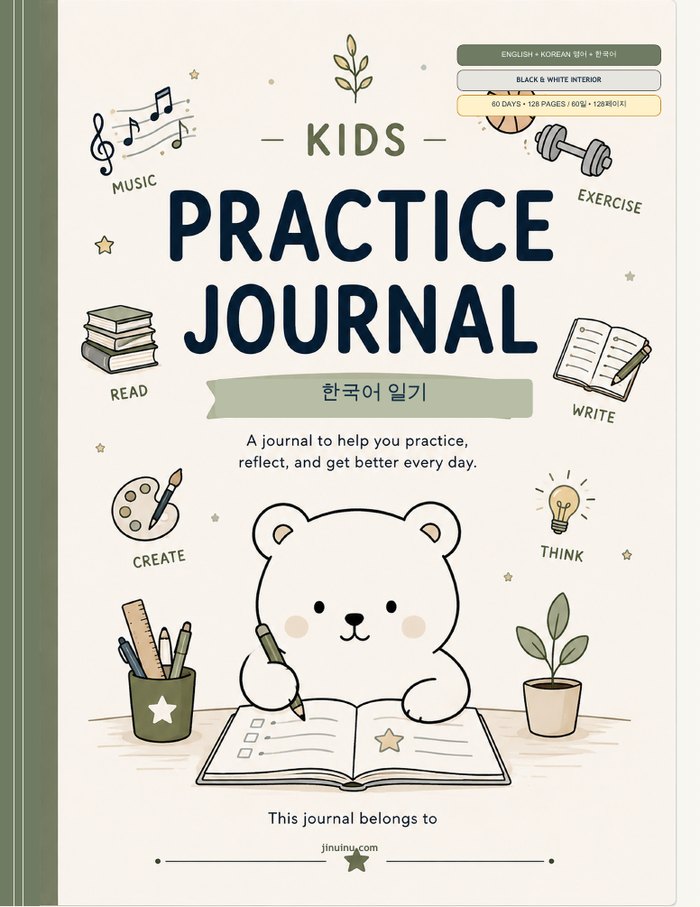
English + Korean · Black-and-white interior
Color cover · Paperback · 8.5 × 11 in · 128 pages
Open this edition on Amazon128 pages · 60 undated two-page entries · 8.5 × 11 in
Guided journals · Complete guide
Practice reflection for growing learners
Help a growing learner see how practice works, not only whether it went well.
A friendly undated journal for music, study, sports, art, and other skills: practice, notice what helped or felt difficult, learn from it, and try again.
Featured: English + Korean · Black-and-white interior · Color cover · Paperback · 8.5 × 11 in · 128 pages. Paid Amazon Associate link.
Choose the exact edition
Each button opens the paperback shown beside it. As an Amazon Associate, we may earn from qualifying purchases.
Color cover · Paperback · 8.5 × 11 in · 128 pages
Open this edition on Amazon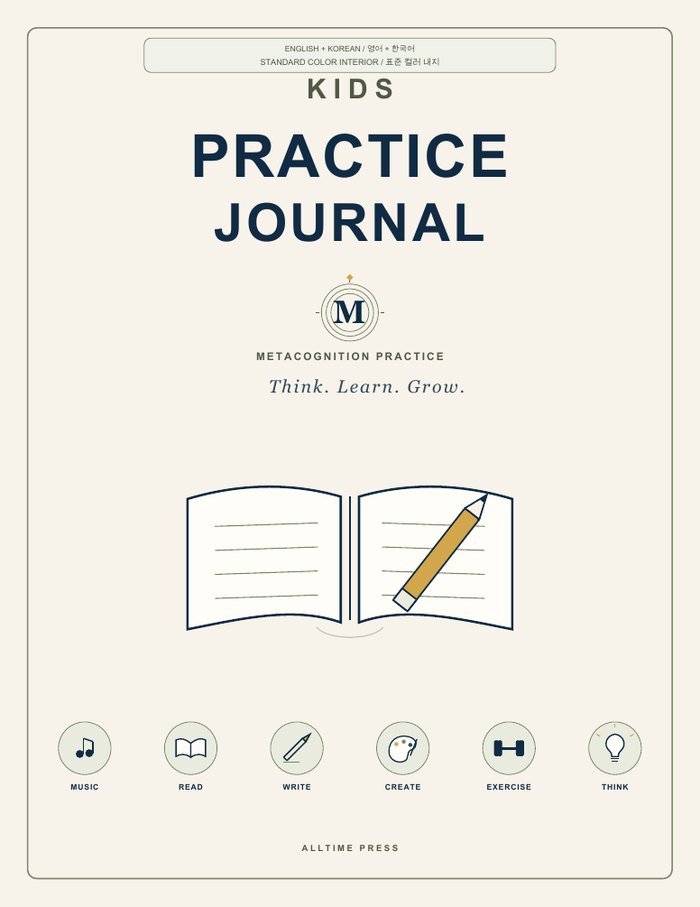
Color cover · Paperback · 8.5 × 11 in · 128 pages
Open this edition on Amazon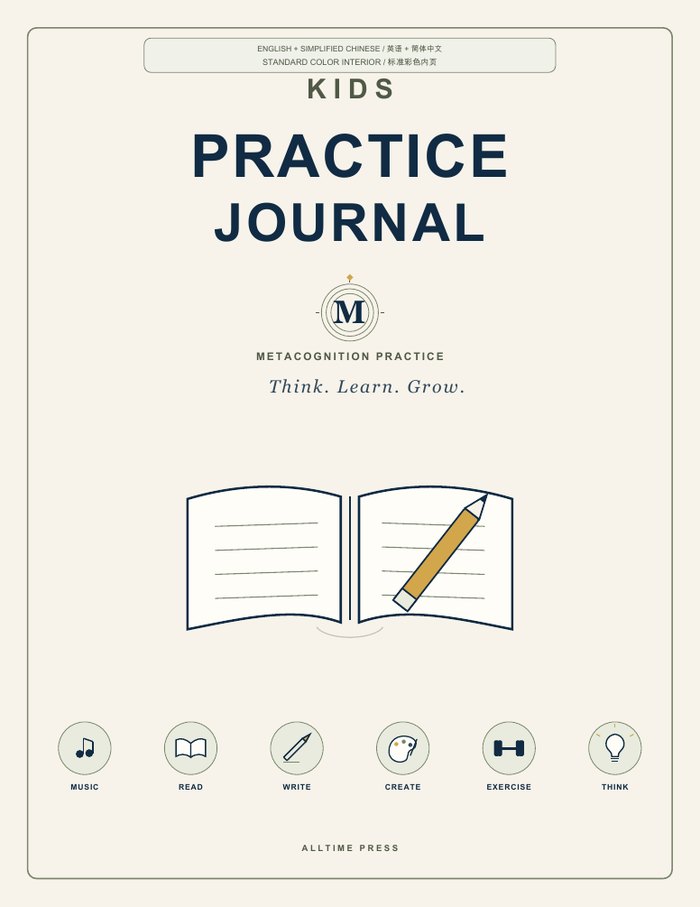
Color cover · Paperback · 8.5 × 11 in · 128 pages
Open this edition on Amazon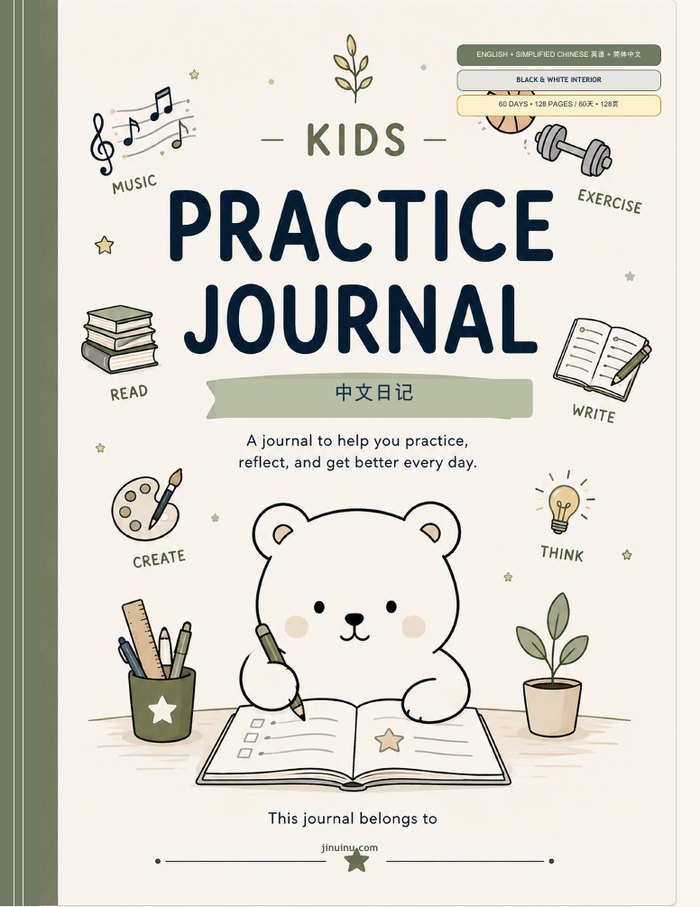
Color cover · Paperback · 8.5 × 11 in · 128 pages
Open this edition on Amazon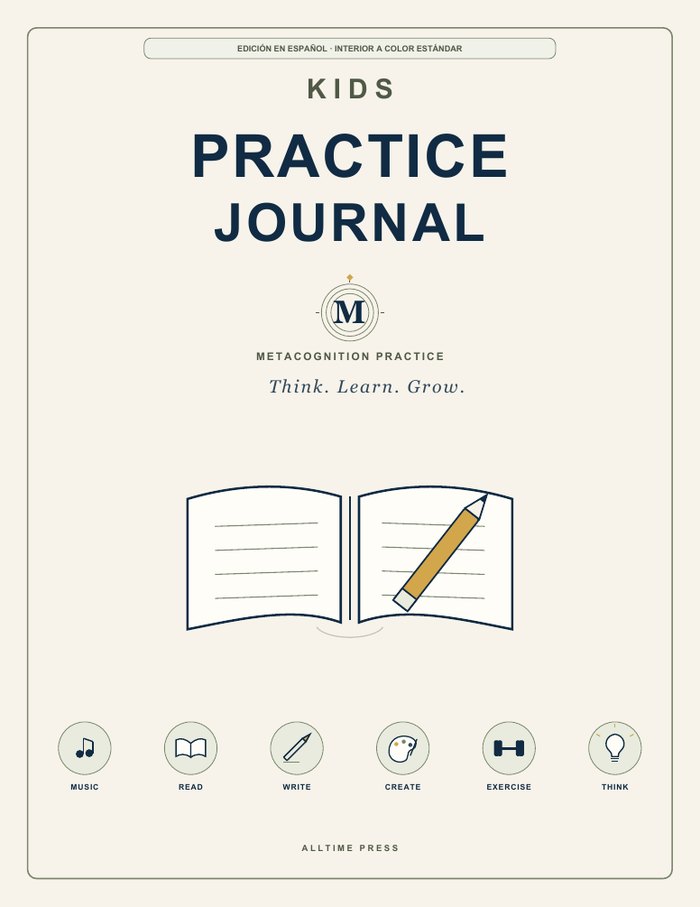
Color cover · Paperback · 8.5 × 11 in · 128 pages
Open this edition on Amazon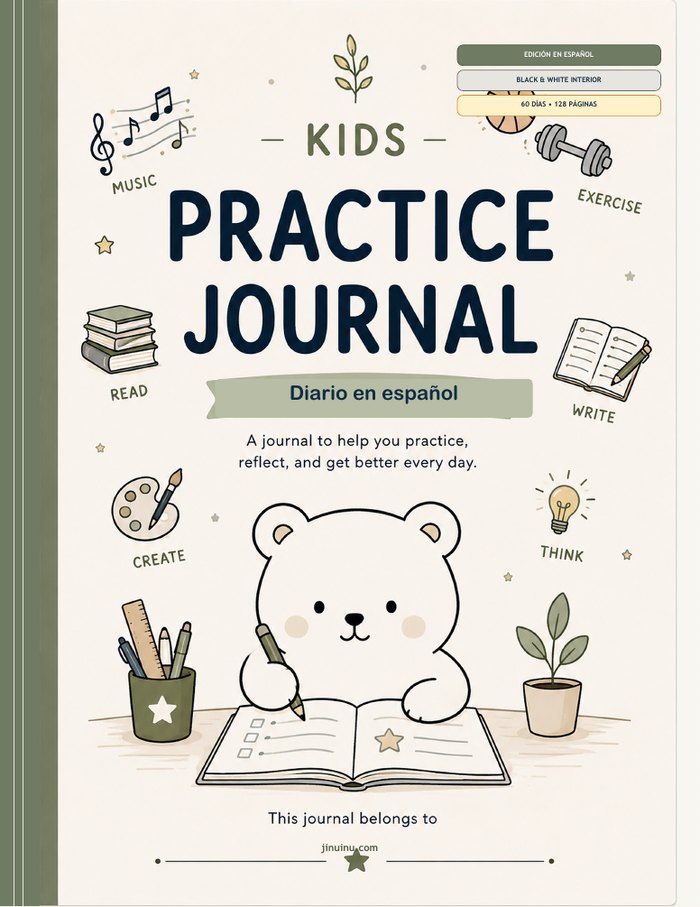
Color cover · Paperback · 8.5 × 11 in · 128 pages
Open this edition on Amazon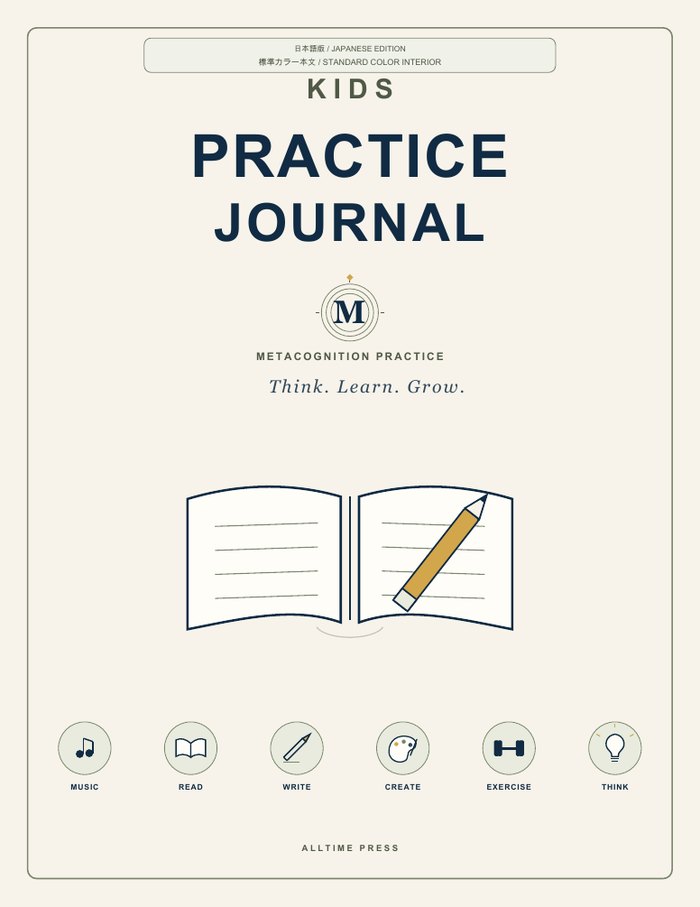
Color cover · Paperback · 8.5 × 11 in · 128 pages
Open this edition on Amazon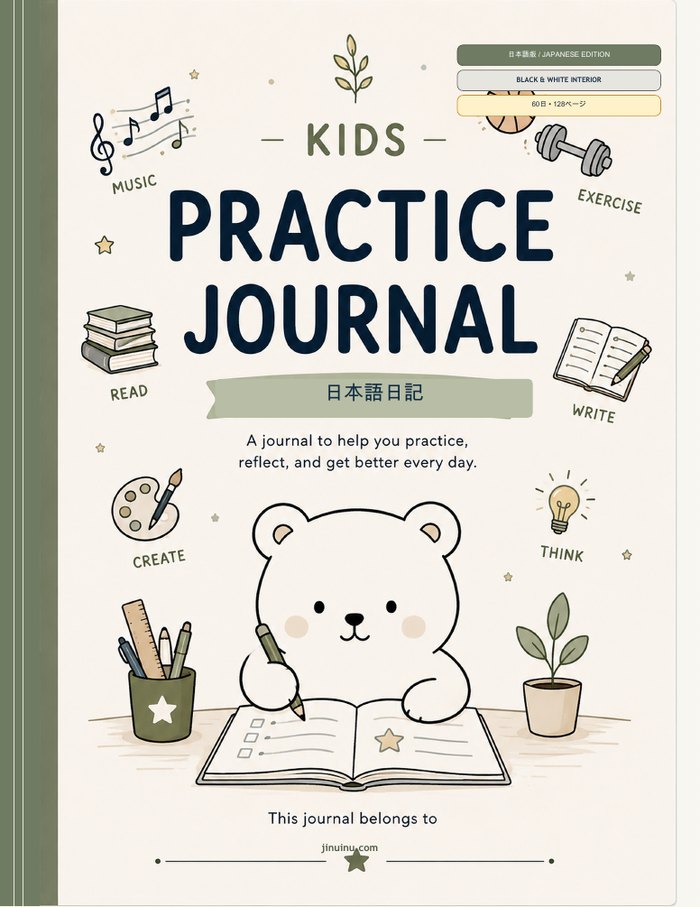
Color cover · Paperback · 8.5 × 11 in · 128 pages
Open this edition on AmazonThe idea behind this book
Practice metacognition means noticing what you worked on, what changed, what felt difficult, and which method helped. That turns one practice session into information for the next one.
Print facts
A4 is 8.27 × 11.69 in. We call 8.5 × 11 and 8.25 × 11 books A4-class, but they are not exact A4 sheets.
Color cover with black-and-white inside pages. Paperback · 8.5 × 11 in · 128 pages · 60 two-page entries. Black and white describes the inside pages, not the cover.
Color cover with standard-color inside pages. Paperback · 8.5 × 11 in · 128 pages · 60 two-page entries. Choose the same language in the edition list below to compare the two print options.
Size, page count, and price belong to the exact edition shown. A review file or planned edition is not the book supplied by an existing Amazon purchase link.
Before you buy
Use these three checks to choose by purpose, not only by the cover.
How it works
Complete one two-page entry after a practice session in music, reading, study, sports, art, writing, or another skill. A child can use it independently or talk through the prompts with a parent, teacher, or coach. The color and black-and-white editions use the same guided structure.
Look inside
See the cover, welcome page, and selected interior details before choosing a live edition.
Selected interior pages are shown for a closer look.
Ready to choose?
Open the featured edition now, or compare every live language and format below.
Choose the exact edition
Each set comes from that language and print format. Compare the cover, page style, and edition label before choosing.
Page by page
Follow the printed order the first few times. Once the flow feels familiar, use the parts that are most useful that day.
Start with Practice → Look Back → Understand → Try Again. Good days and hard days both give useful information.
Add current practice needs under Do First, Ask for Help, Build Next, or Save for Later. Keep updating the map throughout the book.
Try the visual and hands-on tools when a practice problem needs a new angle rather than more repetition.
Each entry offers a small optional idea. Use it when helpful and skip it when the day needs a different approach.
Write what you practiced and the part that was most memorable.
Name one thing that felt a little better than before. Small changes count.
Mark yes, no, or not sure, then describe the part that felt difficult.
Check every reason that may fit, including method, understanding, practice time, rushing, distraction, mood, surroundings, or your own answer.
Use the open spaces to explain, sketch, diagram, or show something that words alone do not capture.
Mark how much mood or physical condition affected practice and write how it showed up.
Imagine explaining today’s practice to someone else. This makes understanding easier to see.
Write one detail, cue, or idea to carry into the next session.
Summarize the day in one clear sentence without trying to make it sound perfect.
At the end, look back at the Practice Map, priority patterns, and growth trail to see what mattered most and how practice changed.
A simple routine
About 10-15 minutes. Stop when the useful thought is clear; completing every line is never the goal.
Choose one specific moment, session, task, or thought instead of reviewing everything at once.
Follow the printed order. Short, truthful answers are more useful than filling every line.
End by naming one thing you understand better and one useful next step or reminder.
Use the checkboxes as conversation starters, not a score. More than one reason can be true, and a short honest entry is enough.
Live Amazon editions
Check the language, interior style, format, and trim size before ordering. Amazon shows the current price and delivery estimate.
B0HFQ9HJP9View on Amazon Paid linkB0HFPSWYXZView on Amazon Paid linkB0HFQ21LKMView on Amazon Paid linkB0HFQFPM96View on Amazon Paid linkB0HFPXX47GView on Amazon Paid linkB0HFQ3NPTPView on Amazon Paid linkB0HG9KM2WSView on Amazon Paid linkB0HG9KVMMFView on Amazon Paid linkB0HG9MLJ15View on Amazon Paid linkB0HG9NK5JHView on Amazon Paid linkBoth print options have a color cover. The U.S. publisher list prices are $17.99 for a black-and-white interior and $20.99 for a standard-color interior. Amazon may offer an edition for less, so check the current price there before buying. Choose the language and inside-page style carefully. The bilingual, Japanese, and Spanish black-and-white editions have bear covers; their standard-color editions have notebook covers. Compare the exact edition previews below, as typography and page details vary.
Prices above are U.S. publisher list prices. Amazon may show a lower current offer for an exact language and interior edition; confirm its current price before buying.