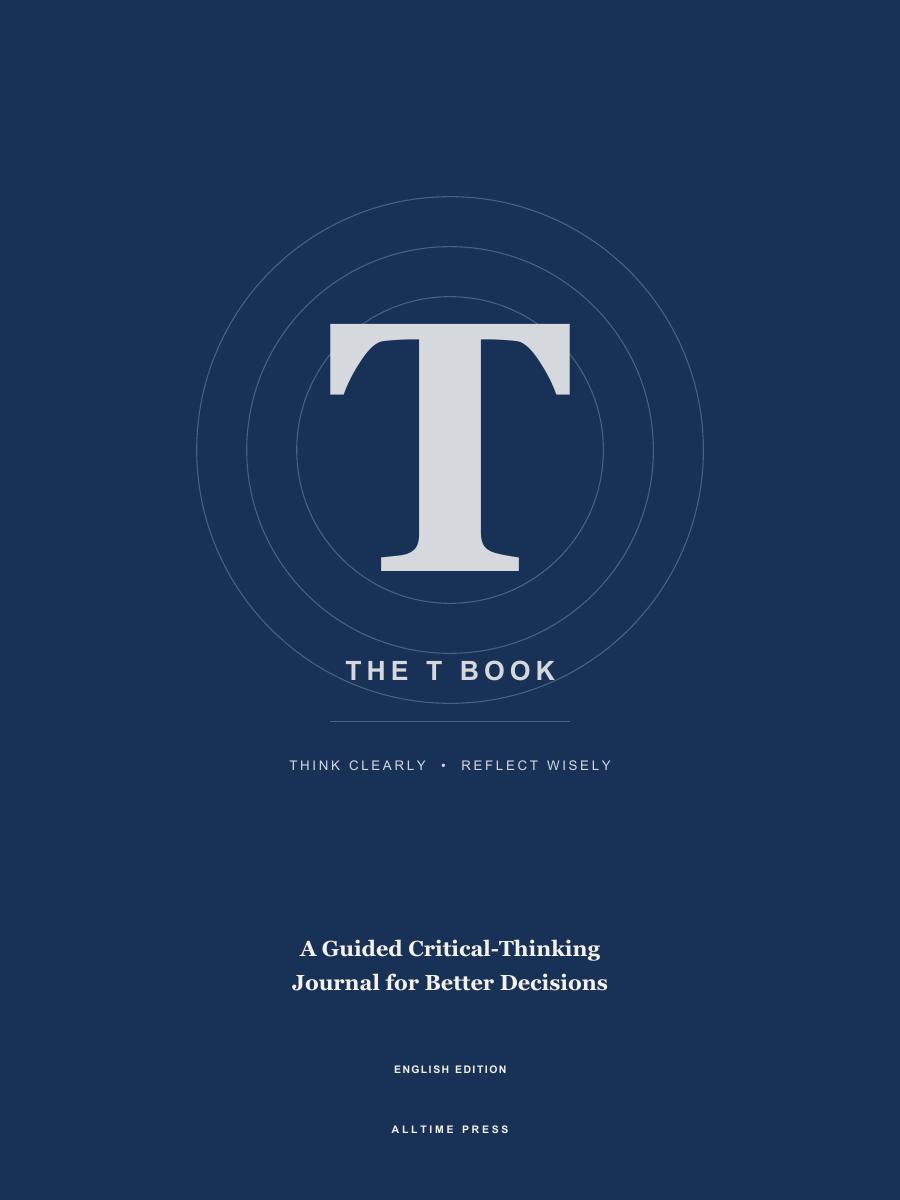
Latest paperback editions
7.5 × 10 in · 126 black-and-white pages · 60 two-page entries · glossy cover. English, English + Korean, English + Simplified Chinese, and Spanish are available at $20.99 each.
Guided journals · Complete guide
Clear thinking and decisions
Slow down a tangled thought before it becomes a rushed conclusion or reaction.
Separate facts from the first story, test evidence and assumptions, consider other explanations, and act with intention.
Featured: English · Latest edition · Glossy paperback · 7.5 × 10 in · 126 B&W pages. Paid Amazon Associate link.
Print facts
A4 is 8.27 × 11.69 in. We call 8.5 × 11 and 8.25 × 11 books A4-class, but they are not exact A4 sheets.
7.5 × 10 in · 126 black-and-white pages · 60 two-page entries · glossy cover. English, English + Korean, English + Simplified Chinese, and Spanish are available at $20.99 each.
Size, page count, and price belong to the exact edition shown. A review file or planned edition is not the book supplied by an existing Amazon purchase link.
Before you buy
Use these three checks to choose by purpose, not only by the cover.
How it works
Open one spread when a thought feels tangled, after a conflict, before reacting, or when a decision deserves a slower look. Follow the order from facts to action.
Look inside
See the cover, welcome page, and selected interior details before choosing a live edition.
Selected interior pages are shown for a closer look.
Ready to choose?
Open the featured edition now, or compare every live language and format below.
Page by page
Follow the printed order the first few times. Once the flow feels familiar, use the parts that are most useful that day.
Write only the observable event. Leave motives and guesses out of this first box.
Write the conclusion or story your mind formed about the event.
List what supports the claim and what weakens it. Include facts on both sides.
Name unproven ideas, including urgency, fear, pride, embarrassment, mind-reading, or missing information.
Write what you would need to know before making a confident decision.
Generate at least three possible explanations, including ones that are less personal or less extreme.
Choose the view that fits the known facts best right now. It can stay provisional.
Write one clear, useful step that is within your control.
A simple routine
About 10-15 minutes. Stop when the useful thought is clear; completing every line is never the goal.
Choose one specific moment, session, task, or thought instead of reviewing everything at once.
Follow the printed order. Short, truthful answers are more useful than filling every line.
End by naming one thing you understand better and one useful next step or reminder.
Use the method, not perfection. A short factual entry is more useful than filling every line with guesses.
Live Amazon editions
Check the language, interior style, format, and trim size before ordering. Amazon shows the current price and delivery estimate.
B0HJP38H8MView on Amazon Paid linkB0HJPC7BXFView on Amazon Paid linkB0HJPC5Y23View on Amazon Paid linkB0HJPFRJ1TView on Amazon Paid linkThe featured cover and protected samples show the latest English paperback. Bilingual editions pair English with Korean or Simplified Chinese; the Spanish edition is in Spanish. Choose a latest paperback for the 60-entry layout.
These books can make useful gifts for students, teachers, families, and thoughtful journal keepers. Verified edition prices are shown in USD and may change on Amazon. Explore the protected interior pages and full use guide here on JINUINU.com before choosing.