Notice feelings before responding
Sort mixed feelings, name what stands out, choose what may help, and look back at the real result.
See The F Book →Journals and practice books by AllTime Press
Swipe a cover to preview real inside pages, use its nearby Amazon button for the matching edition, or open the guide for full print details.
13 book families · 35 live editions · 0 editions in preparation
Compare metacognition journals →메타인지 저널·학습 회고 노트 비교 →
All JINUINU books
Use the matching button beside a cover to open that Amazon edition. Each book’s guide shows real selected inside pages and print details.
Mixed-feeling awareness & regulation
Purchase guidance is paused while The F Book is being revised. The current Amazon paperback has 182 pages; a 120-page revision is planned, not yet published.
Cover, inside pages & guide →Fact-first metacognition & reflection
From $24.99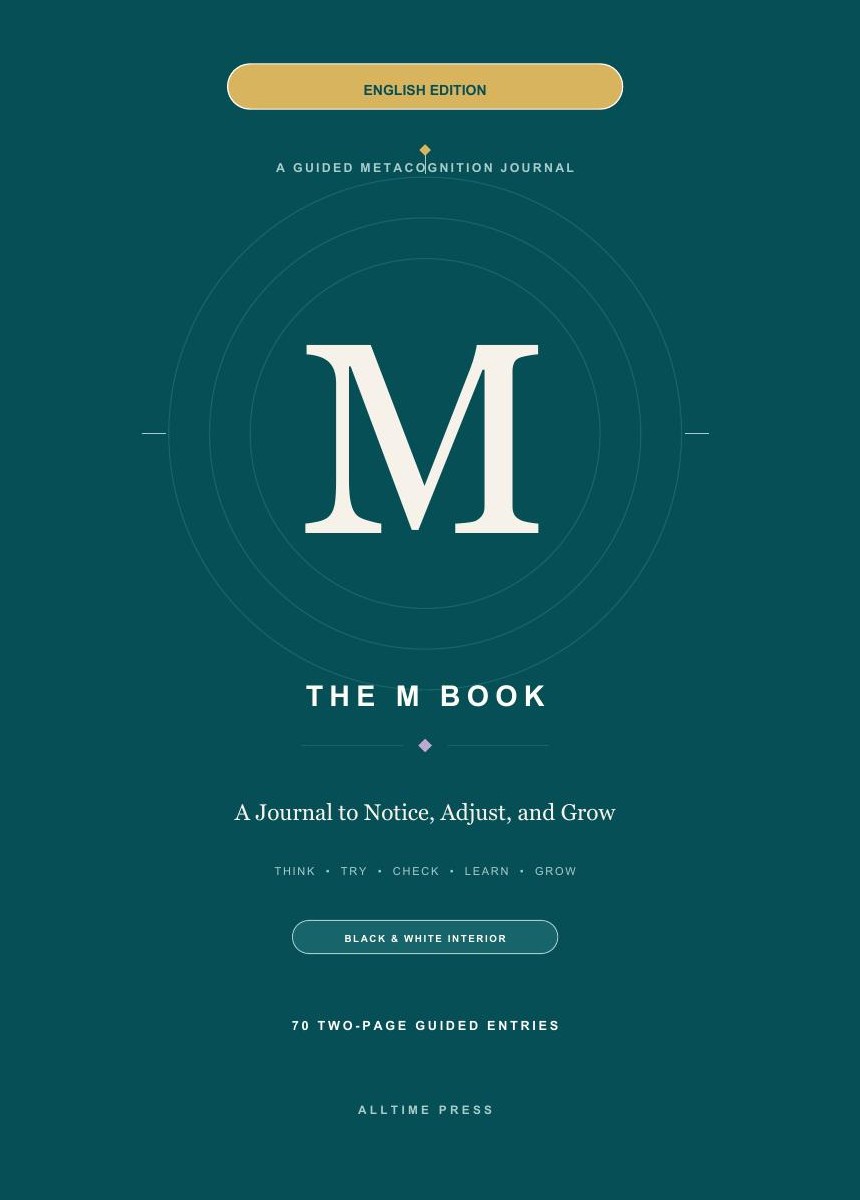
Practice reflection for growing learners
Publisher list from $17.99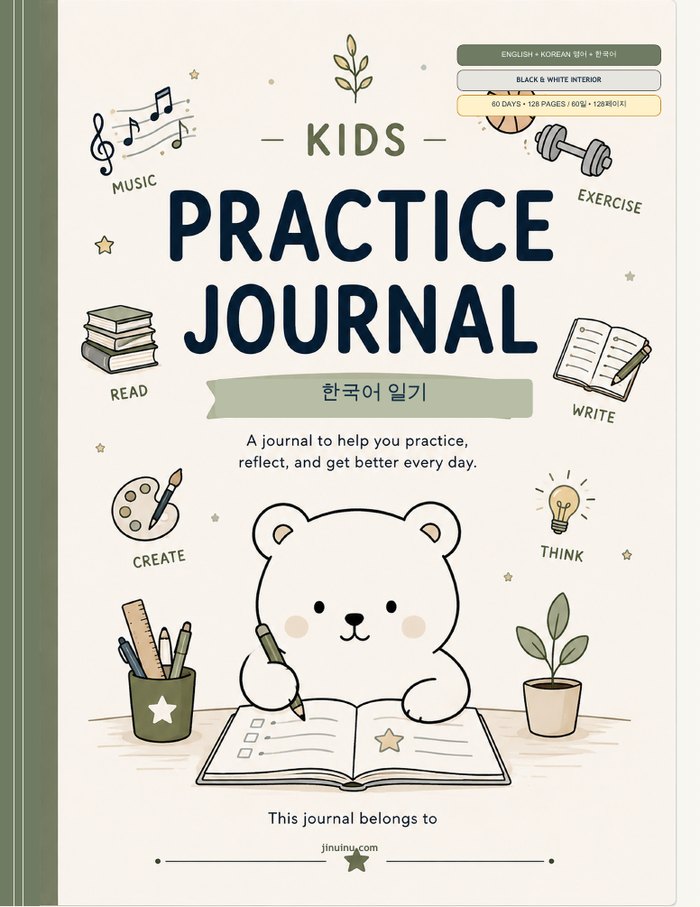
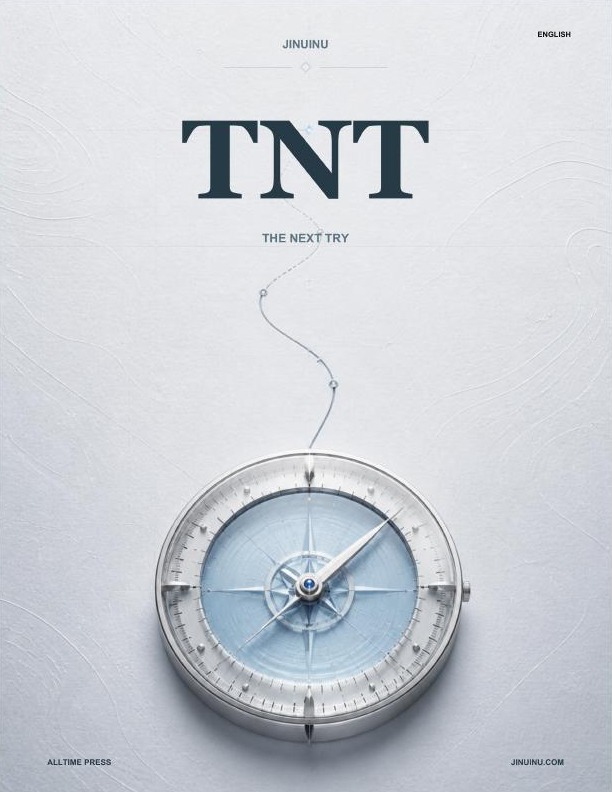
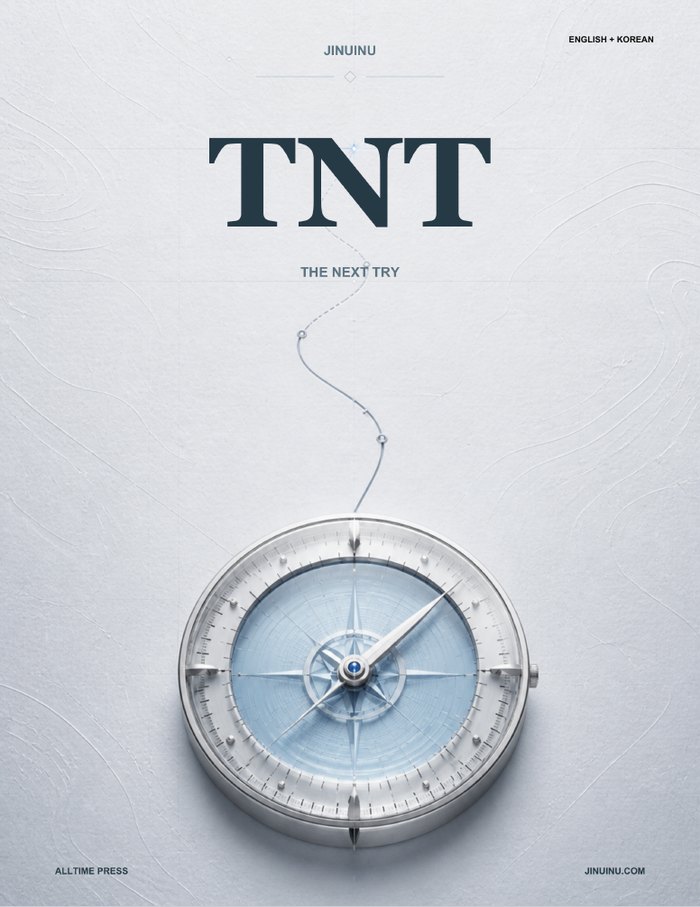
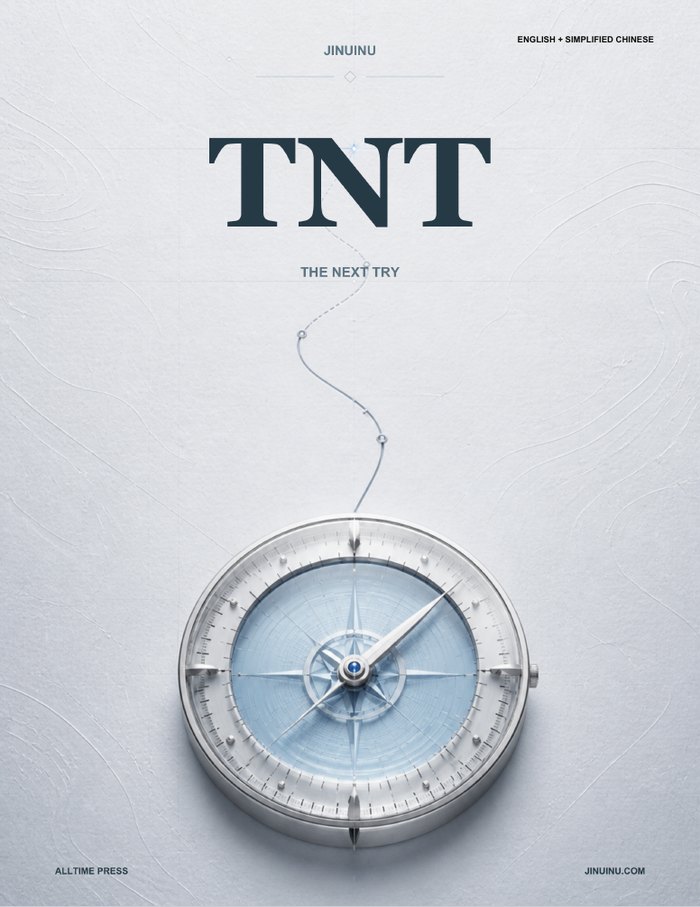
The Next Try · Metacognitive practice journal
From $20.99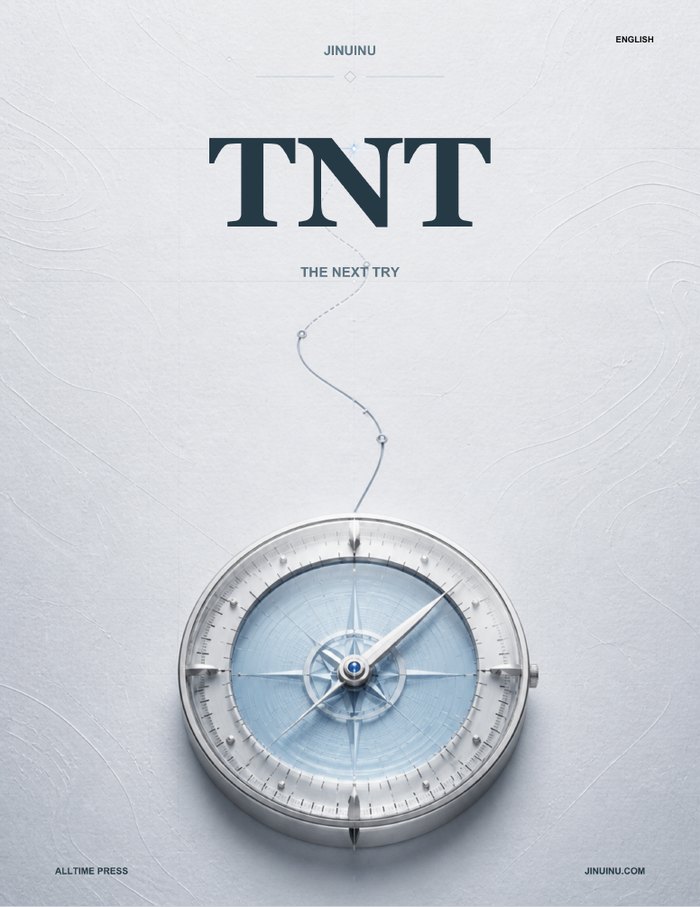
Clear thinking and decisions
From $20.99
Independent thinking practice
From $19.99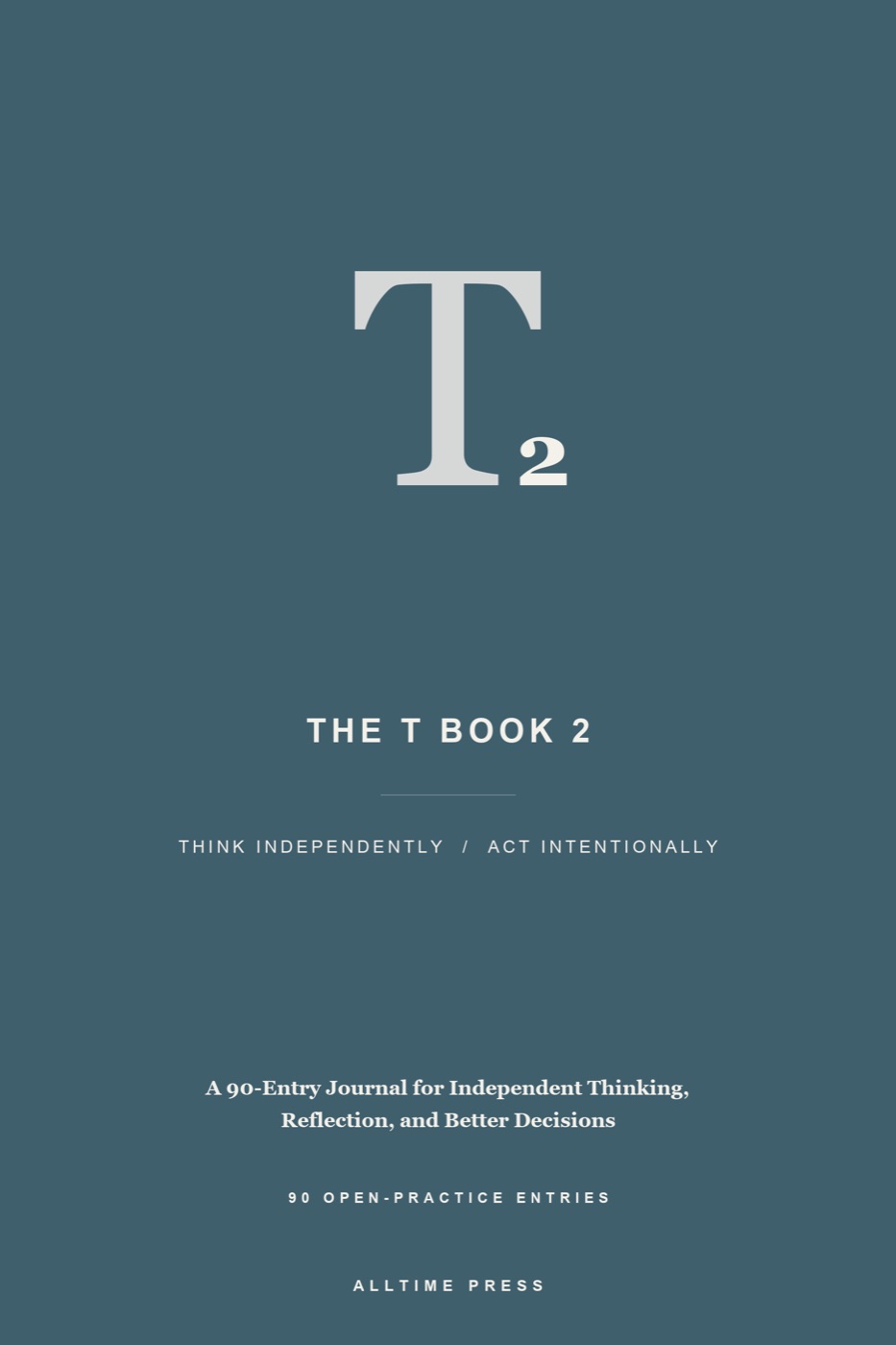
Beginning writers
From $15.99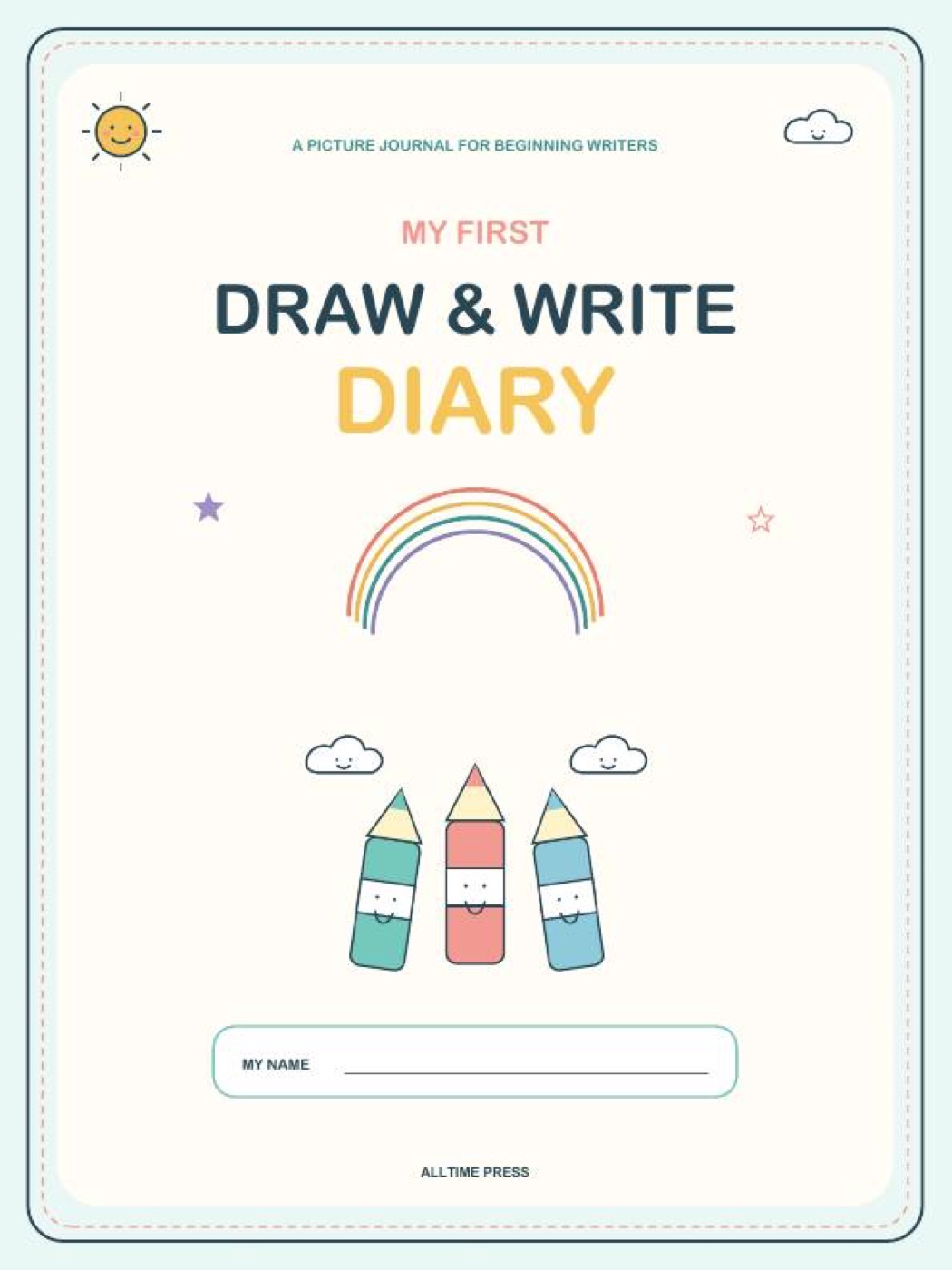
Draw, write, and wonder
One drawing-and-writing diary, two cover choices
From $11.99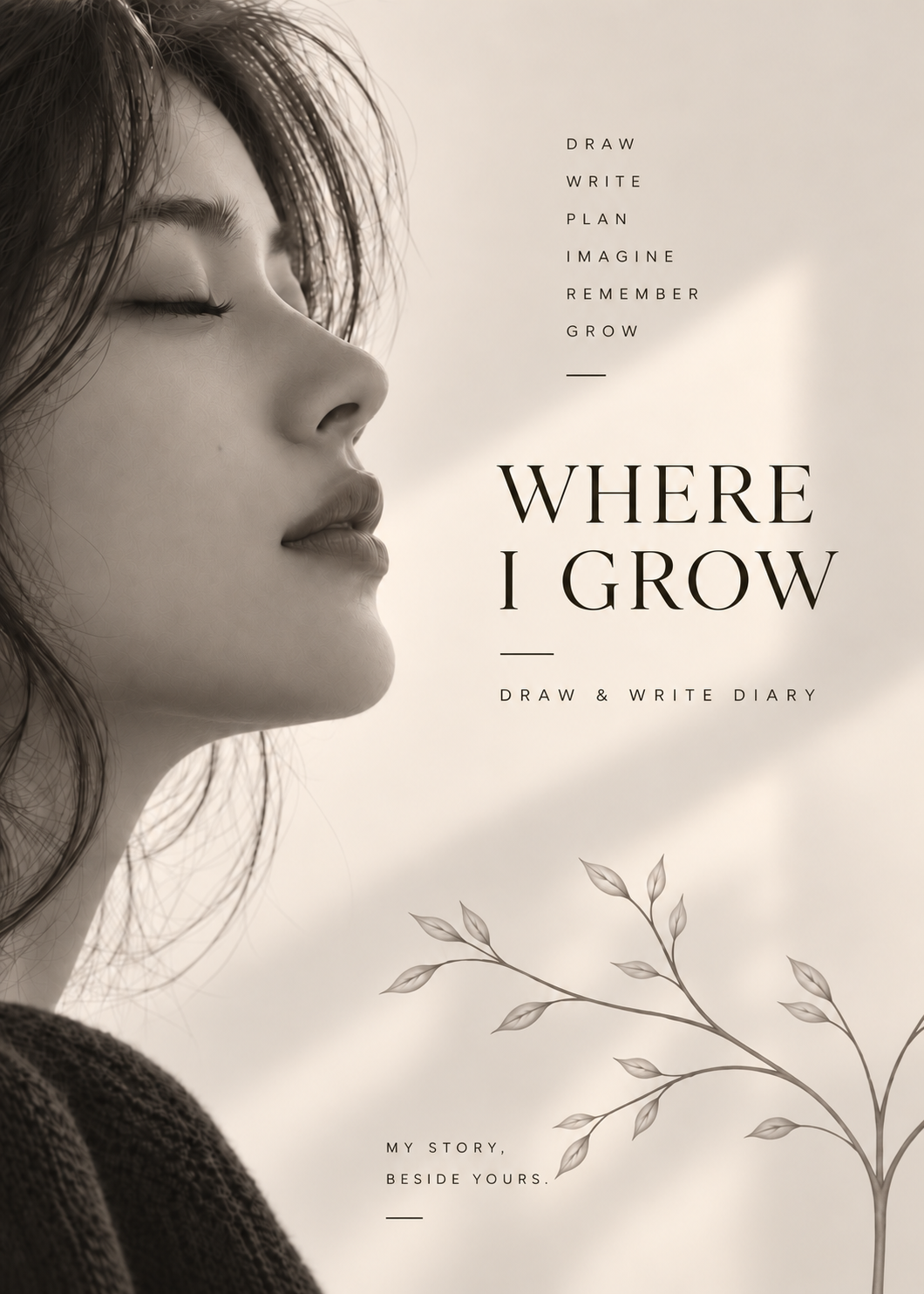
Instrument bears, lesson notes, and weekly practice
From $12.99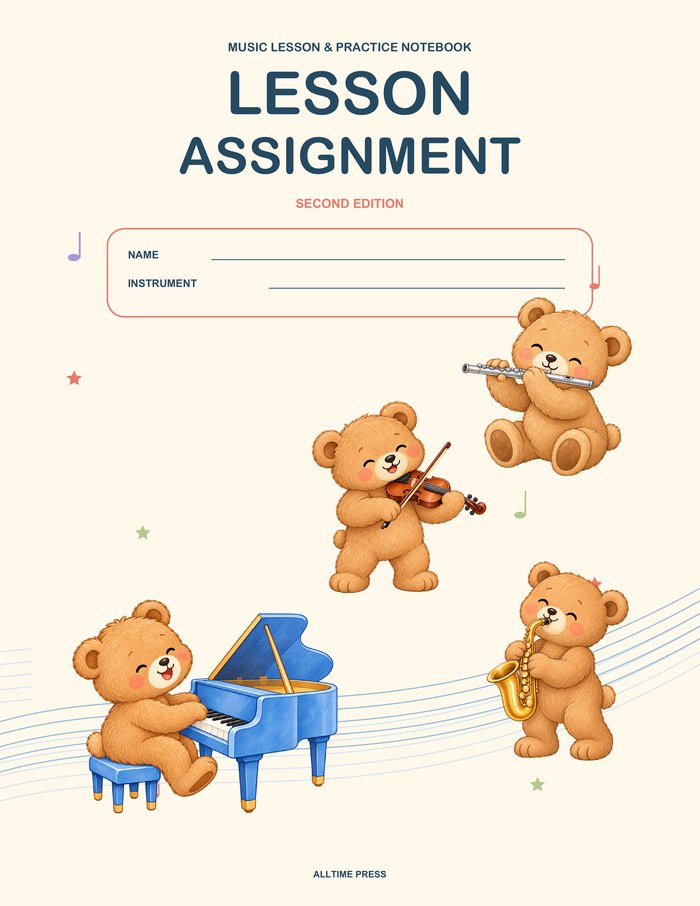
Guided weekly music practice
Publisher list from $12.99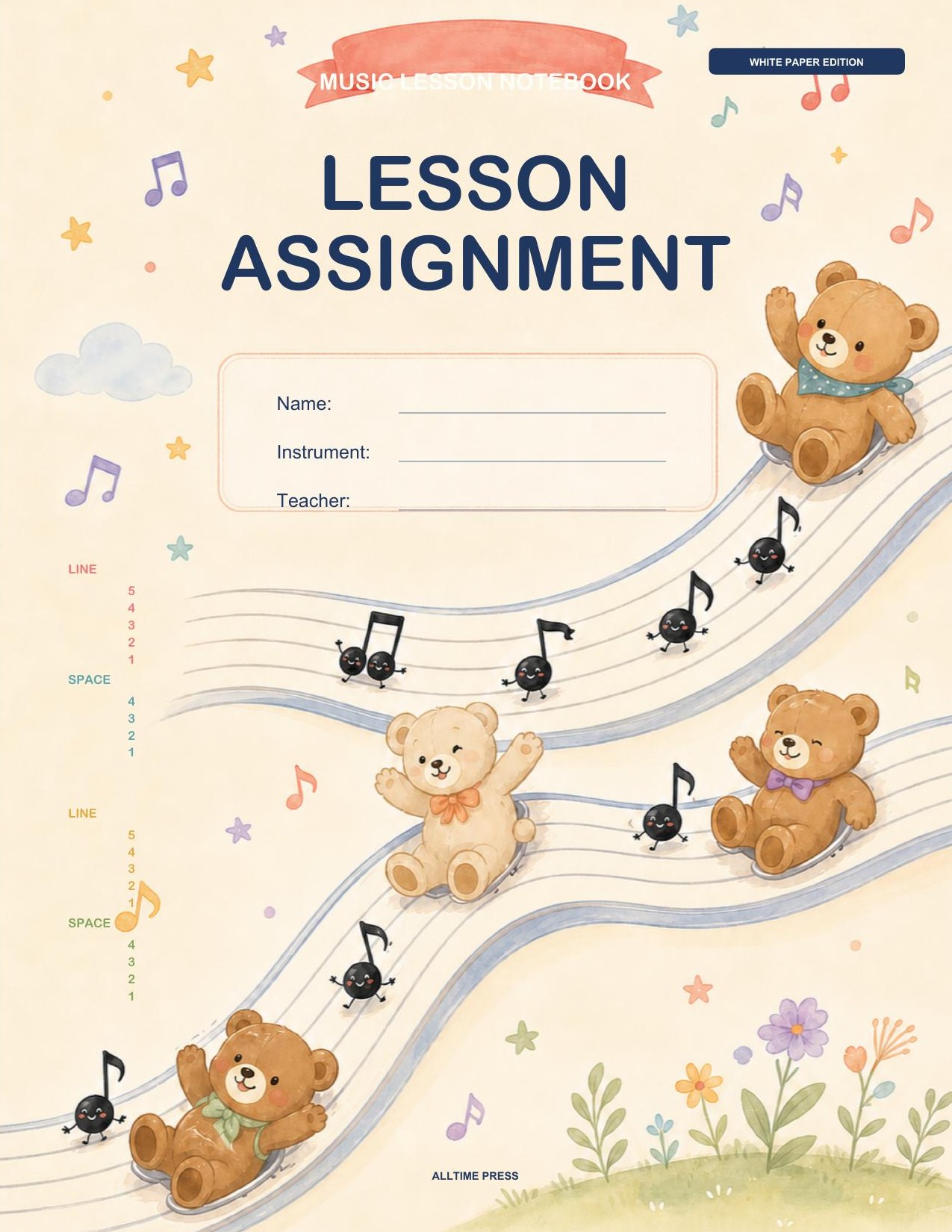
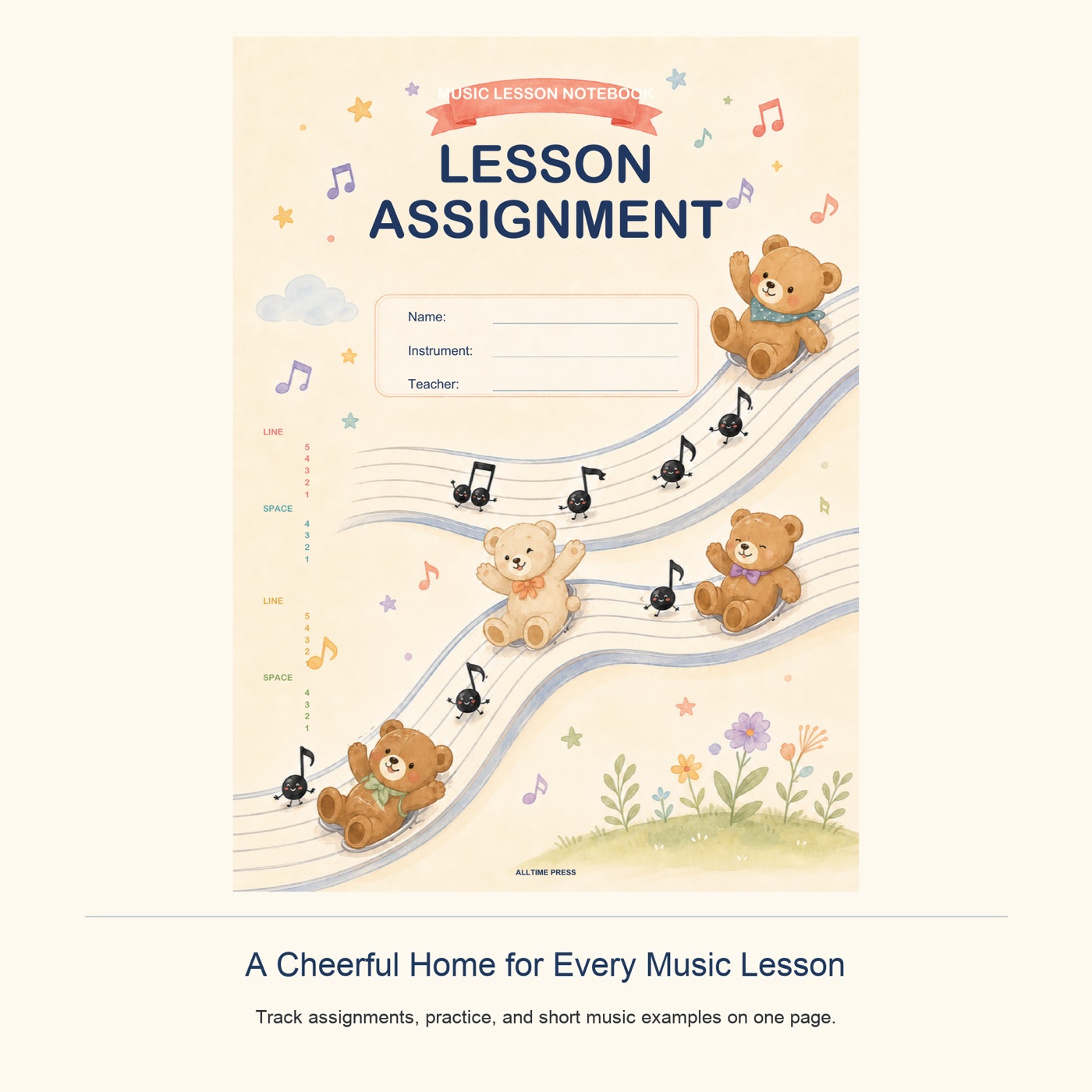
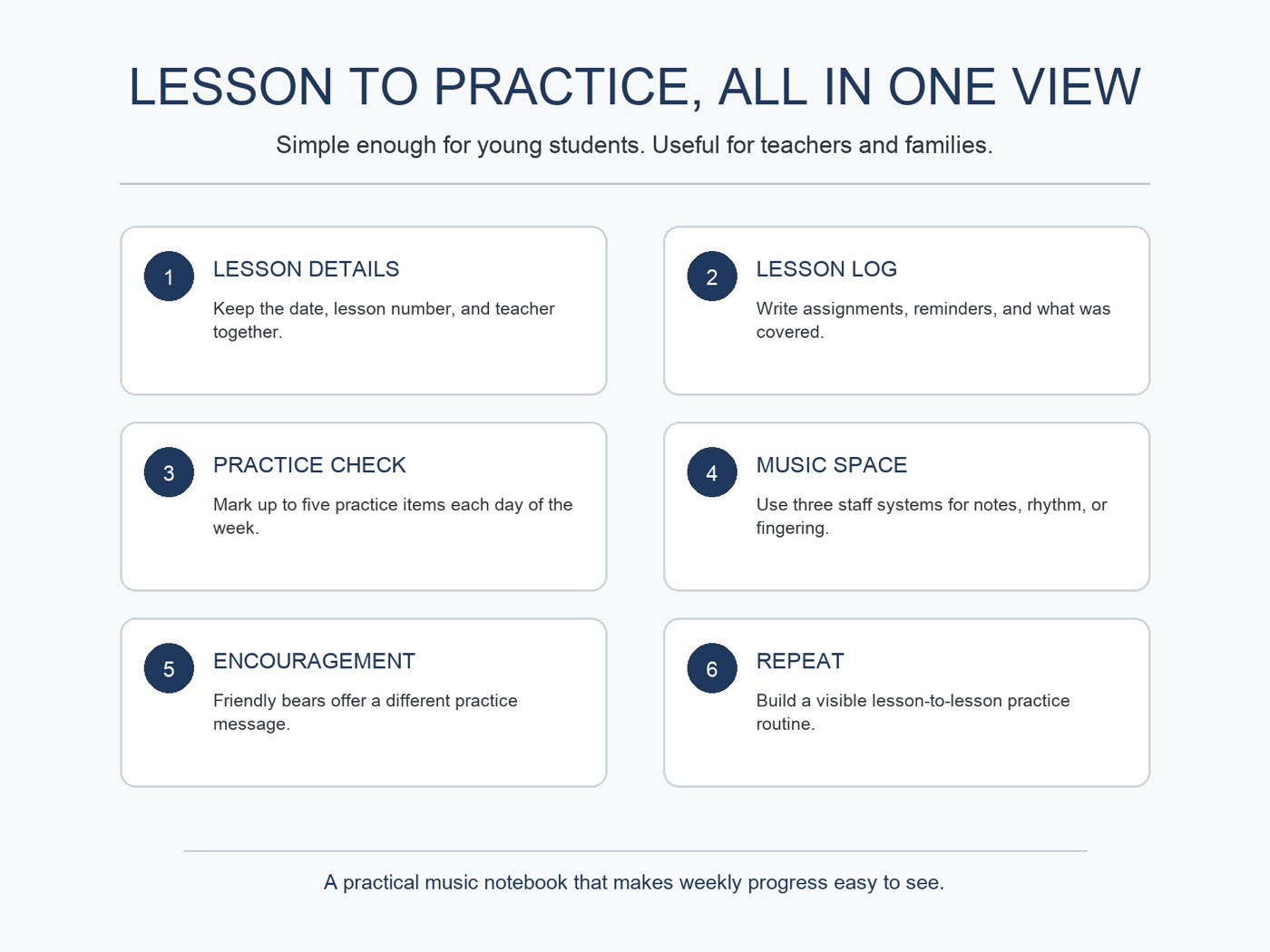
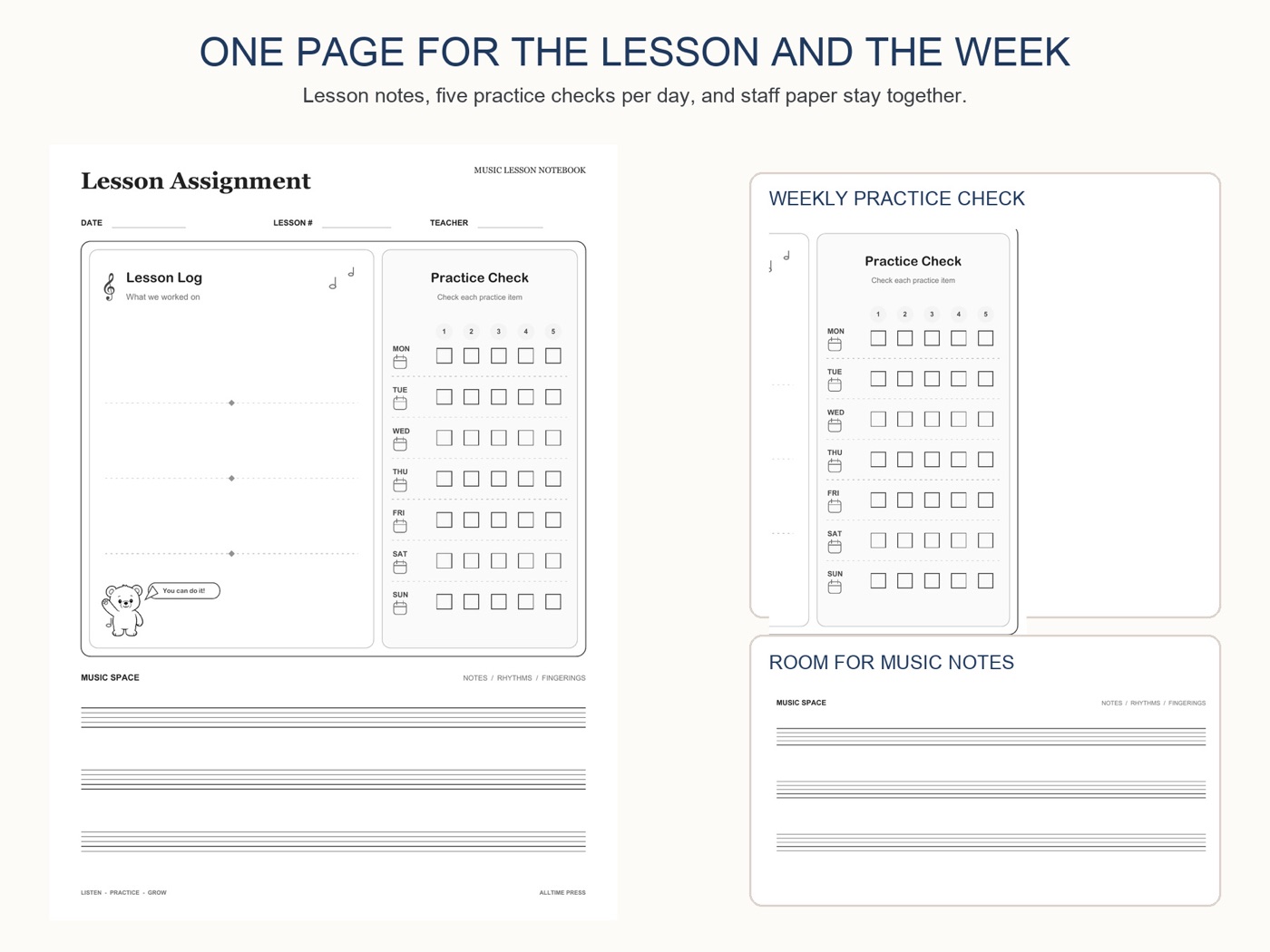
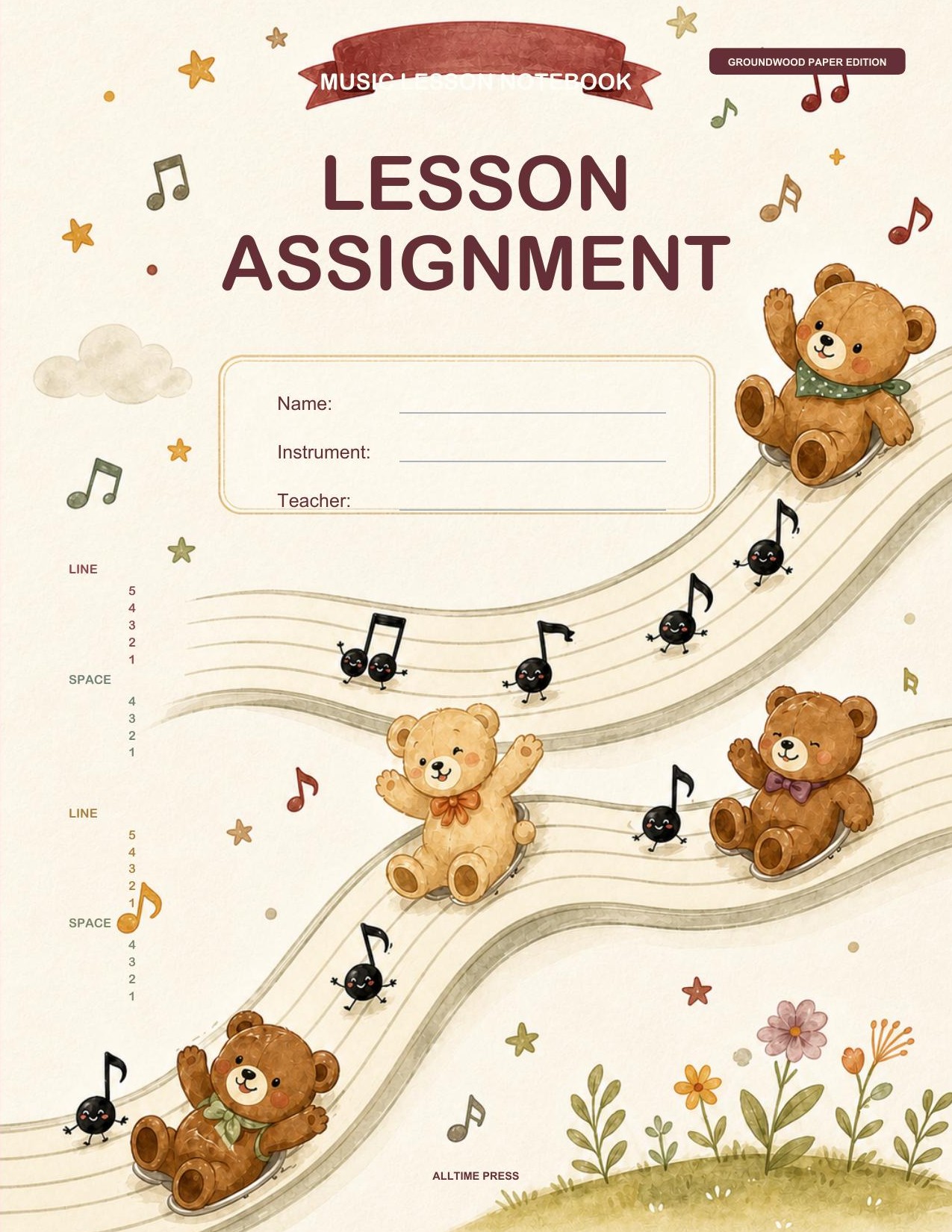
Current listings show 120 pages; older printed copies may still be delivered.
Cover, inside pages & guide →Assignments, goals, and staff paper
From $10.99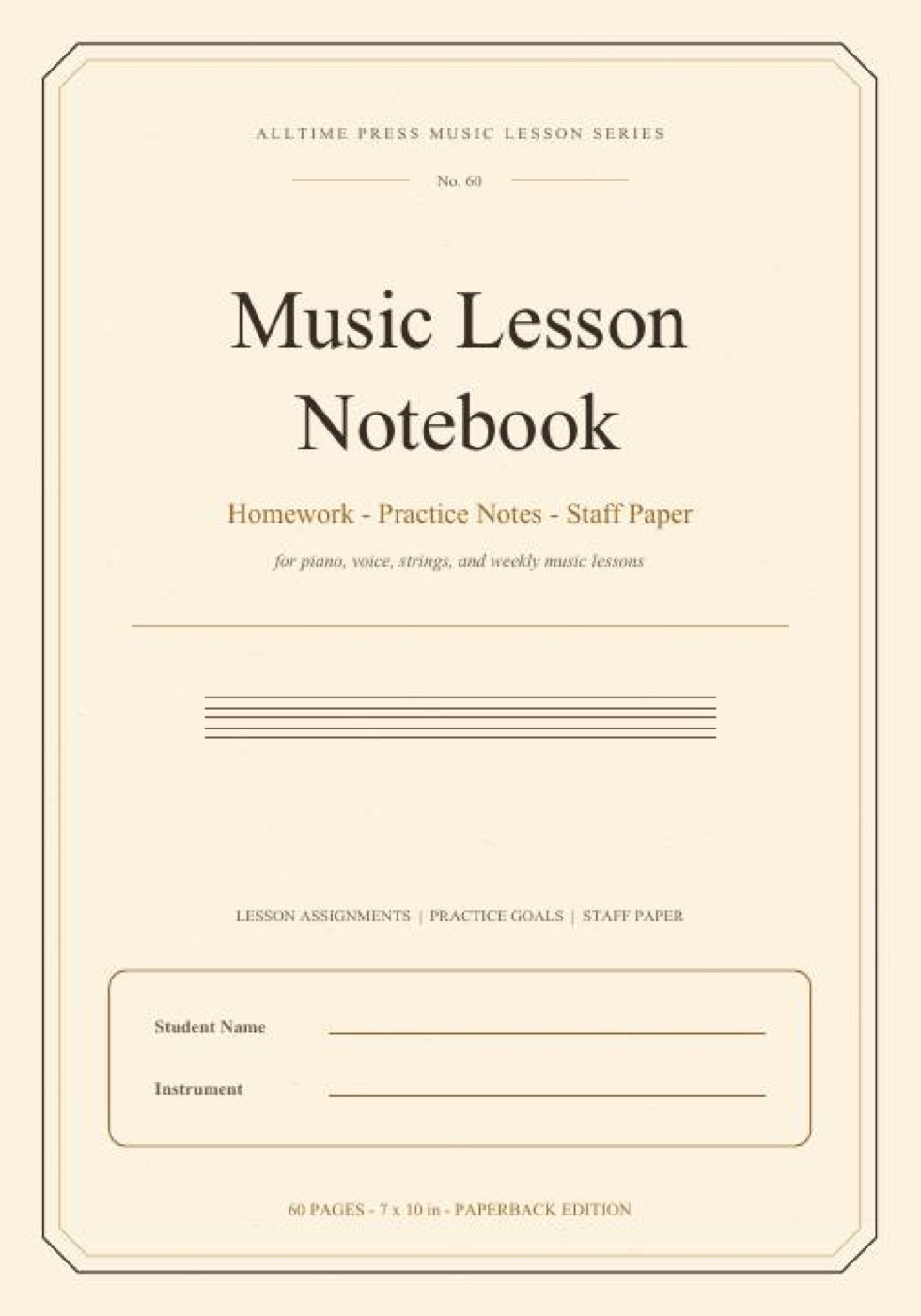
Open notation and composition
From $9.99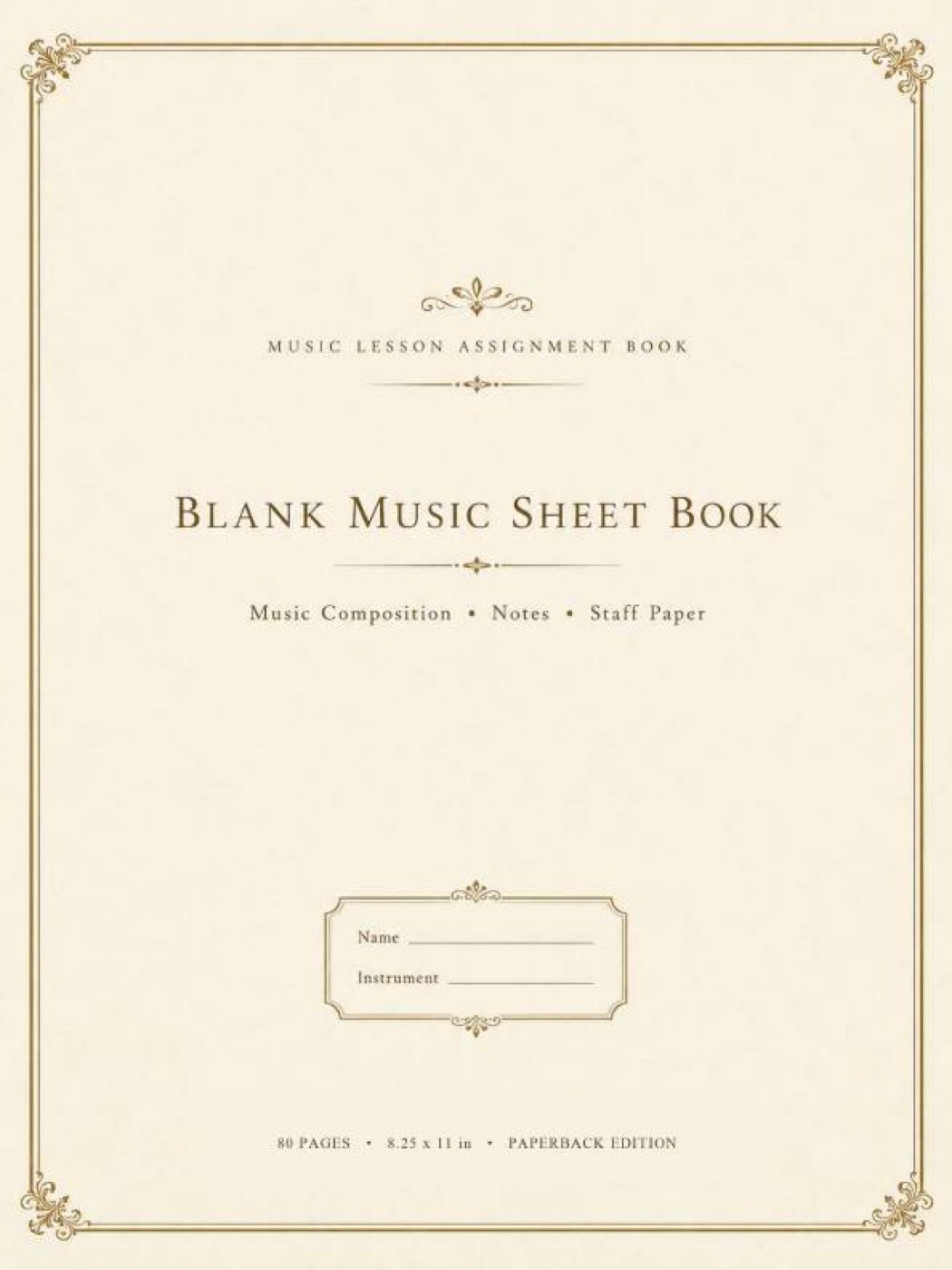

Guided journals
Six guided tools for emotional awareness, fact-first metacognition, deliberate practice, and better decisions. F and M serve different starting needs.
182 standard-color pages · 90 undated two-page entries · 8.25 × 11 in
Mixed-feeling awareness & regulation
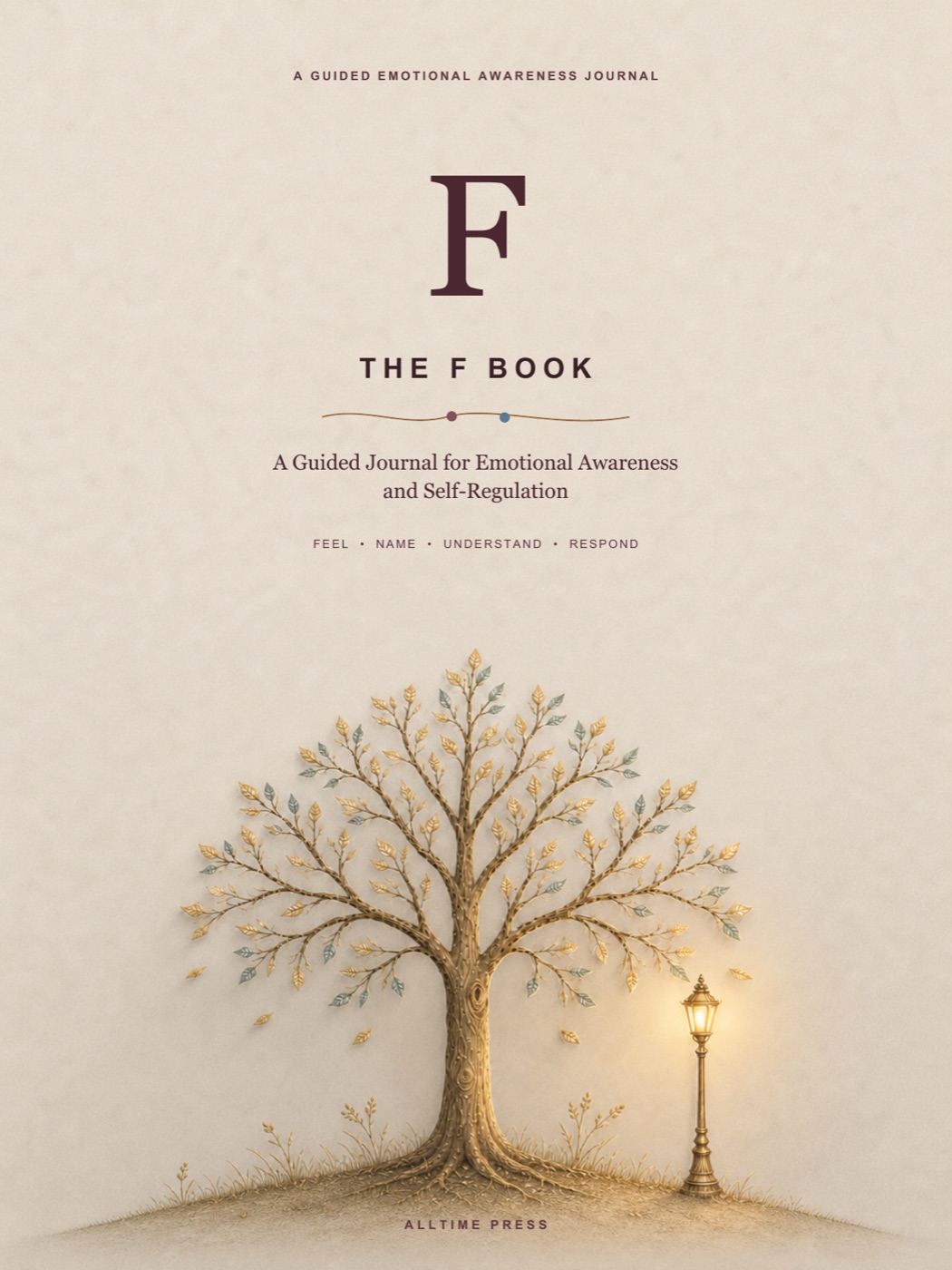
Feelings can arrive together: upset and relieved, excited and worried. The F Book helps you name what you feel, choose something that may help, and look back at what happened.
Turn a hard-to-name mix of feelings into one clear, manageable next step.
A thoughtful gift for someone who wants a practical place to learn, create, reflect, or practice.
8.25 × 11 in · 182 standard-color pages. This is already an A4-class writing area.
A 120-page physical revision is planned but has not been published. The existing Amazon edition remains 182 pages; do not mistake it for the planned revision.
Purchase guidance is paused while The F Book is being revised. The current Amazon paperback has 182 pages; a 120-page revision is planned, not yet published.
Low-resolution previews only. Original layouts and artwork are copyright protected.
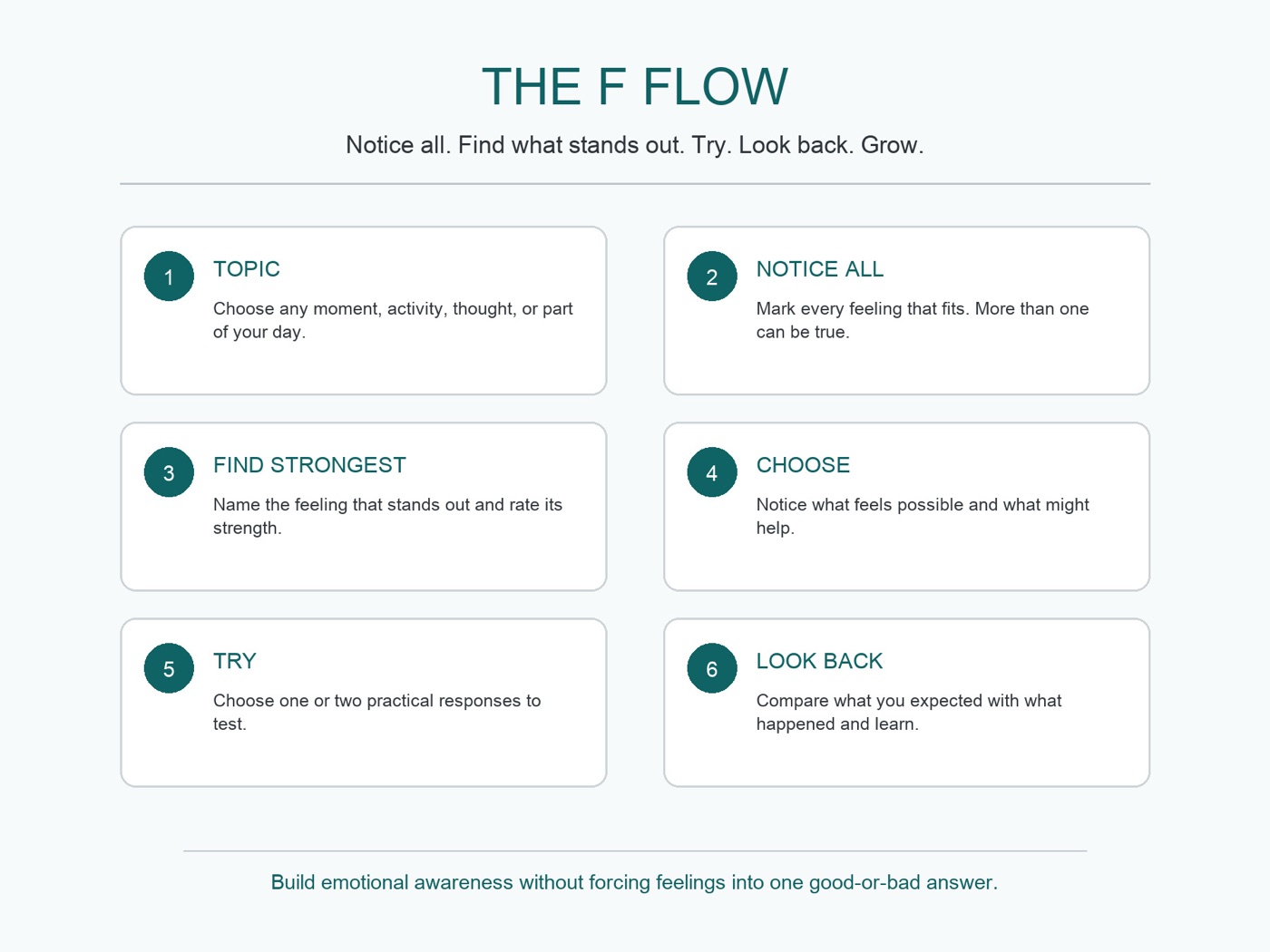
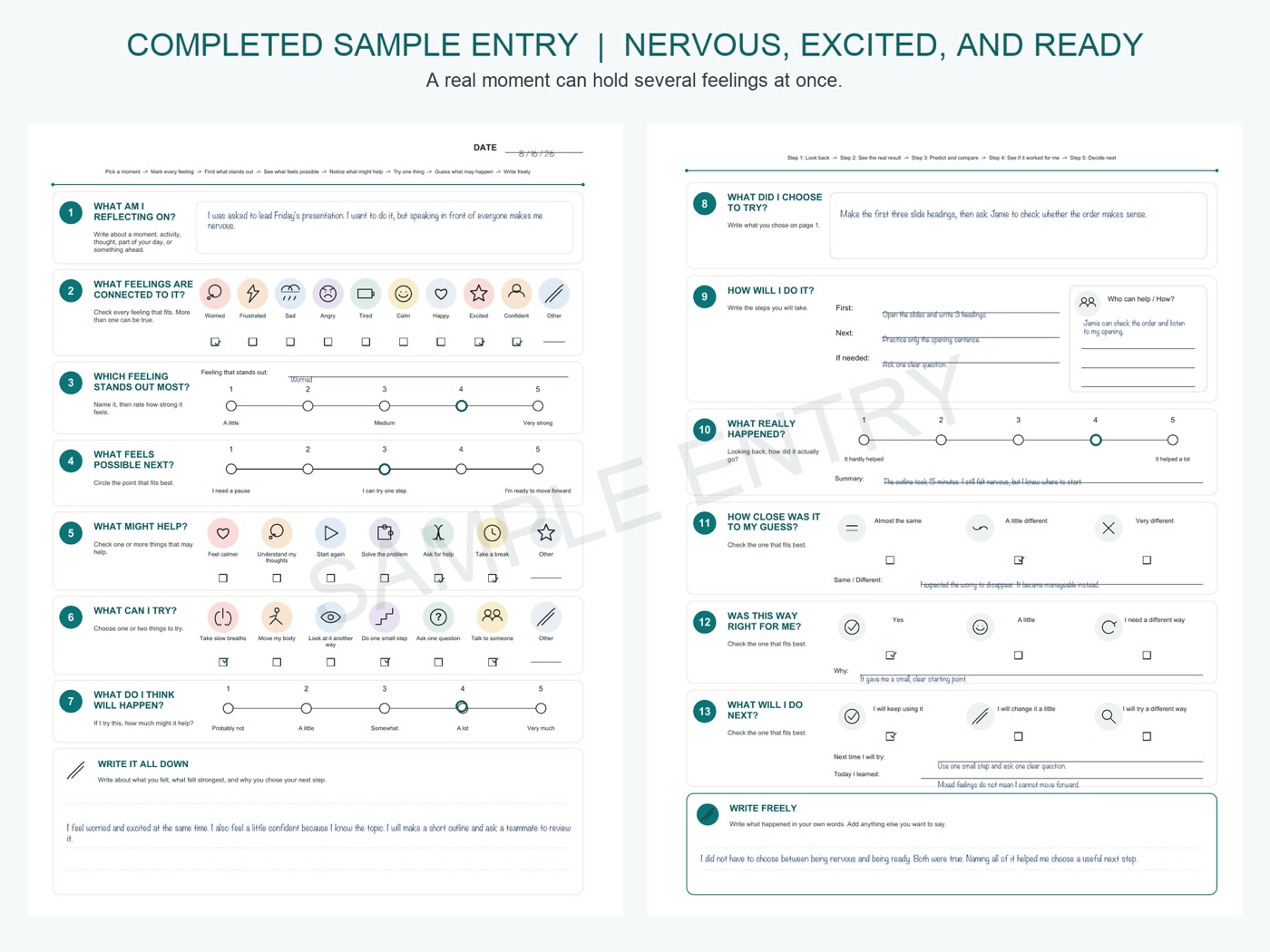
Use one two-page entry for a moment, activity, thought, or part of the day. The F Book differs most on page one: it helps you sort mixed feelings before choosing a response. Page two then uses a try-and-look-back learning cycle.
Name the moment or part of your day you want to understand. It can be small.
Mark every feeling that fits. Mixed feelings are allowed, so do not force one answer.
Write the strongest feeling and rate how intense it feels right now.
Mark whether you need a pause, can try one step, or feel ready to move forward.
Choose the need that fits: calm, understanding, a restart, help, a break, or your own answer.
Pick a practical action to try. More choices are not always more helpful.
Before acting, estimate how much the response may help.
On page two, write the response you actually chose.
Write the first step, the next step, what to do if needed, and who could help.
Rate what actually happened and add a short factual summary.
Notice whether the result was close to your prediction or different.
Decide whether this response worked for you, partly worked, or needs replacing.
Keep the method, adjust it slightly, or try a different way next time.
Use the final space for anything that did not fit the checkboxes or short prompts.
Helpful noteYou do not need to fill every line. Honest marks and a few clear words are enough to reveal a pattern over time.
Purchase guidance is temporarily paused. The current Amazon paperback has 182 pages. A 120-page revision is planned but is not yet available.
Purchase guidance is paused while this book is revised. The current Amazon edition remains 182 pages.
Fact-first metacognition & reflection
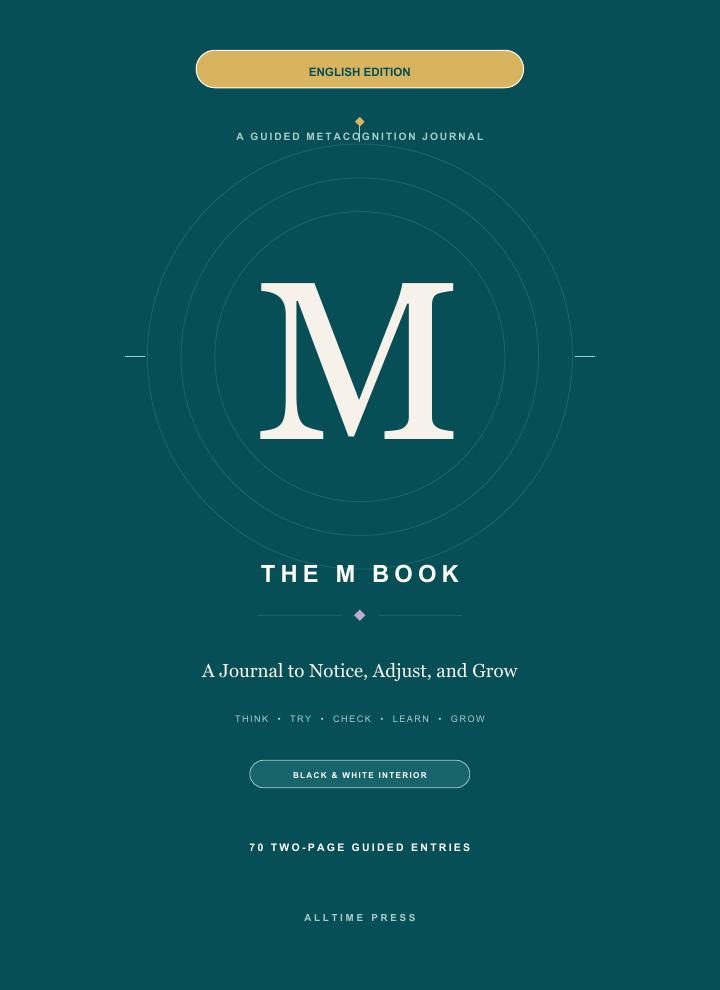
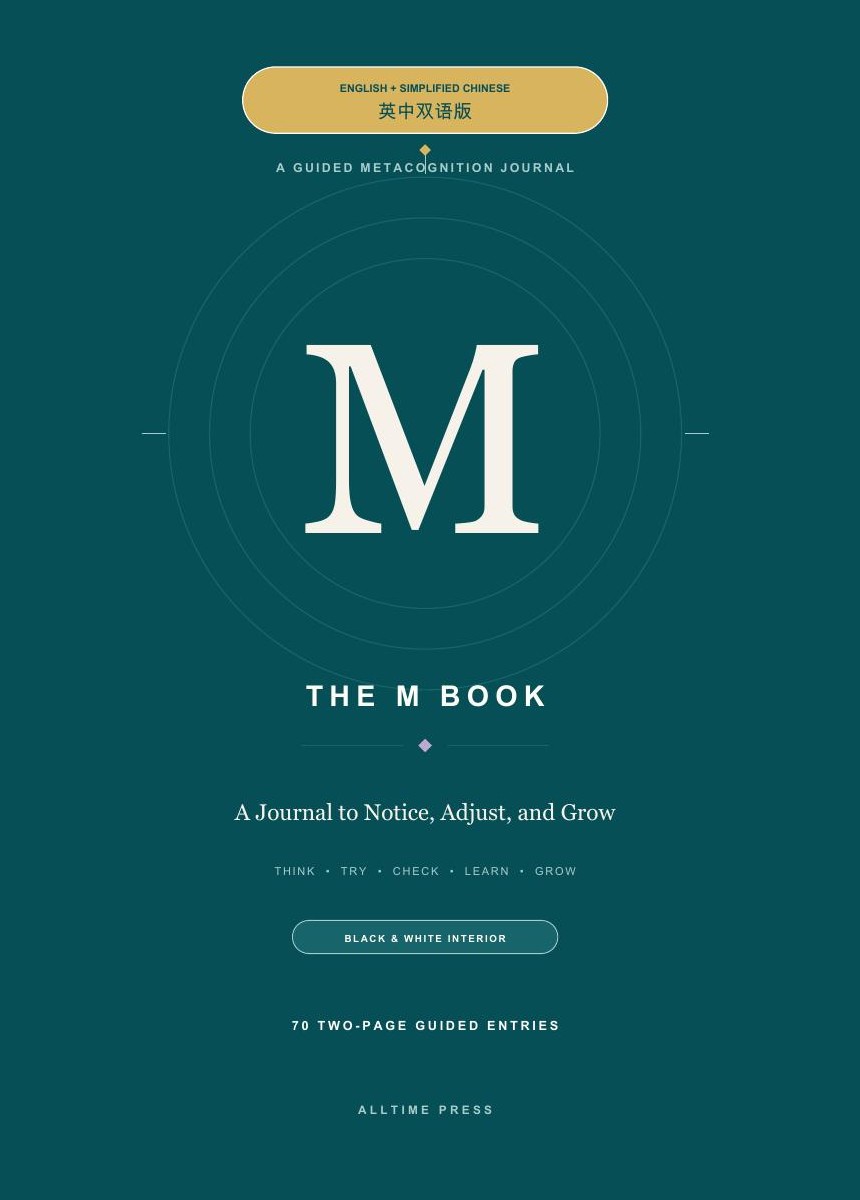
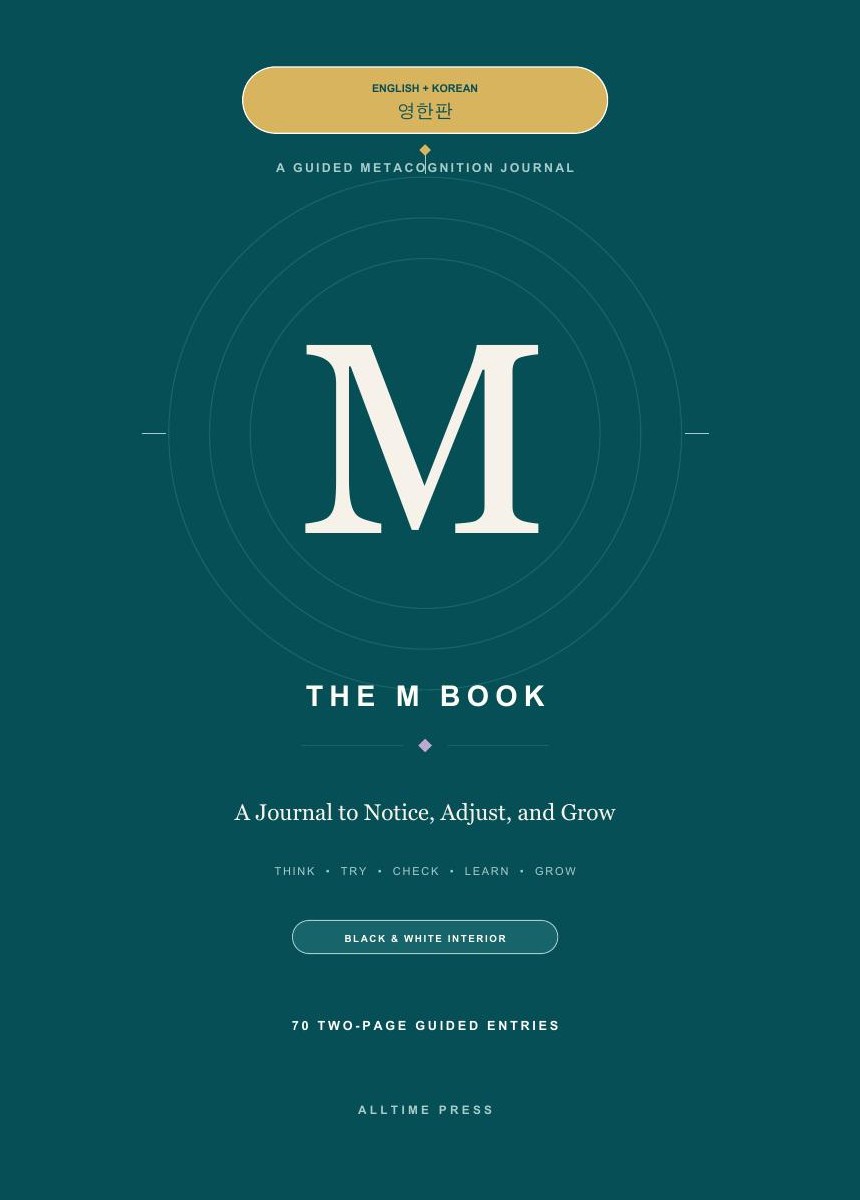
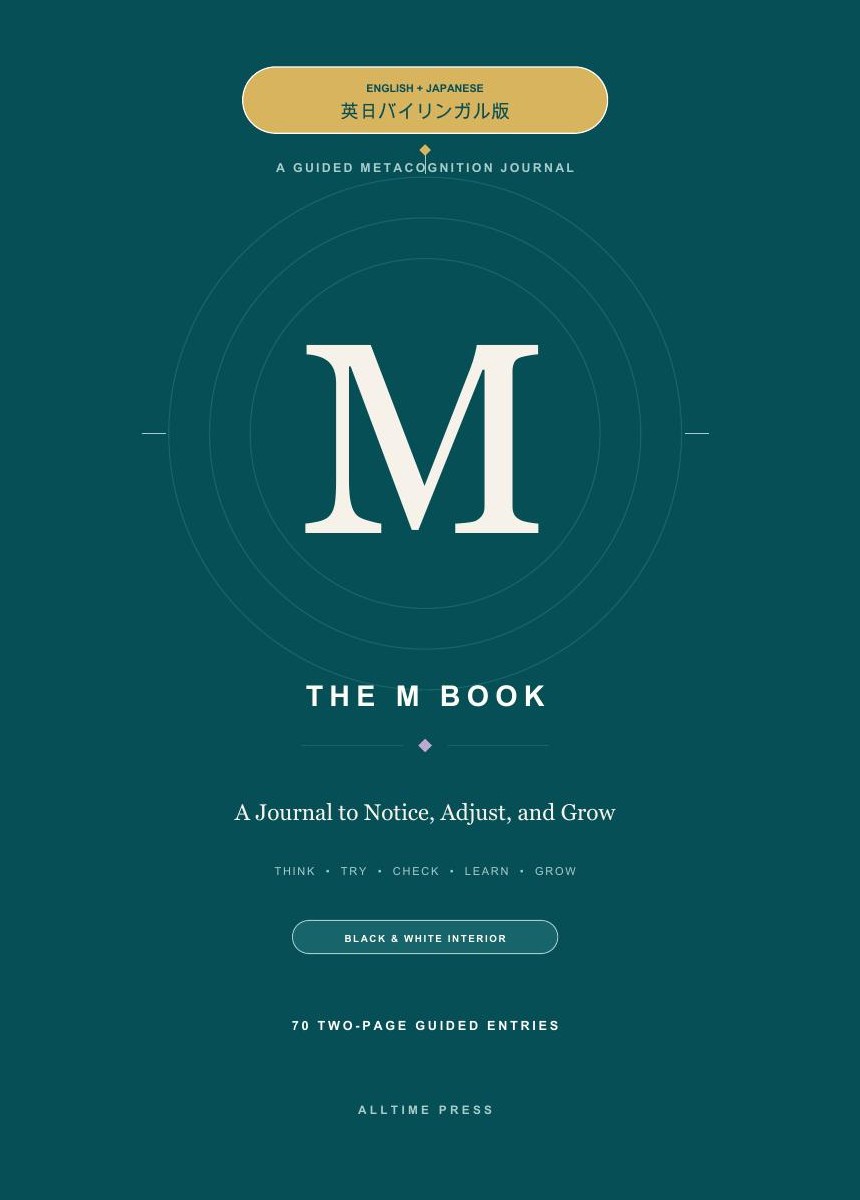
Notice what happened. Choose what comes next. 70 guided entries give you room to record the facts, separate interpretation, and keep one useful lesson from study, work, practice, conversations, and everyday life.
One experience. One clear takeaway.
A thoughtful gift for someone who wants a practical place to learn, create, reflect, or practice.
English, English + Korean, English + Japanese, and English + Simplified Chinese are available on Amazon. Each edition contains 70 complete two-page entries in a 146-page, 8 × 11 inch paperback. Listed price: $24.99 each.
The latest English + Spanish edition is still under Amazon review. A purchase link will be added after it is available.
Featured: English · Paperback · 8 × 11 in · 146 pages · 70 entries. Paid Amazon Associate link.
The English cover and overview shown here represent the latest 70-entry layout. Choose the language edition that fits you below.
Low-resolution previews only. Original layouts and artwork are copyright protected.
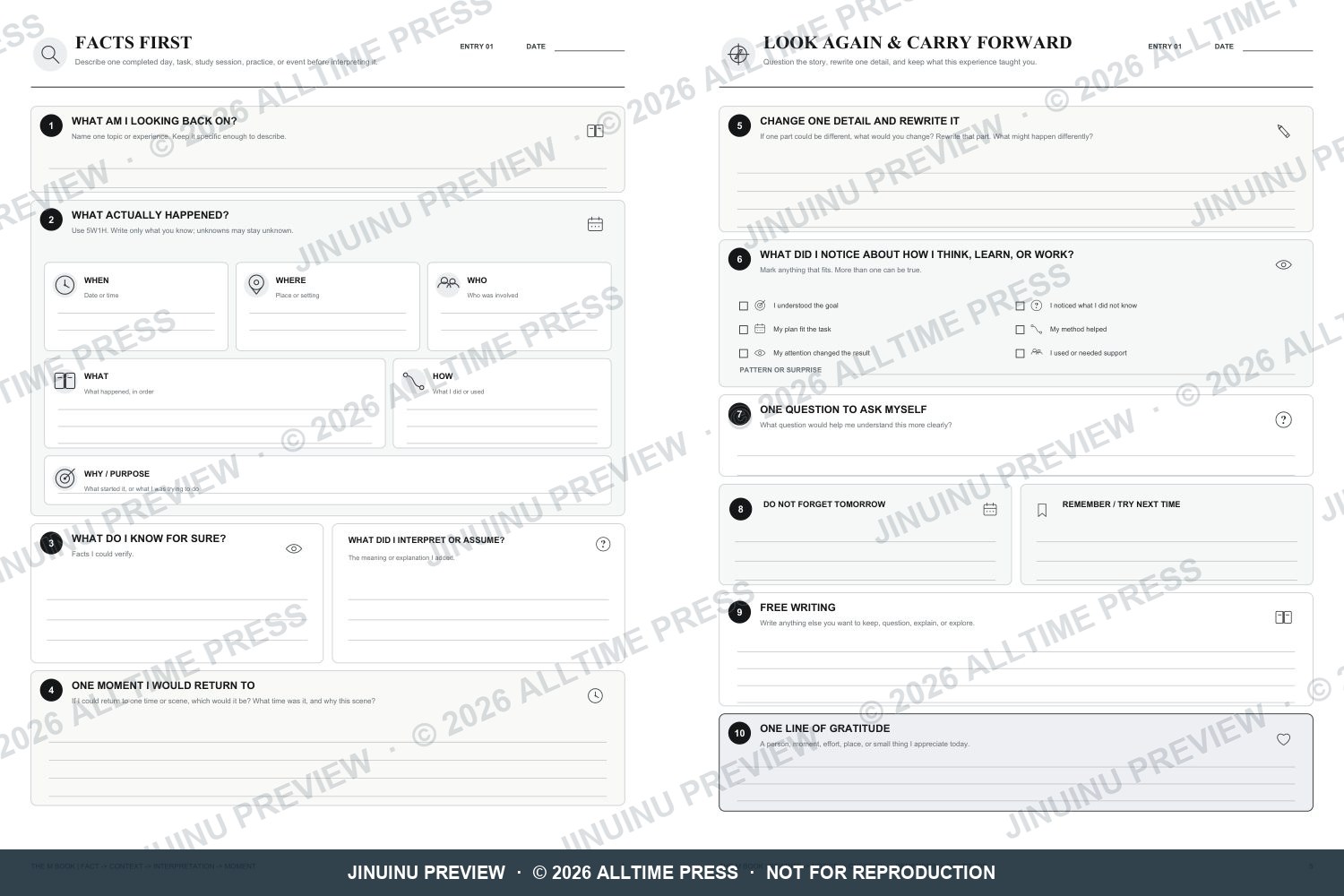
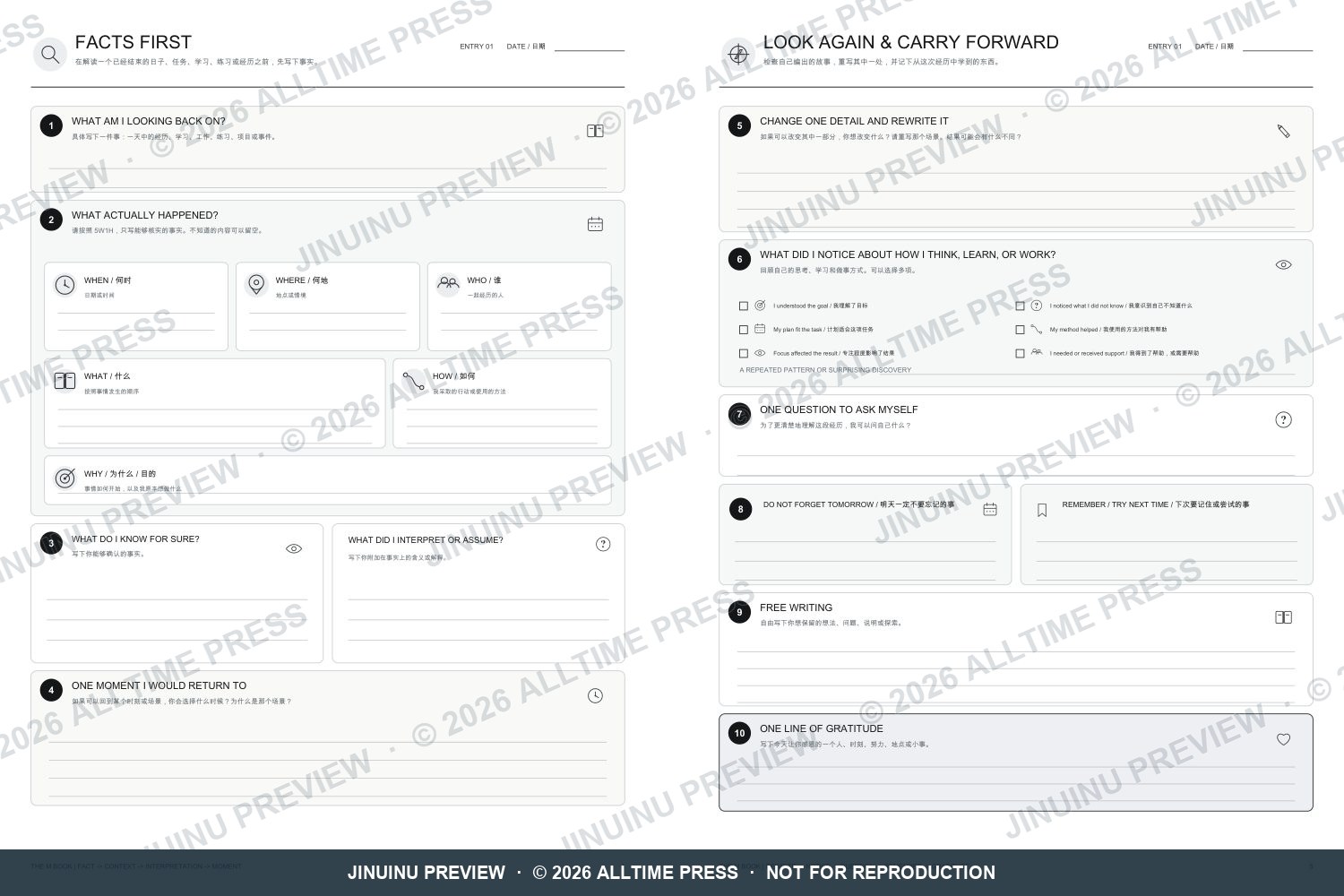
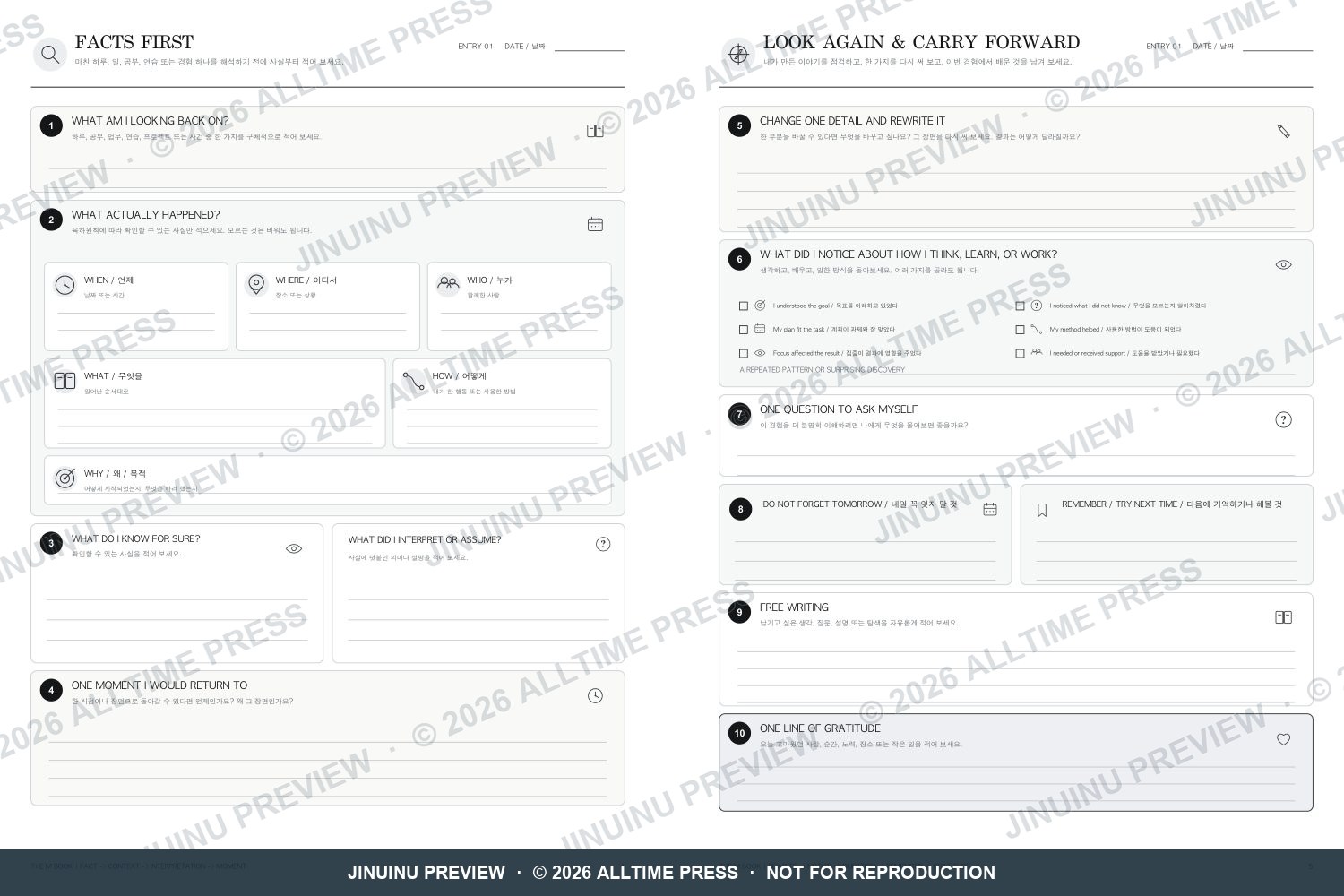
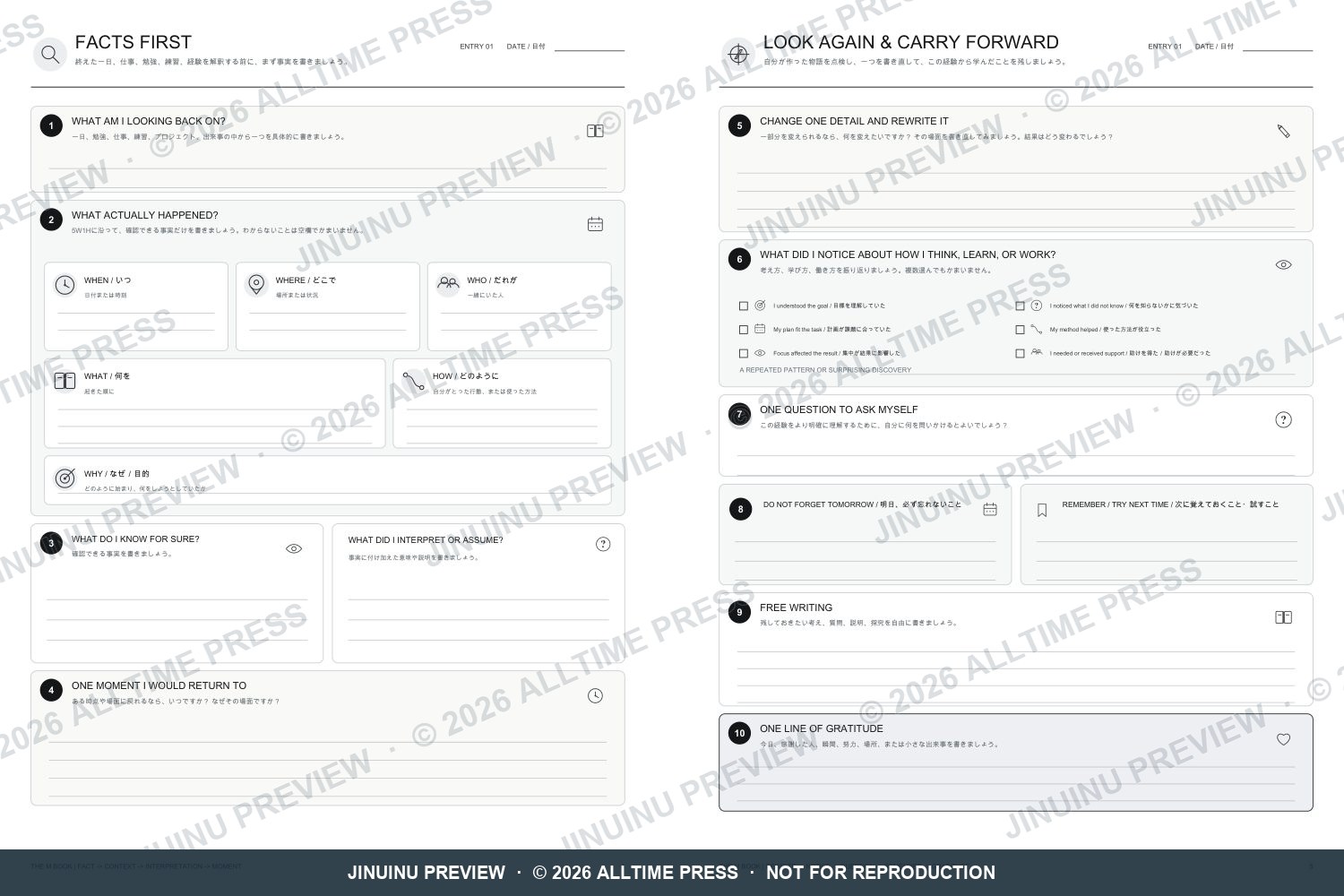
Use one complete two-page entry after a day, study session, work task, practice, project, conversation, or event. The left page records facts and separates interpretation; the right page rewrites one detail, notices patterns, and carries one useful lesson forward.
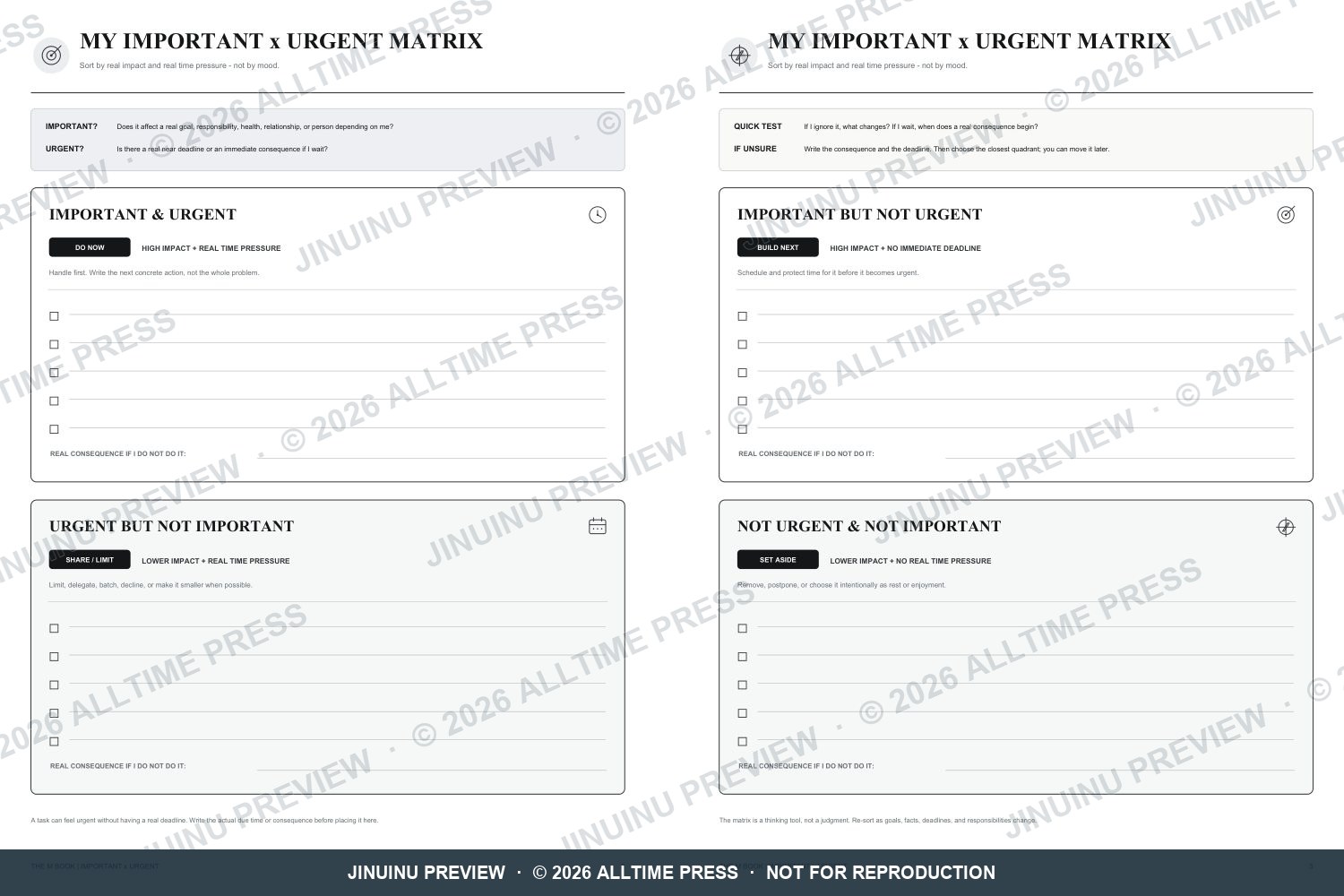
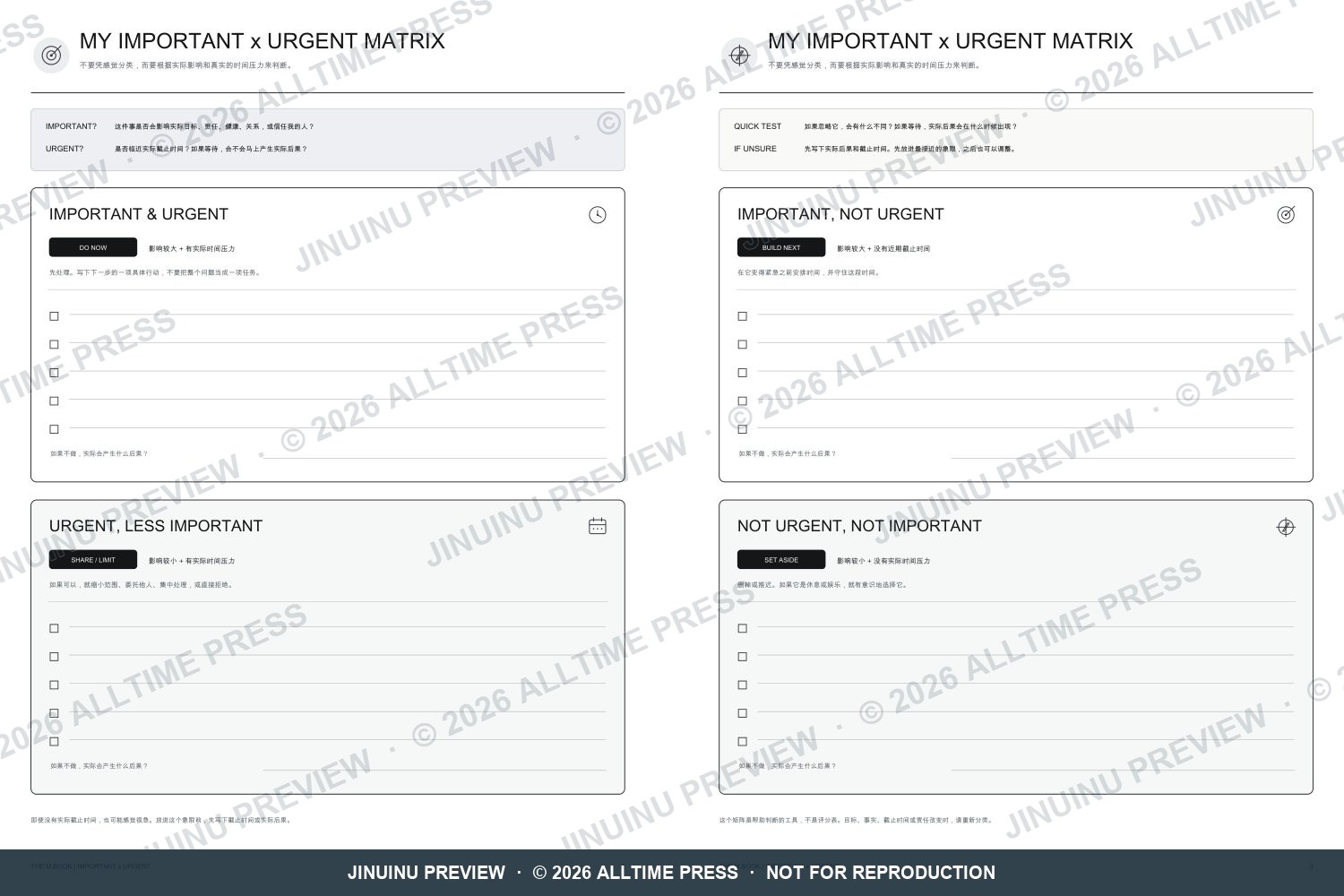
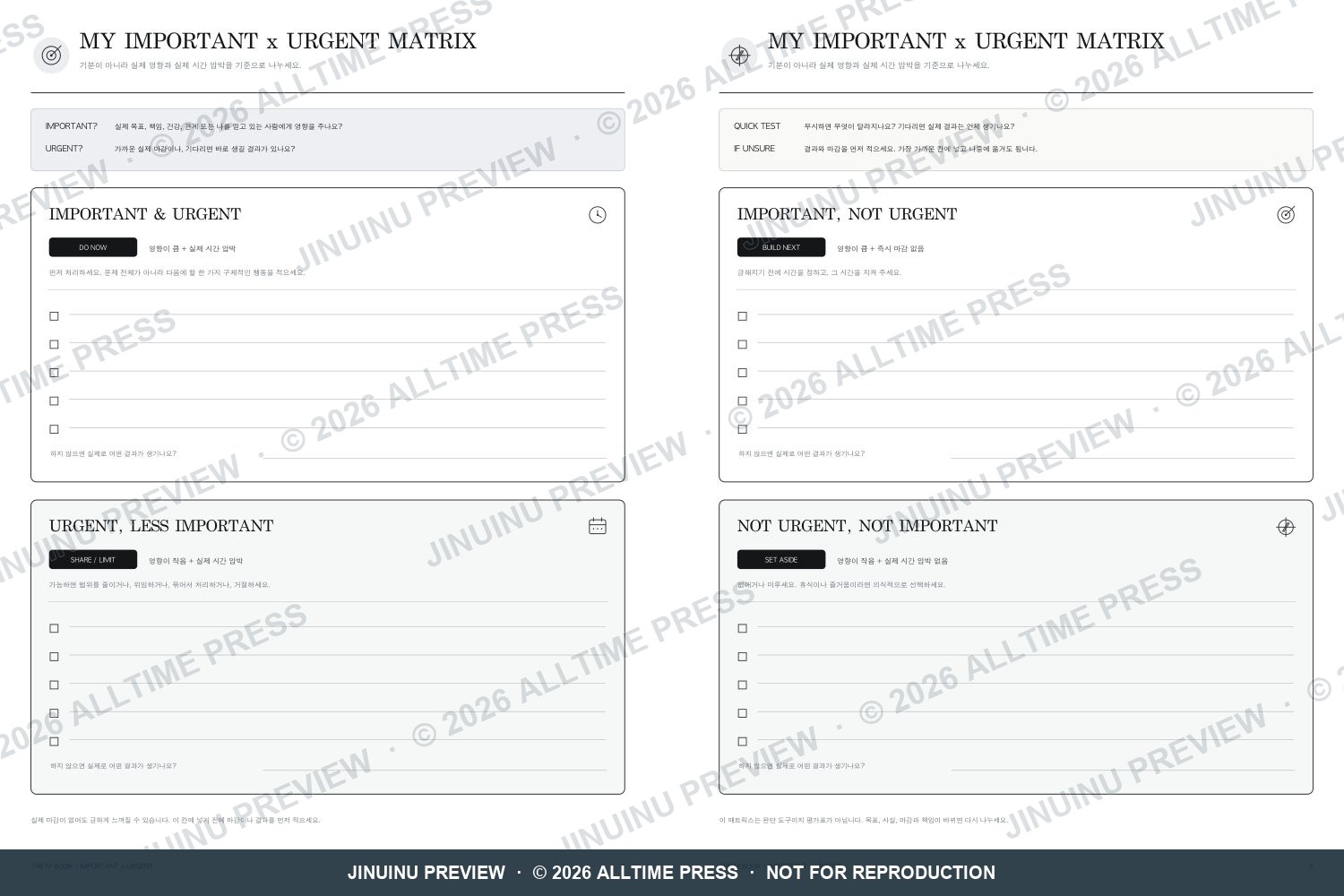
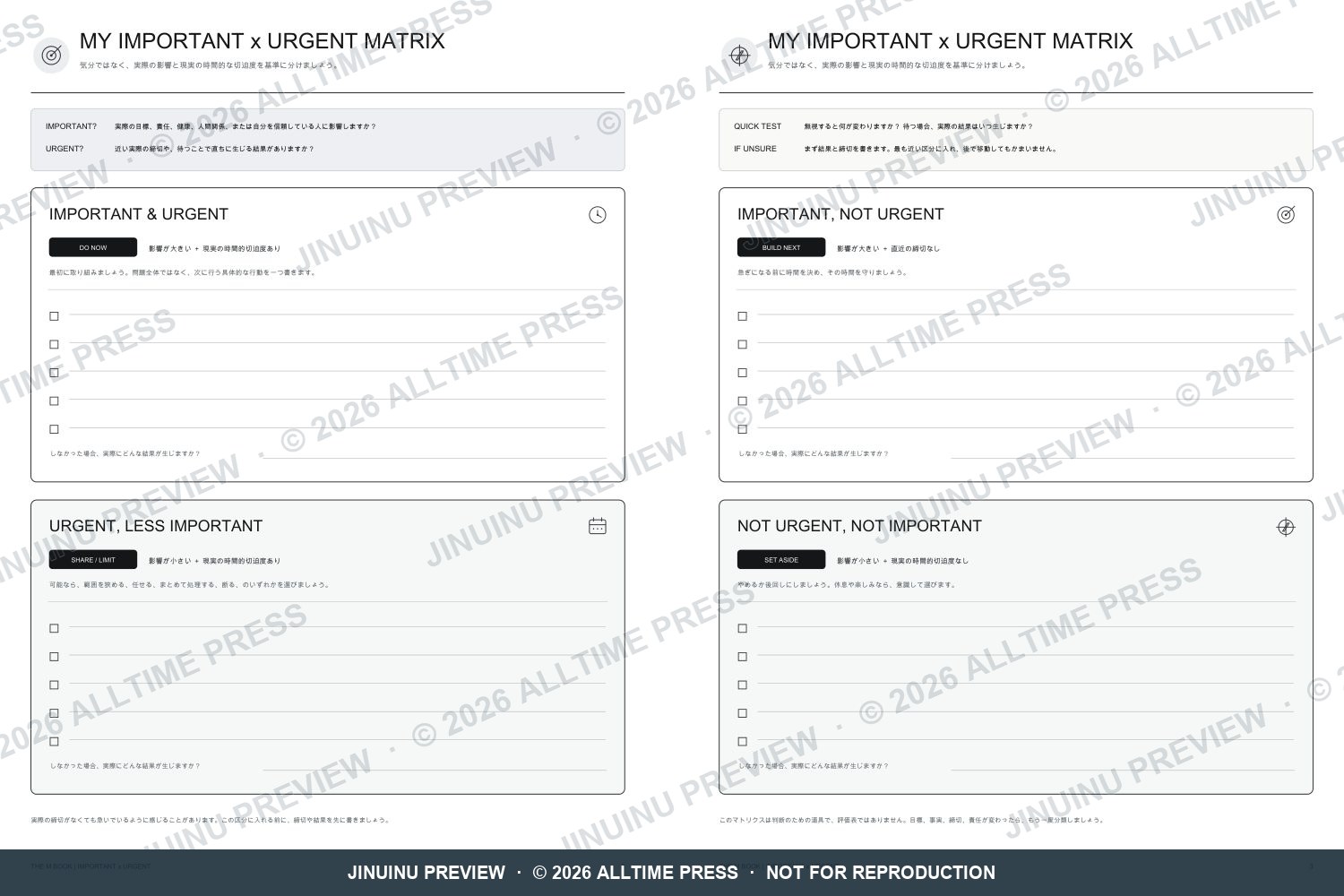
Before Entry 01, use the two-page Important × Urgent matrix. Important means real impact on a goal, responsibility, health, relationship, or person depending on you. Urgent means a real near deadline or immediate consequence, not an anxious feeling.
Name one completed day, task, study session, practice, project, conversation, or event. Keep it specific enough to describe.
Write when, where, who, what, how, and why or purpose. Leave an unknown blank or write that you do not know yet.
List only facts you could verify. This keeps memory and explanation from blending together.
Write the meaning, motive, or explanation you added. An interpretation can be useful without being a confirmed fact.
Name one time or scene you would return to, then write why that moment matters.
Rewrite one part with a different choice, condition, or response and consider what might have changed.
Mark what you learned about how you think, learn, or work, including goals, plans, attention, methods, and support.
Write the question that would help you understand the experience more clearly.
Record the practical reminder that matters for the next day.
Write one lesson, method, or adjustment worth carrying into another experience.
Use the open space for context, questions, details, or thoughts that did not fit the structured prompts.
Name one person, moment, effort, place, or small thing you appreciated.
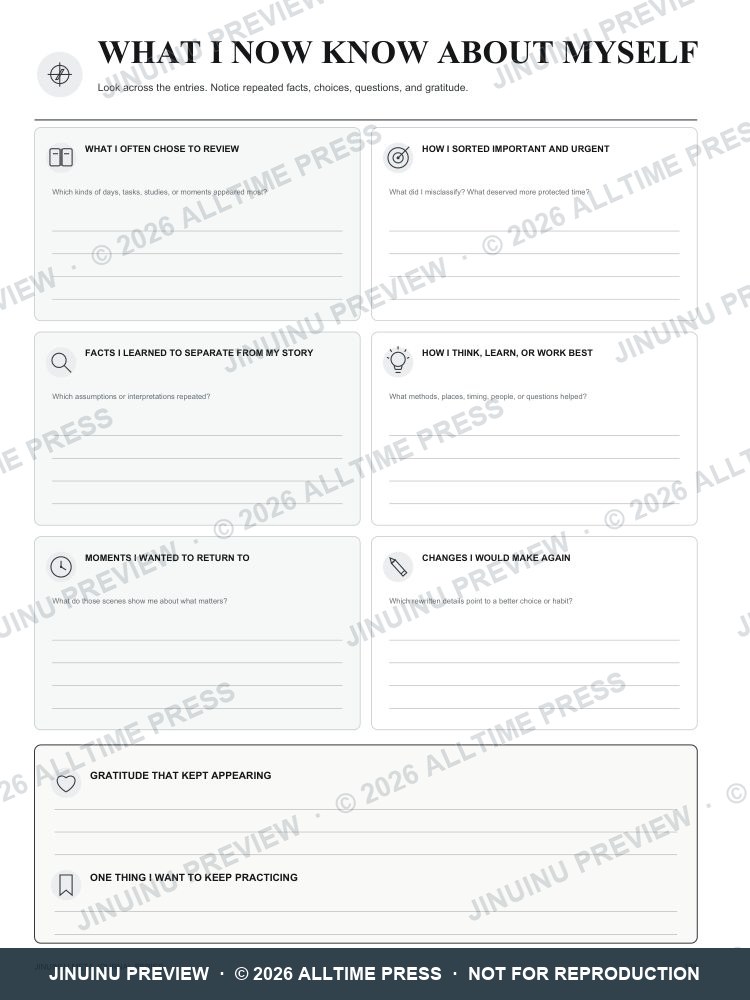
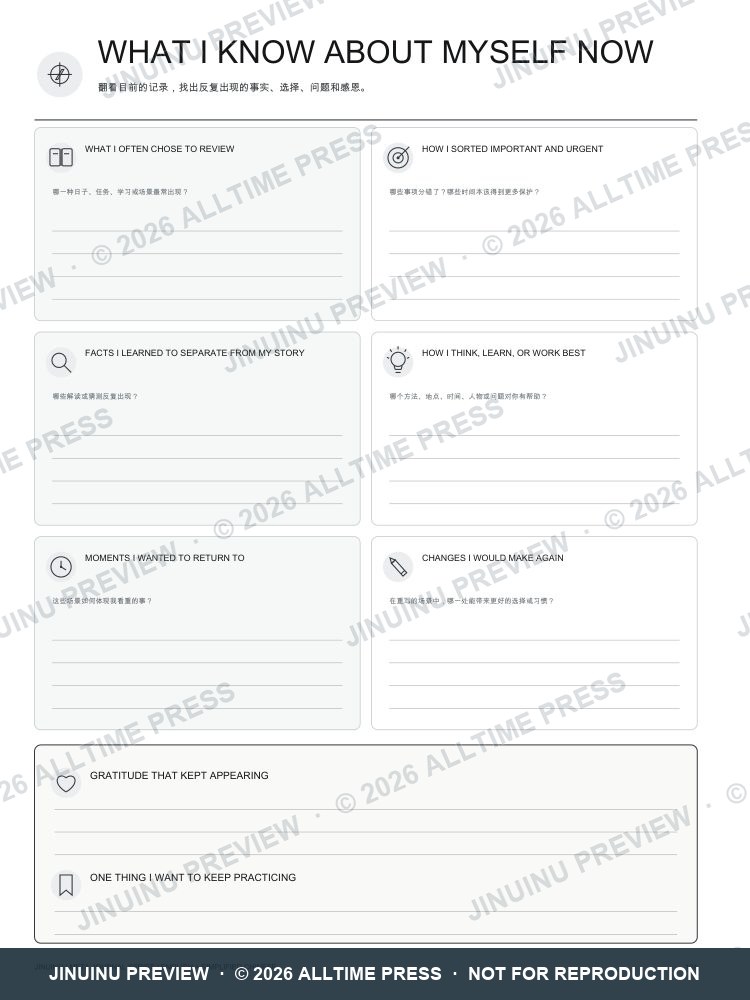
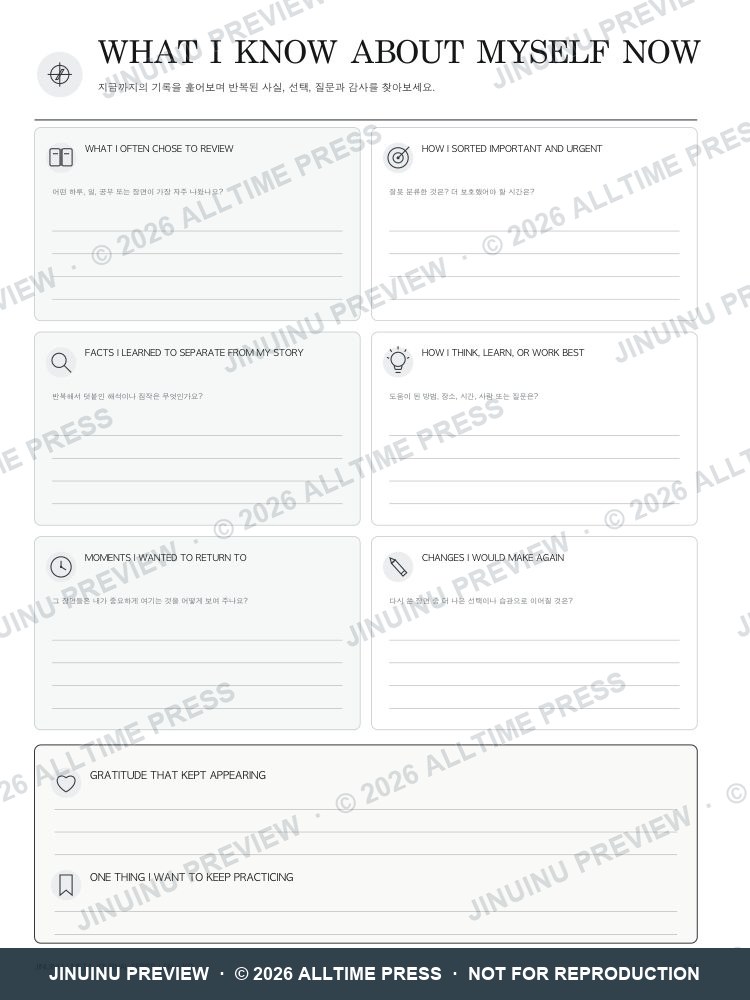
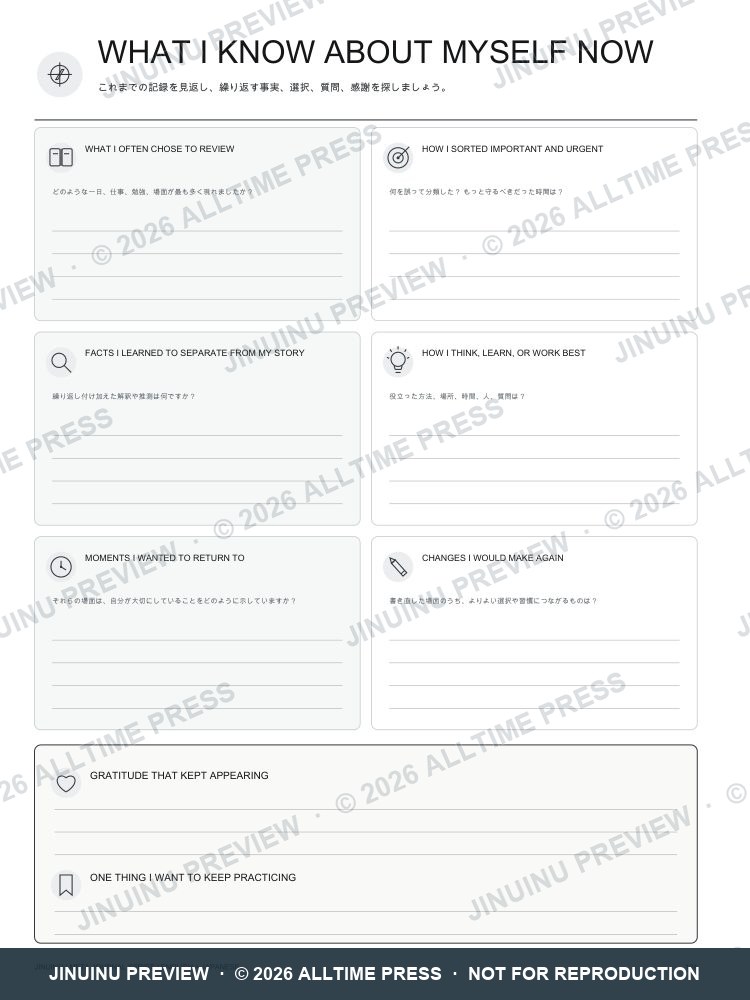
After completing the journal, review repeated topics, priority choices, facts versus stories, useful patterns, memorable moments, and recurring gratitude.
Helpful noteYou do not need to fill every line. The structure trains attention, not perfect memory, and the final review helps repeated patterns become visible.
Paperback · 8 × 11 in · 146 pages · 70 entries
Open this edition on AmazonBilingual paperback · 8 × 11 in · 146 pages · 70 entries
Open this edition on AmazonBilingual paperback · 8 × 11 in · 146 pages · 70 entries
Open this edition on AmazonBilingual paperback · 8 × 11 in · 146 pages · 70 entries
Open this edition on AmazonRecord the facts. Separate your interpretation. Rewrite one detail. Keep one lesson. Use the same simple reflection flow for study, work, conversations, and everyday life.
Verified edition prices are shown in USD. Amazon may change price and availability. See the detailed protected interior pages and complete use guide at JINUINU.com.
128 pages · 60 undated two-page entries · 8.5 × 11 in
Practice reflection for growing learners
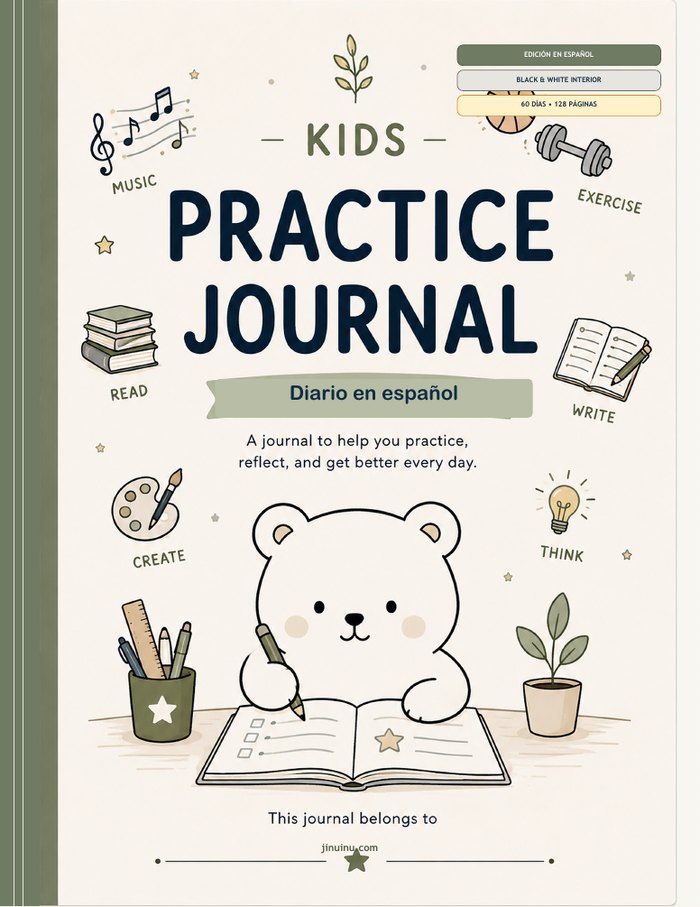
A friendly undated journal for music, study, sports, art, and other skills: practice, notice what helped or felt difficult, learn from it, and try again.
Help a growing learner see how practice works, not only whether it went well.
A thoughtful gift for someone who wants a practical place to learn, create, reflect, or practice.
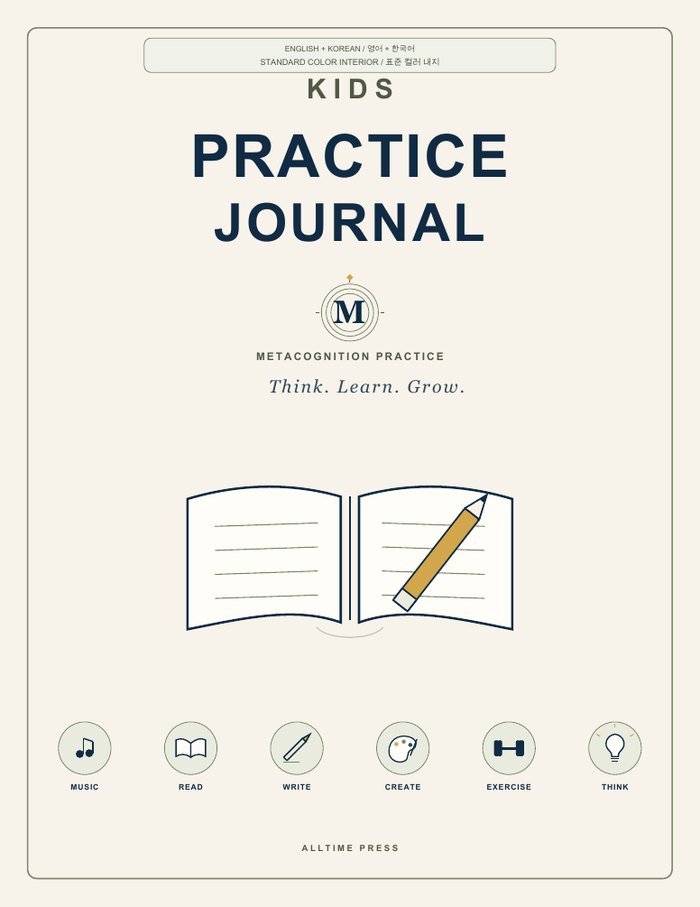
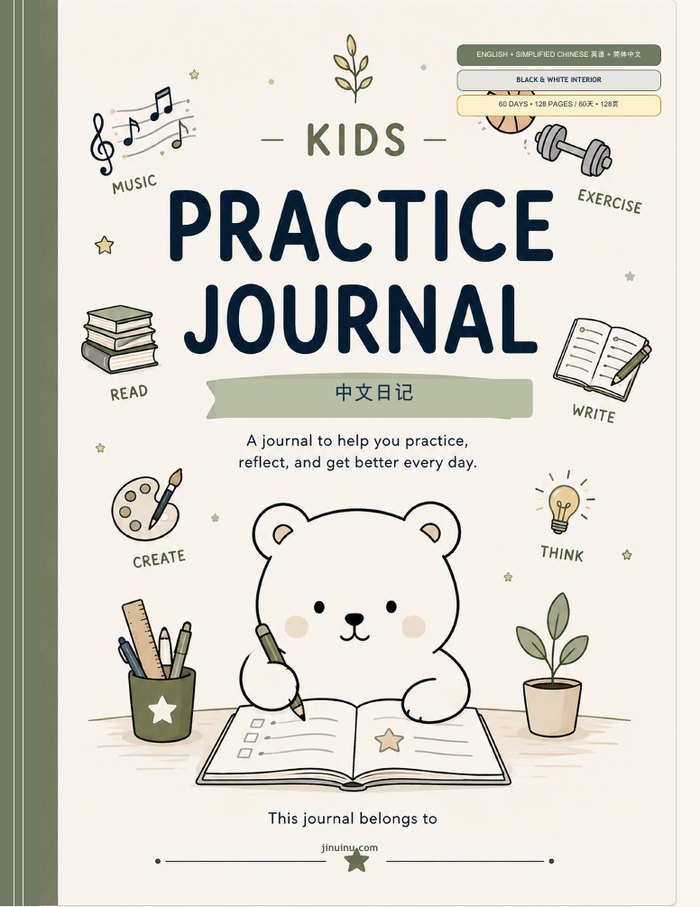
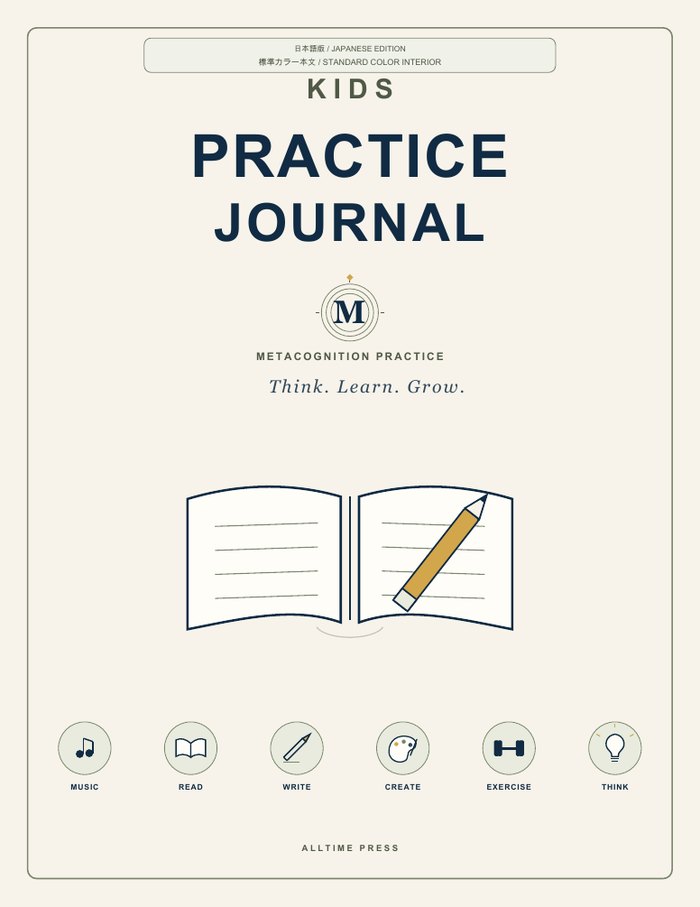
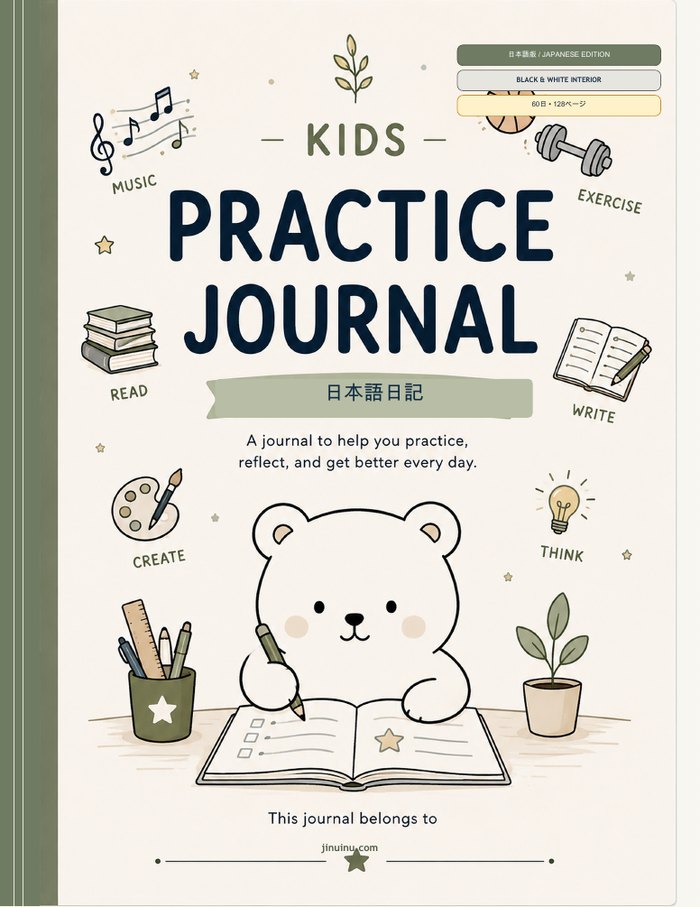
Color cover with black-and-white inside pages. Paperback · 8.5 × 11 in · 128 pages · 60 two-page entries. Black and white describes the inside pages, not the cover.
Color cover with standard-color inside pages. Paperback · 8.5 × 11 in · 128 pages · 60 two-page entries. Choose the same language in the edition list below to compare the two print options.
Featured: English + Korean · Black-and-white interior · Color cover · Paperback · 8.5 × 11 in · 128 pages. Paid Amazon Associate link.
Low-resolution previews only. Original layouts and artwork are copyright protected.
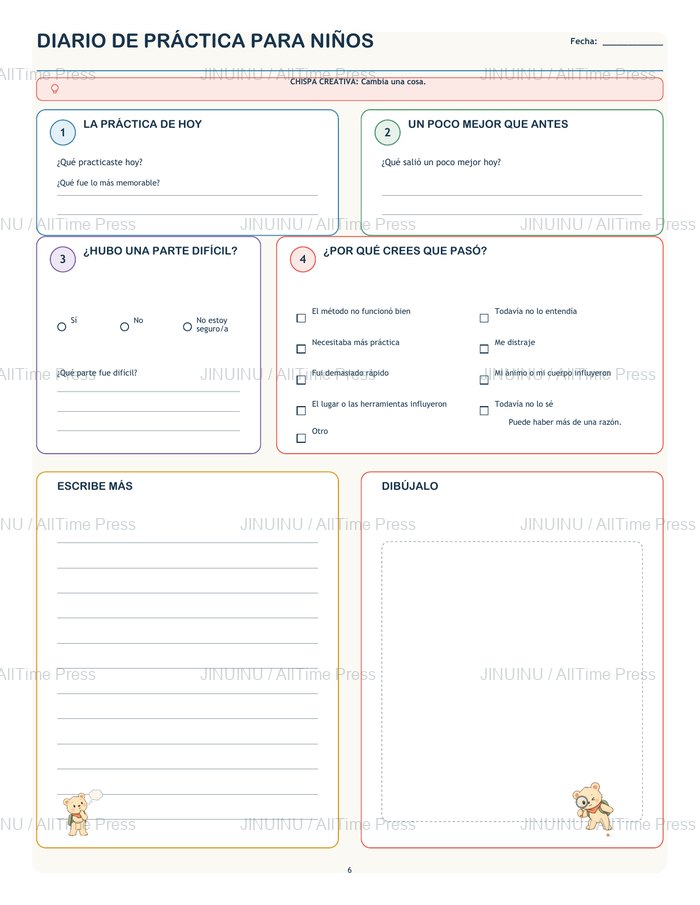
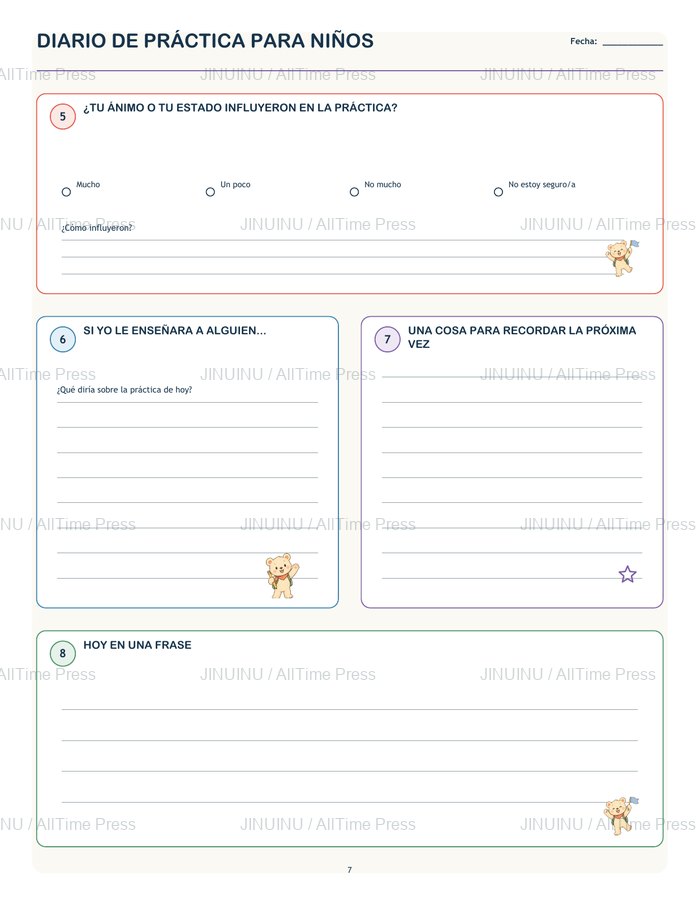
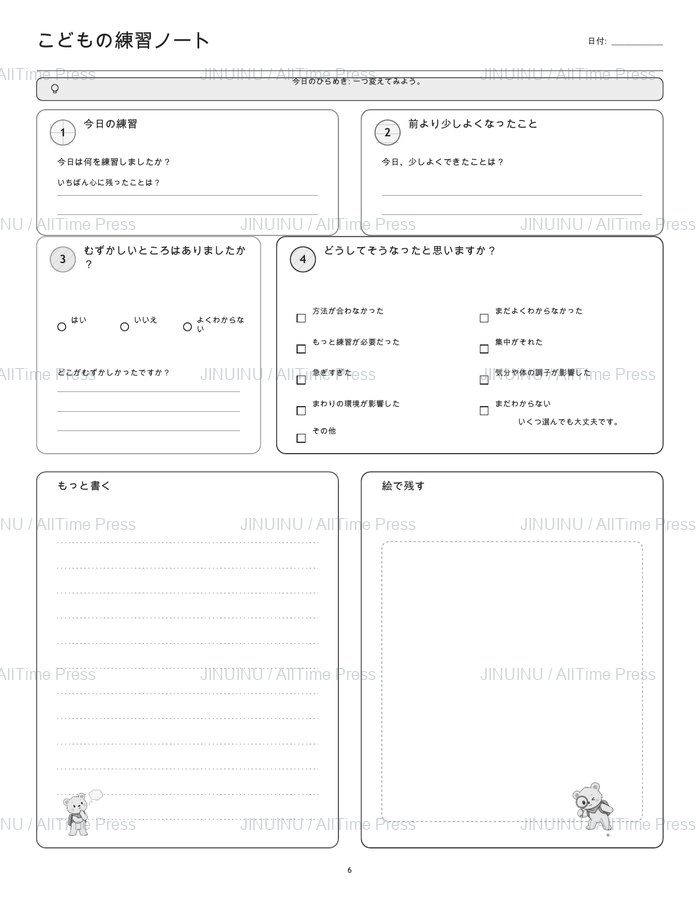
Complete one two-page entry after a practice session in music, reading, study, sports, art, writing, or another skill. A child can use it independently or talk through the prompts with a parent, teacher, or coach. The color and black-and-white editions use the same guided structure.
Start with Practice → Look Back → Understand → Try Again. Good days and hard days both give useful information.
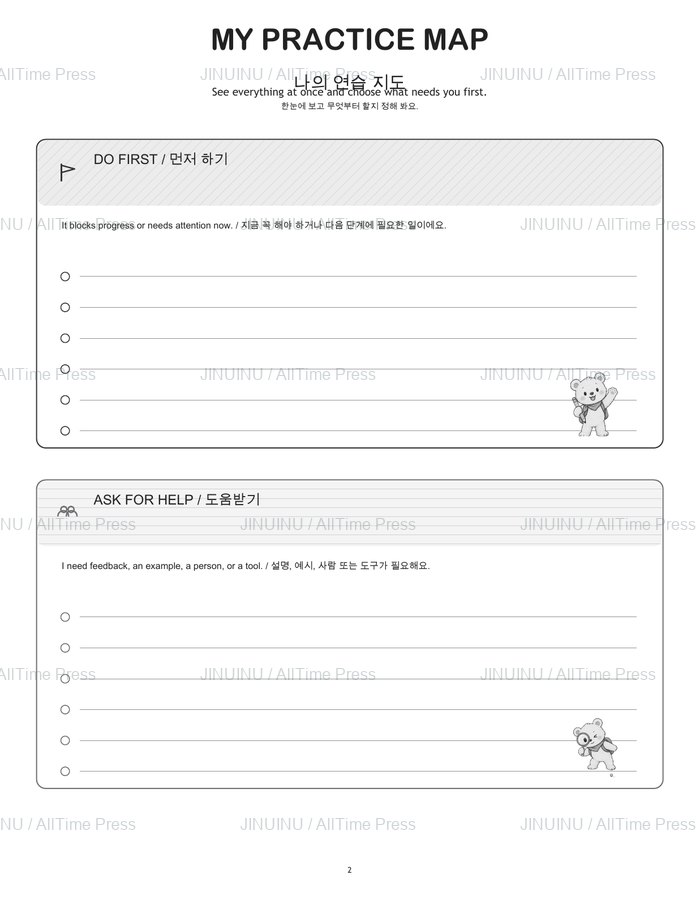
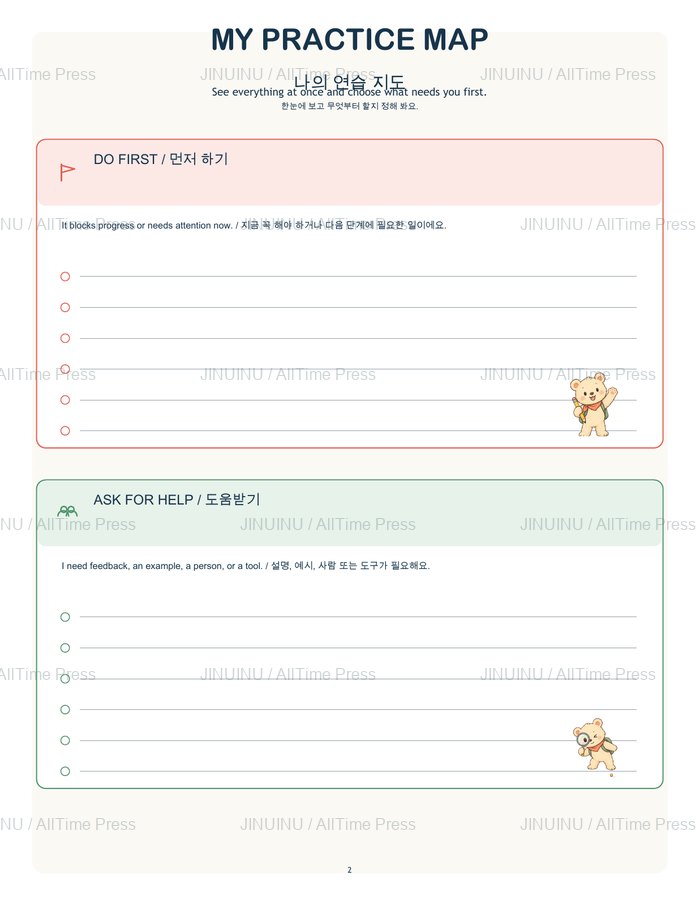
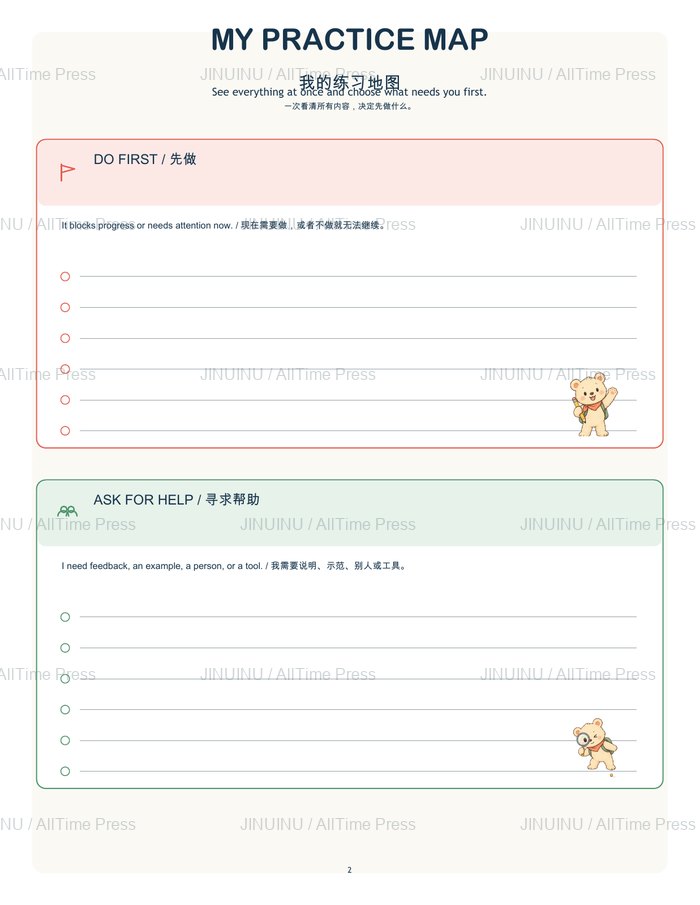
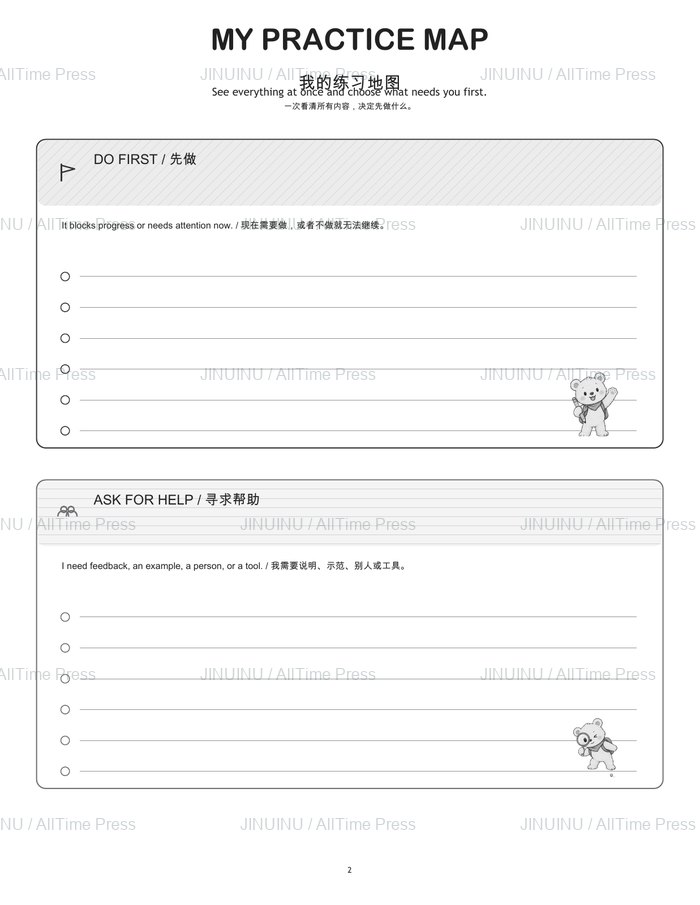
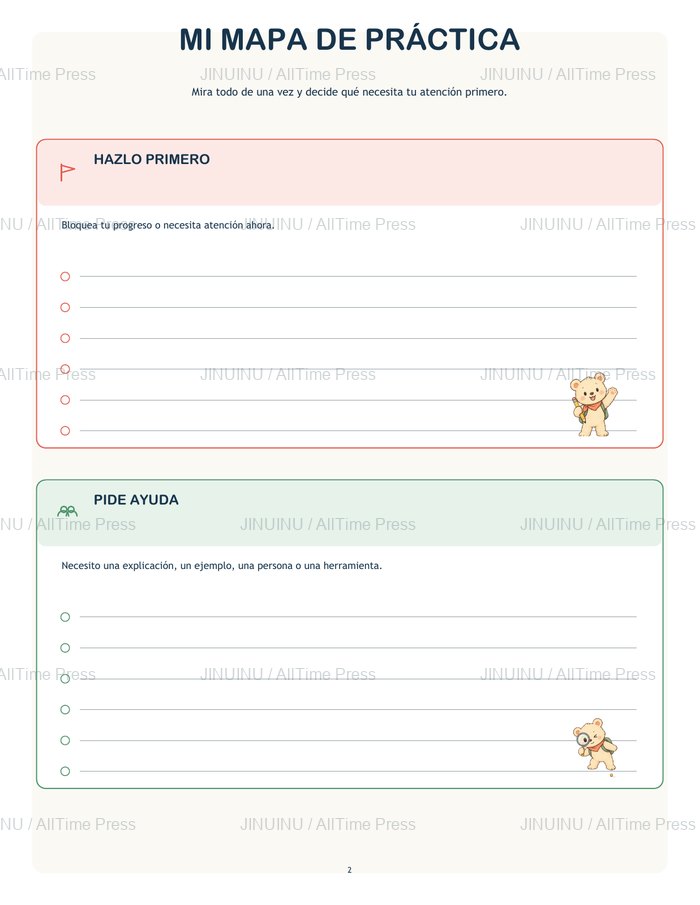
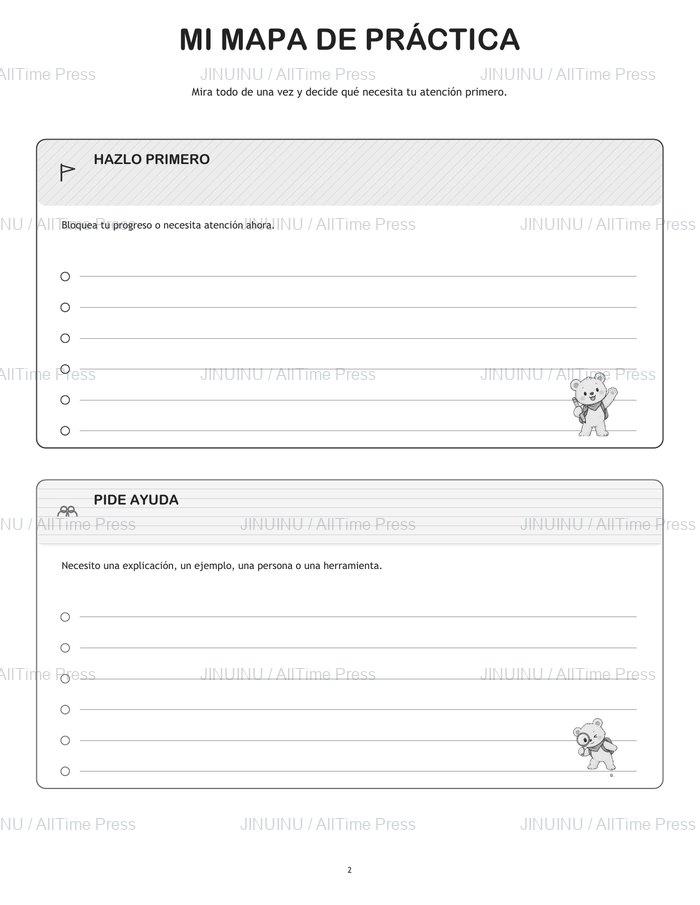
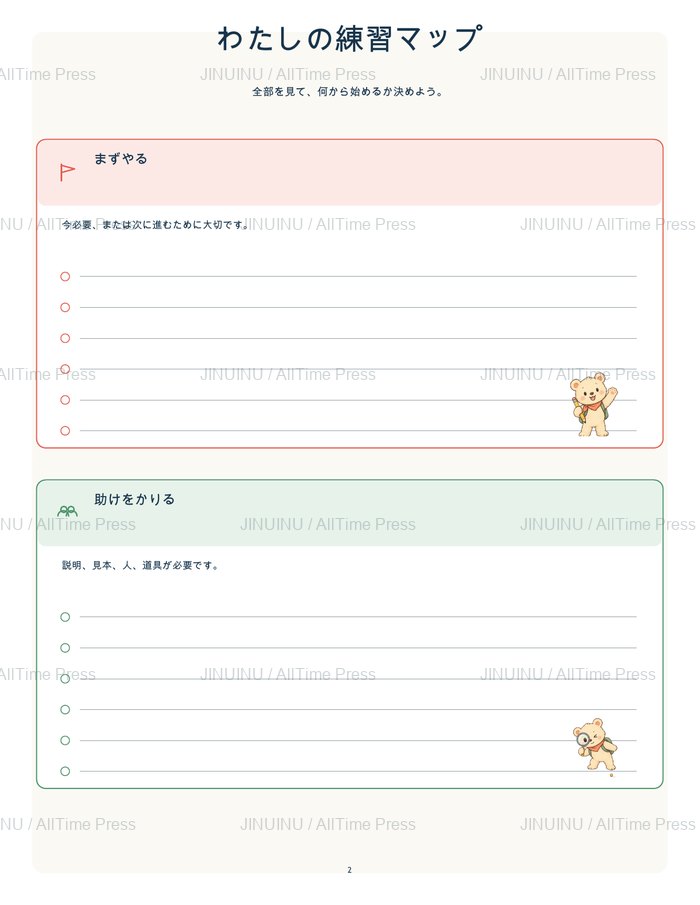
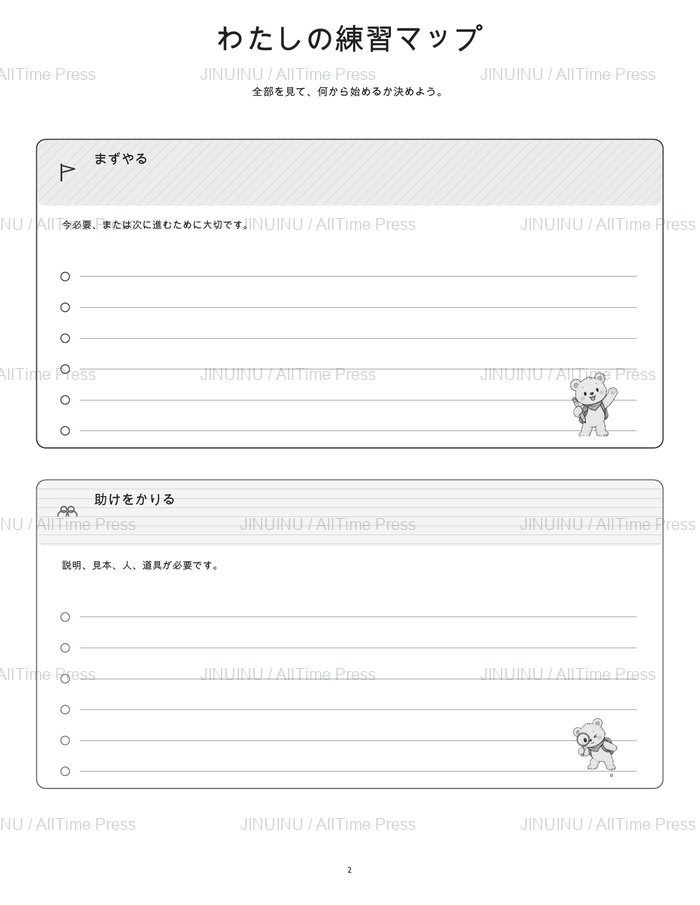
Add current practice needs under Do First, Ask for Help, Build Next, or Save for Later. Keep updating the map throughout the book.
Try the visual and hands-on tools when a practice problem needs a new angle rather than more repetition.
Each entry offers a small optional idea. Use it when helpful and skip it when the day needs a different approach.
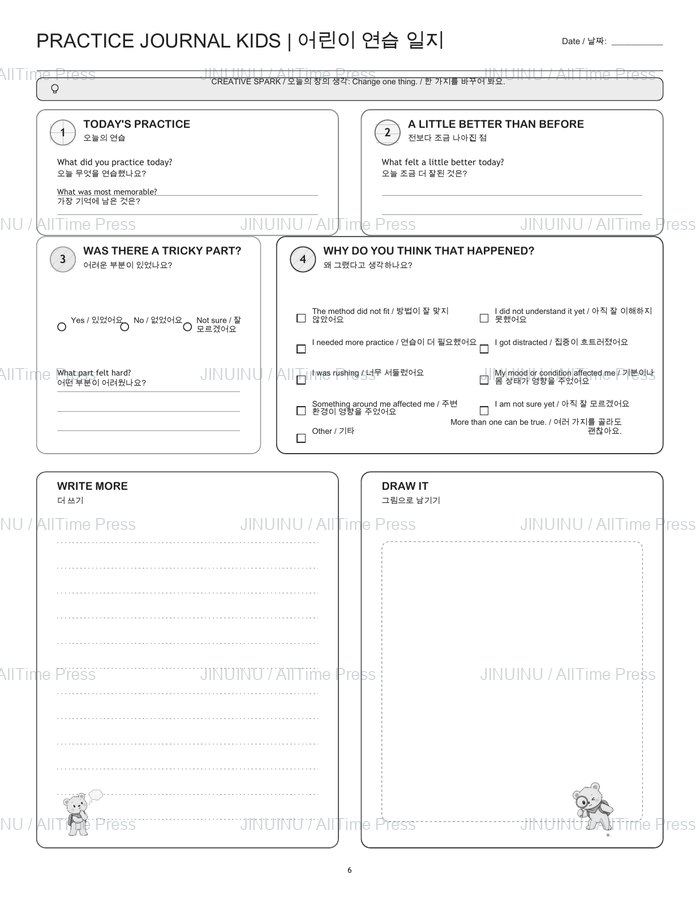
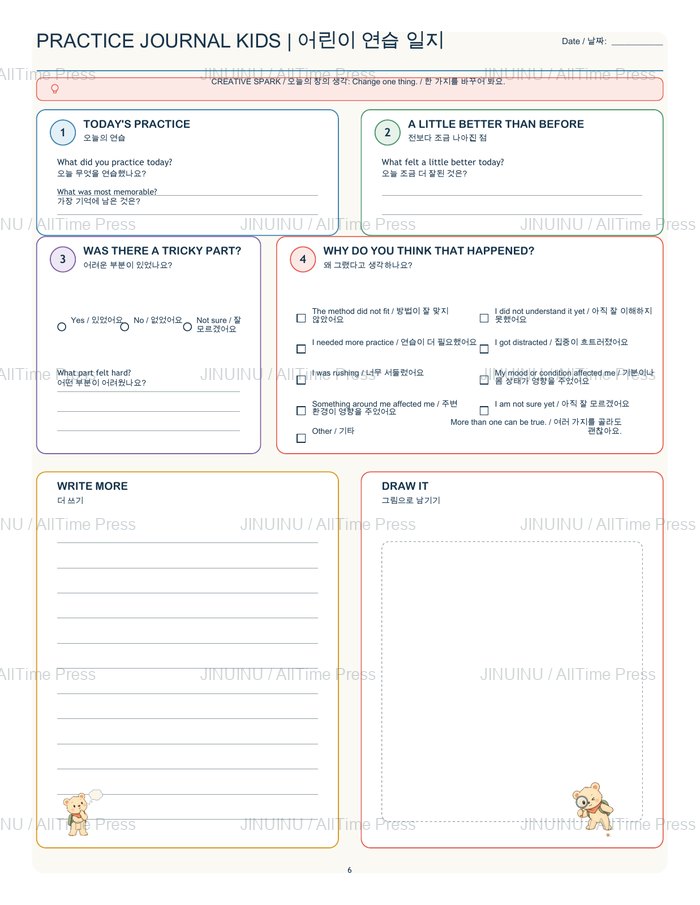
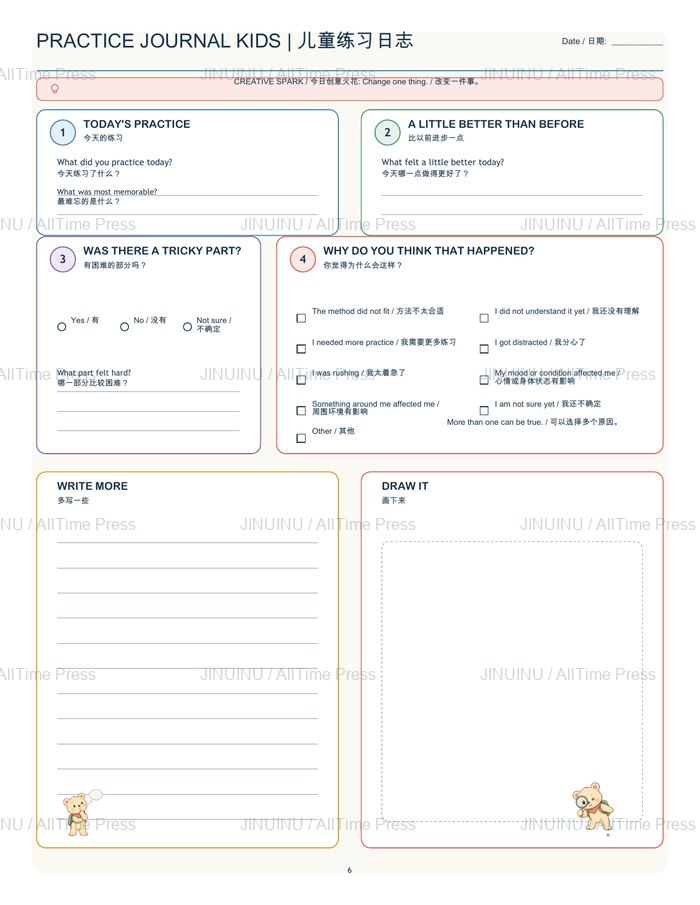
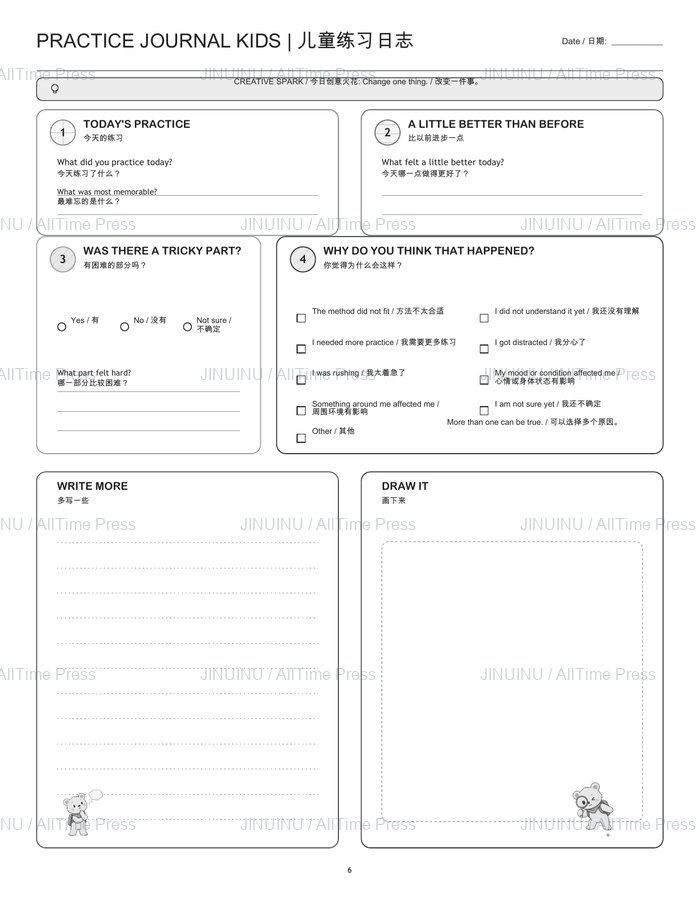
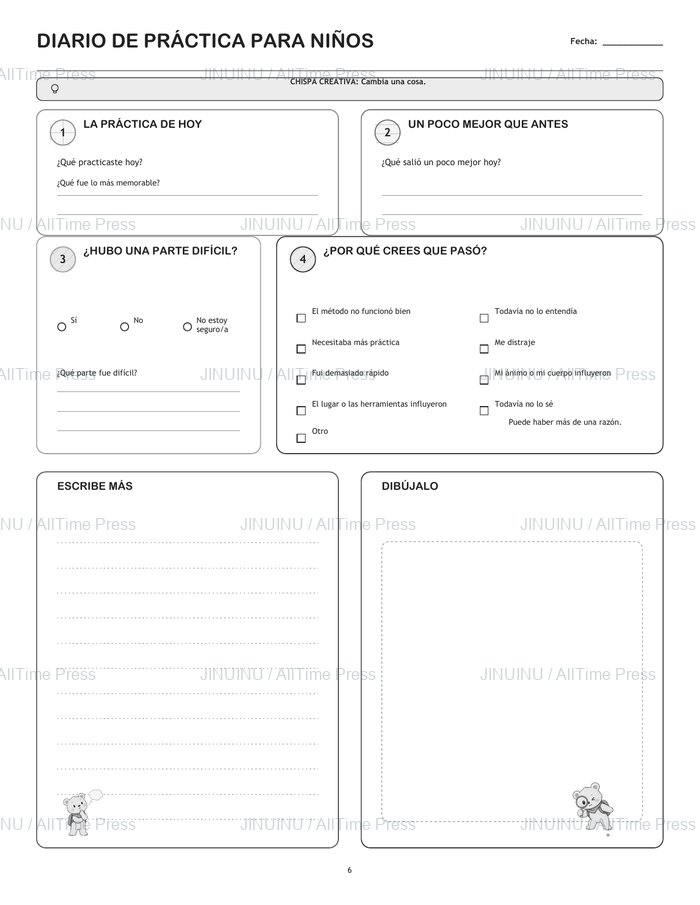
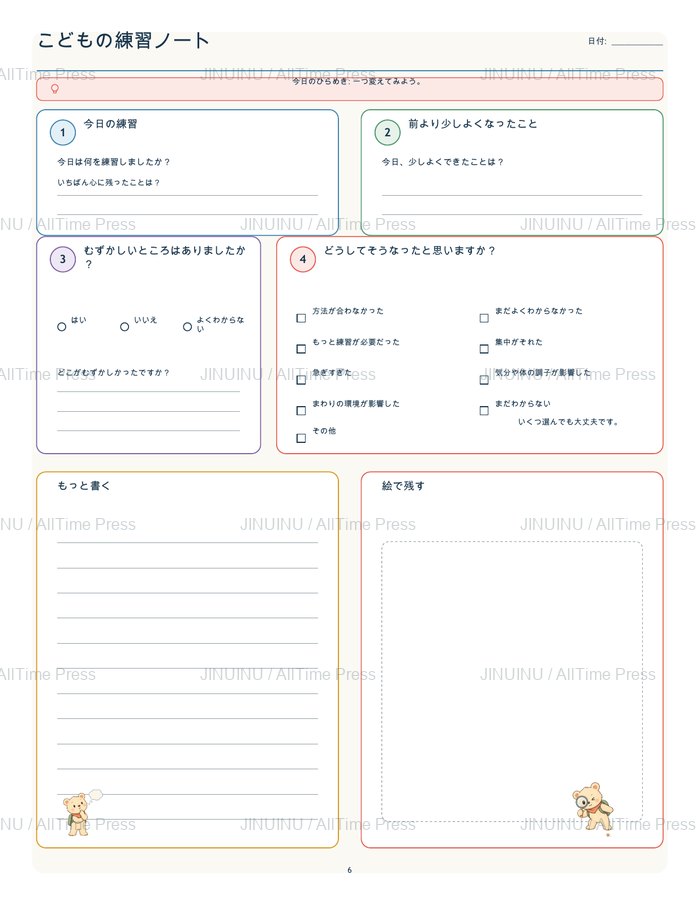
Write what you practiced and the part that was most memorable.
Name one thing that felt a little better than before. Small changes count.
Mark yes, no, or not sure, then describe the part that felt difficult.
Check every reason that may fit, including method, understanding, practice time, rushing, distraction, mood, surroundings, or your own answer.
Use the open spaces to explain, sketch, diagram, or show something that words alone do not capture.
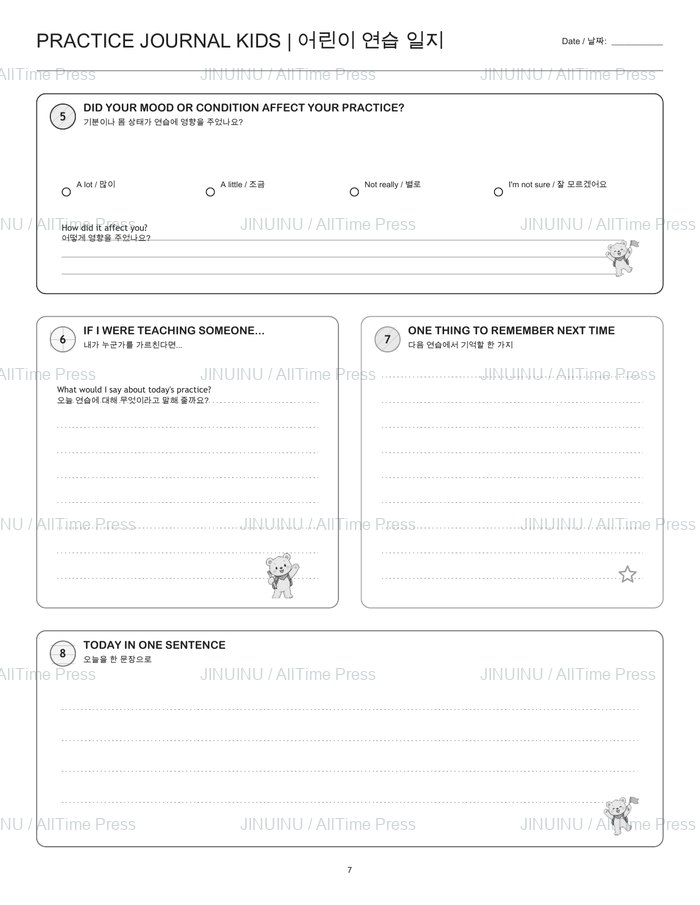
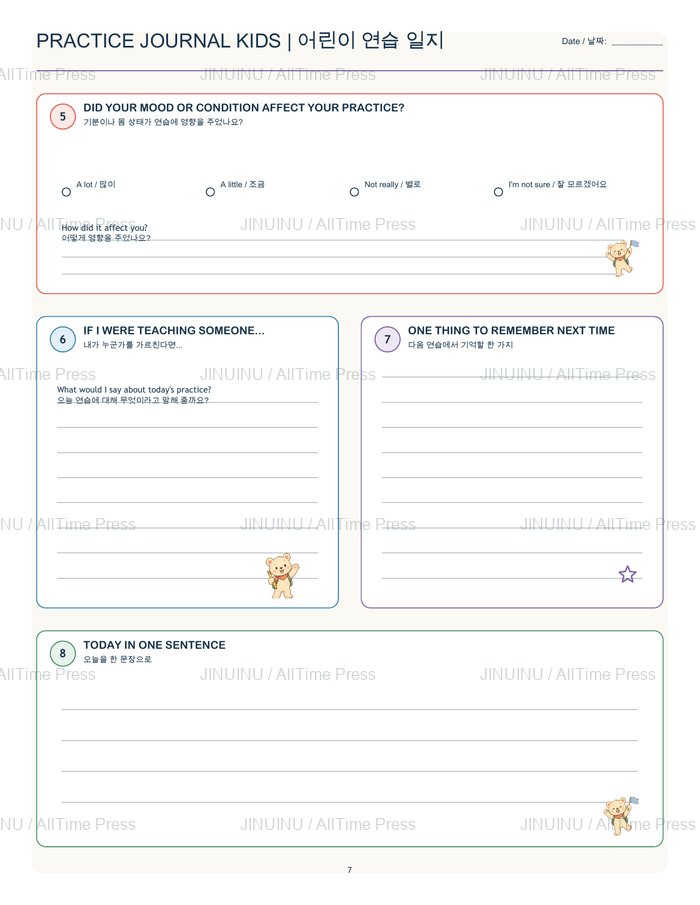
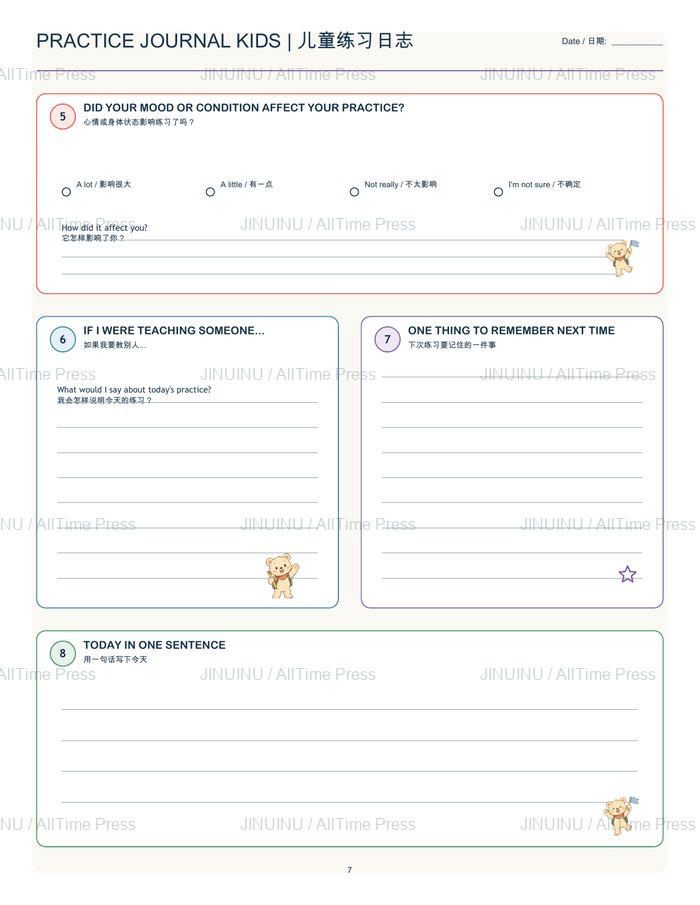
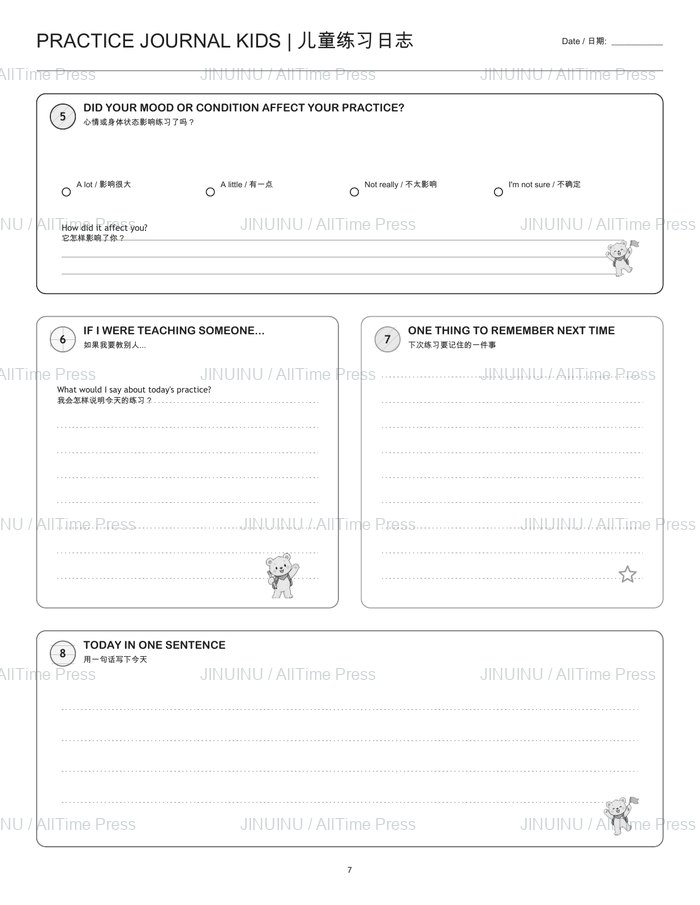
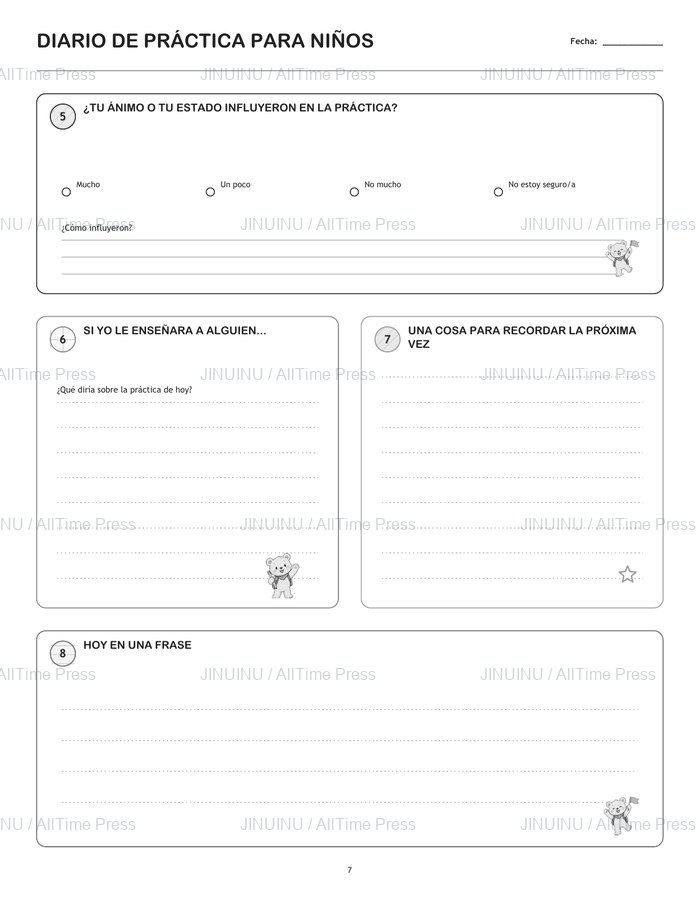
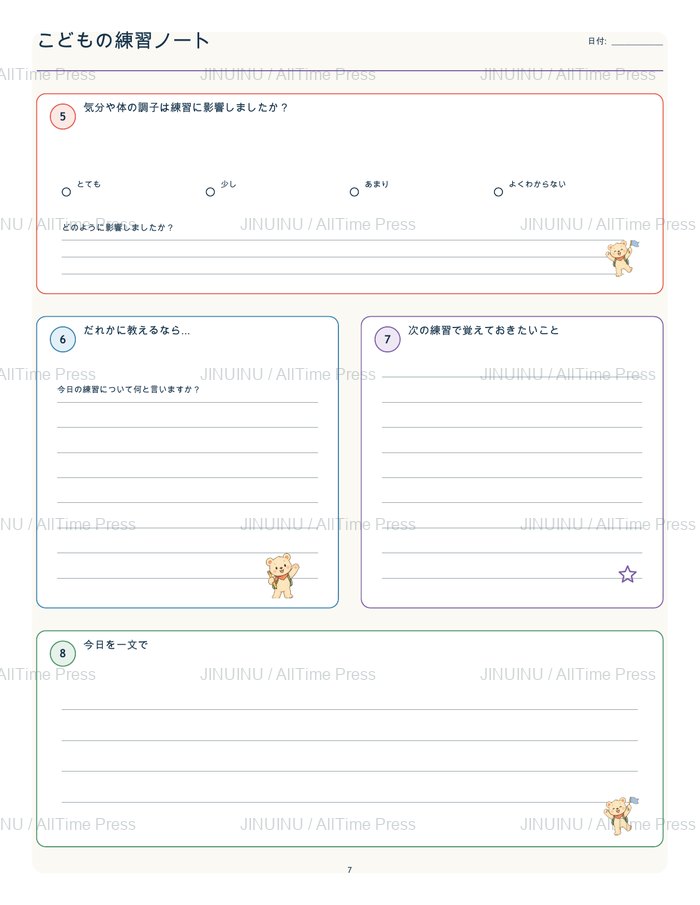
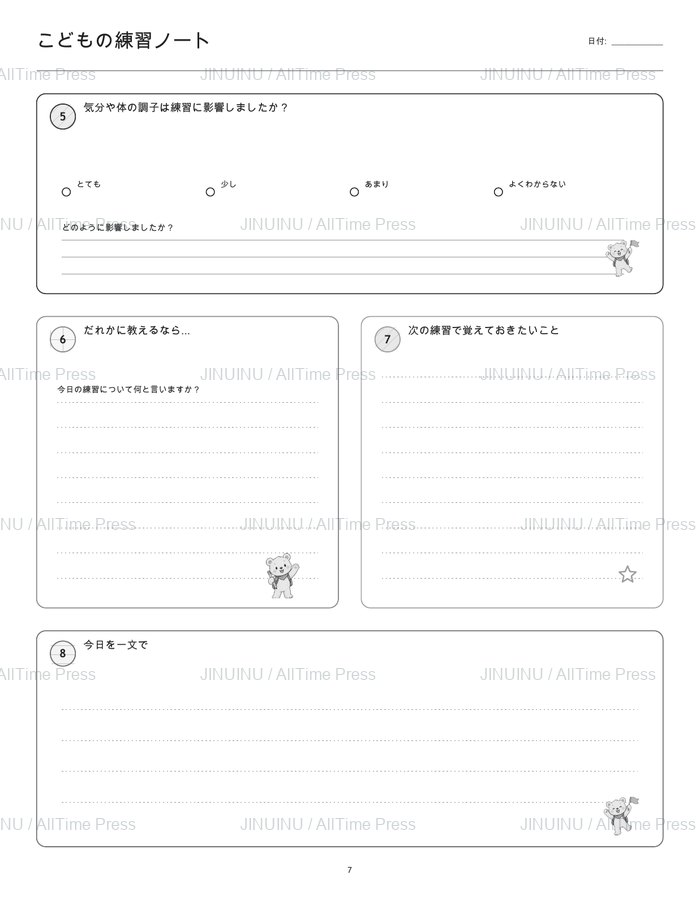
Mark how much mood or physical condition affected practice and write how it showed up.
Imagine explaining today’s practice to someone else. This makes understanding easier to see.
Write one detail, cue, or idea to carry into the next session.
Summarize the day in one clear sentence without trying to make it sound perfect.
At the end, look back at the Practice Map, priority patterns, and growth trail to see what mattered most and how practice changed.
Helpful noteUse the checkboxes as conversation starters, not a score. More than one reason can be true, and a short honest entry is enough.
Color cover · Paperback · 8.5 × 11 in · 128 pages
Open this edition on AmazonColor cover · Paperback · 8.5 × 11 in · 128 pages
Open this edition on AmazonColor cover · Paperback · 8.5 × 11 in · 128 pages
Open this edition on AmazonColor cover · Paperback · 8.5 × 11 in · 128 pages
Open this edition on AmazonColor cover · Paperback · 8.5 × 11 in · 128 pages
Open this edition on AmazonColor cover · Paperback · 8.5 × 11 in · 128 pages
Open this edition on AmazonColor cover · Paperback · 8.5 × 11 in · 128 pages
Open this edition on AmazonColor cover · Paperback · 8.5 × 11 in · 128 pages
Open this edition on AmazonBoth print options have a color cover. The U.S. publisher list prices are $17.99 for a black-and-white interior and $20.99 for a standard-color interior. Amazon may offer an edition for less, so check the current price there before buying. Choose the language and inside-page style carefully. The bilingual, Japanese, and Spanish black-and-white editions have bear covers; their standard-color editions have notebook covers. Compare the exact edition previews below, as typography and page details vary.
Shown USD prices are publisher list prices. Amazon may show a lower current offer; check the exact edition before buying.
The Next Try · Metacognitive practice journal
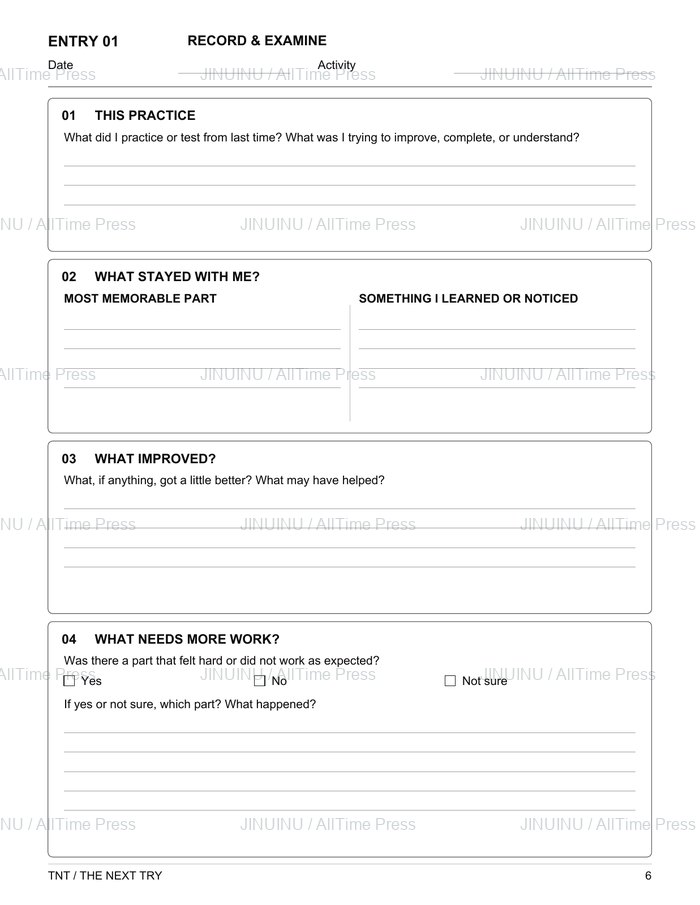
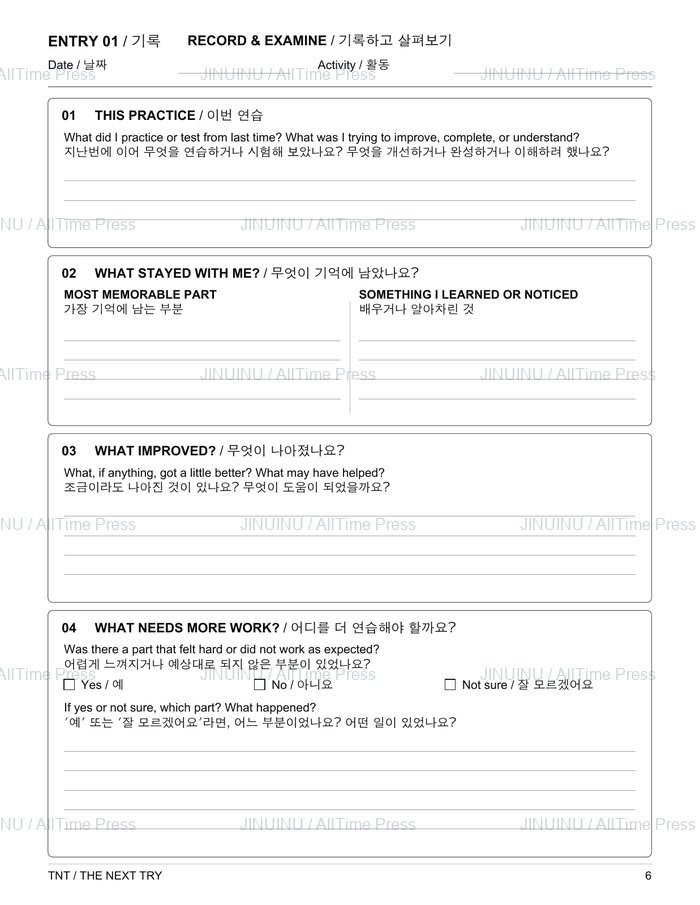
Use one focused two-page entry after music, study, sports, training, work, or creative practice to record what happened, examine the session, understand what mattered, and choose one adjustment to test next.
Turn repetition into learning by noticing what changed, what mattered, and what to test next.
A thoughtful gift for someone who wants a practical place to learn, create, reflect, or practice.
130 black-and-white pages · 60 complete two-page entries · 8.5 × 11 in · matte cover · $20.99. The featured cover and opening previews are from this exact English edition.
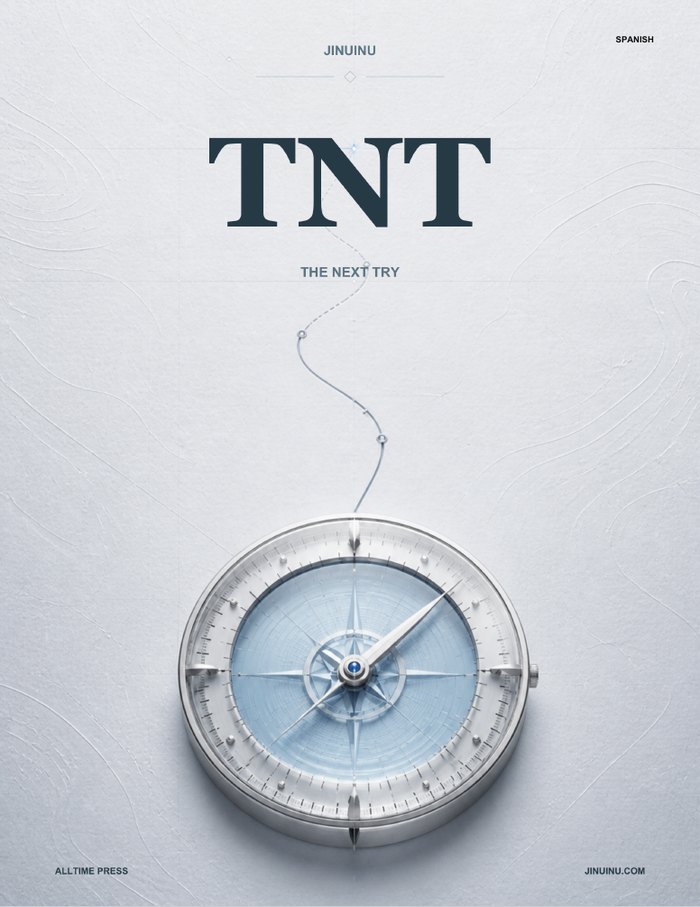
English, English + Korean, English + Simplified Chinese, and Spanish are live in the same 60-entry, 130-page format at a $20.99 publisher list price. Each cover and preview set below matches its language edition.
Featured: English · 60-entry edition · Matte paperback · 8.5 × 11 in · 130 B&W pages. Paid Amazon Associate link.
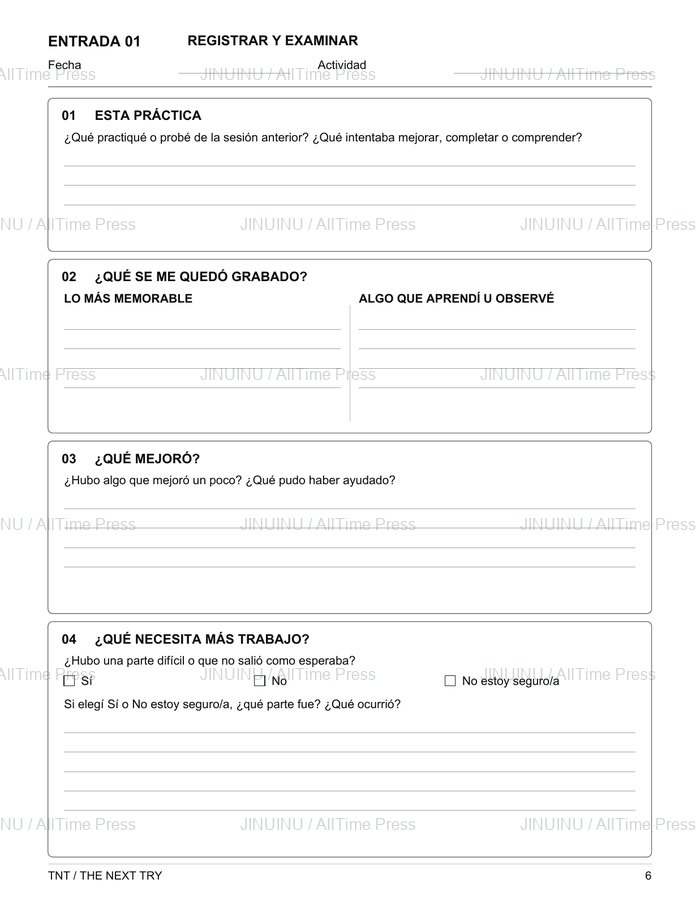
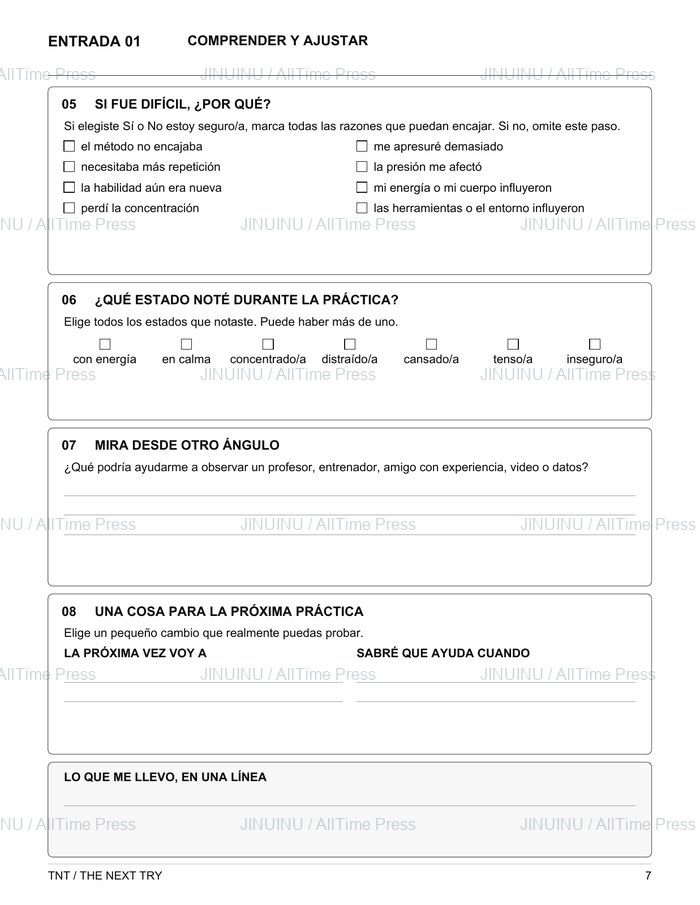
Actual pages from the current 130-page English paperback. Each entry uses the left and right pages together.
Low-resolution previews only. Original layouts and artwork are copyright protected.
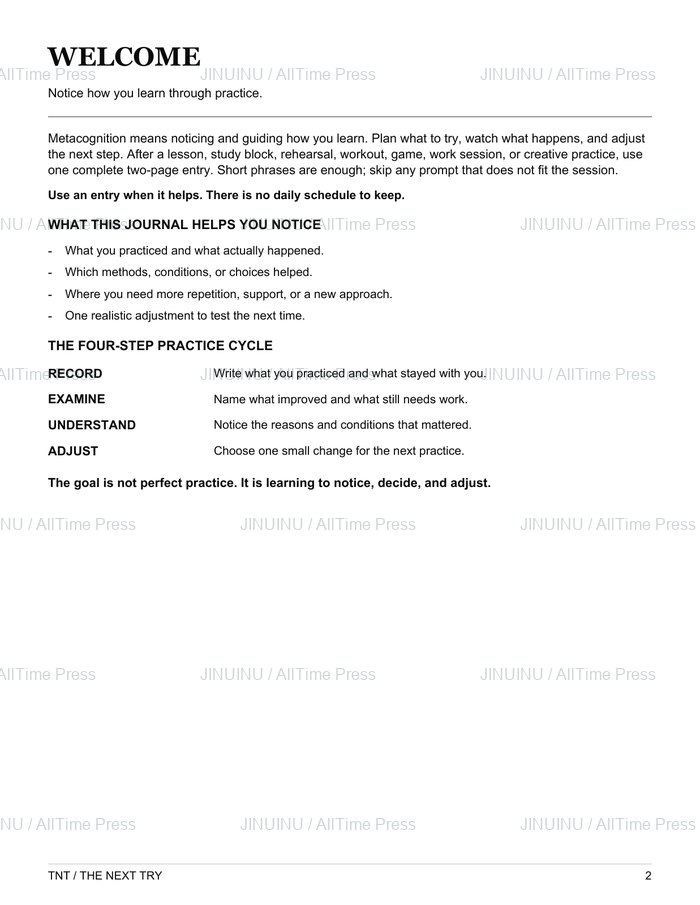
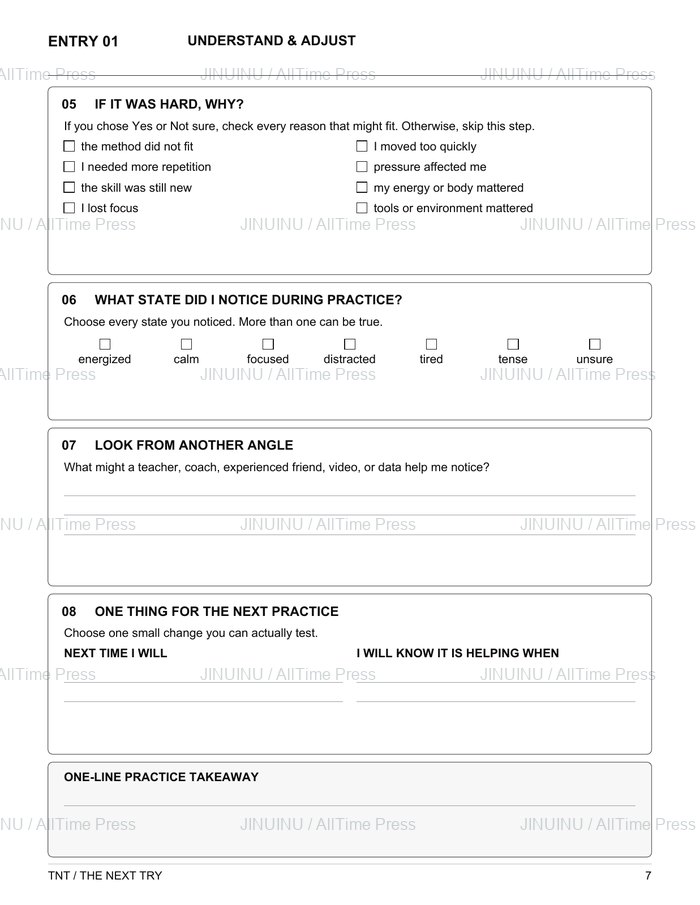
Use one two-page entry after any meaningful practice session. The first page records what you did and examines the session; the second helps you understand what mattered and choose one useful adjustment. The optional Practice Map and final review connect the full journal.
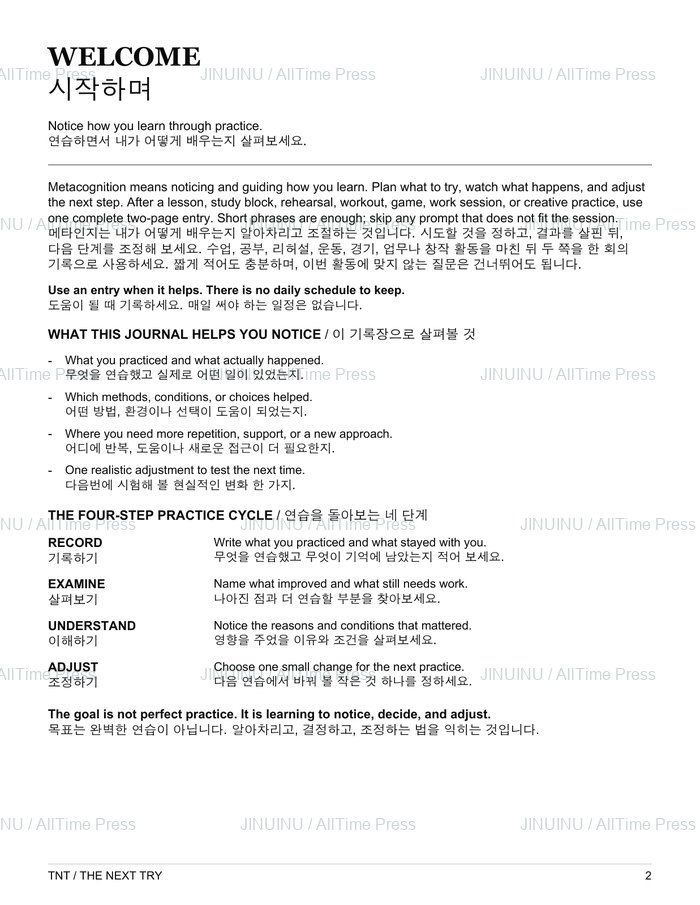
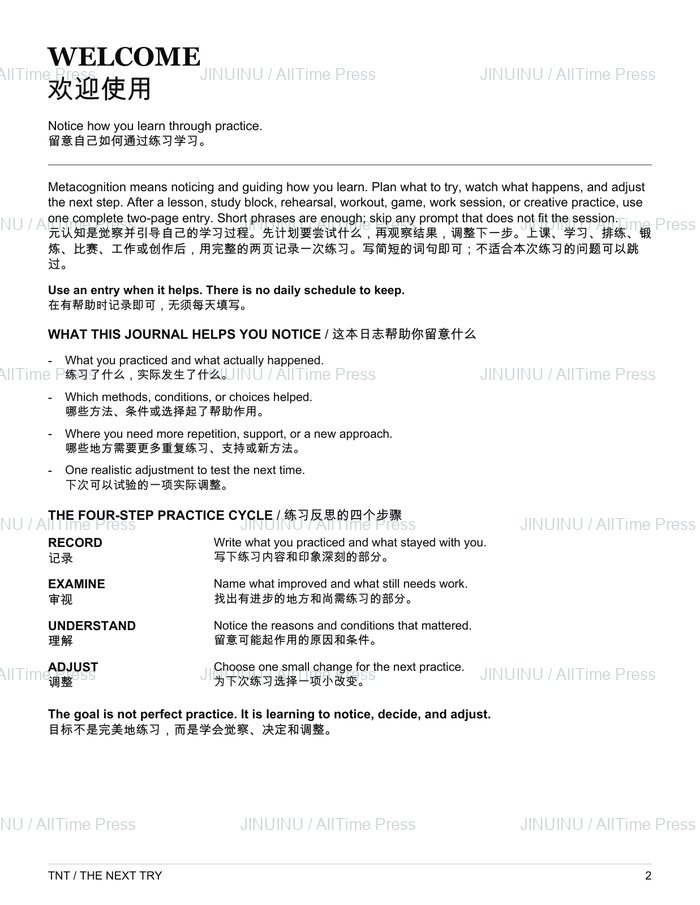
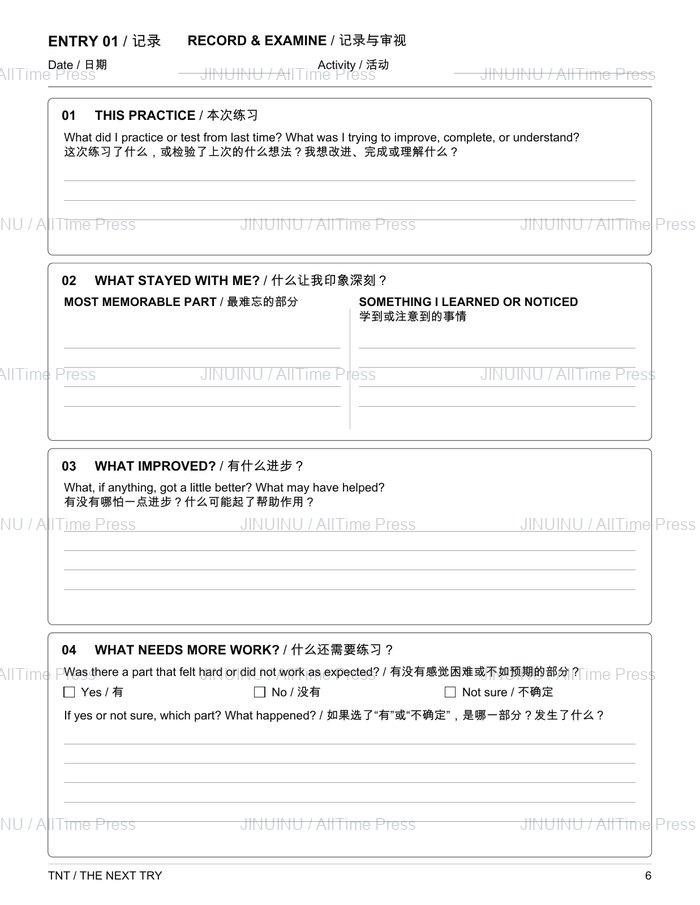
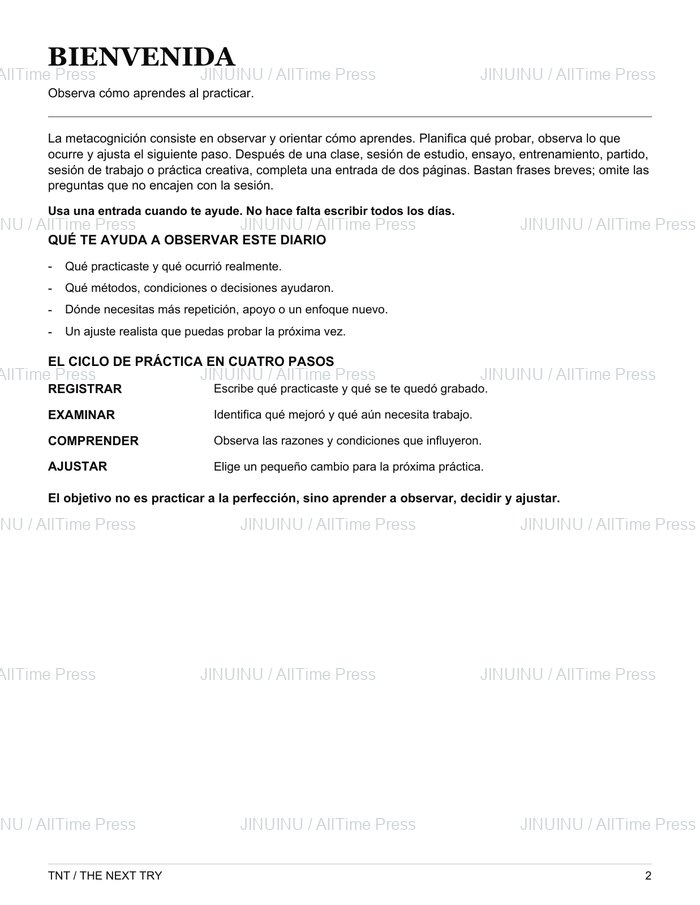
Start with the four-part flow: Record, Examine, Understand, and Adjust. Short phrases are enough, and you may skip a prompt that does not fit the session.
When your list feels crowded, sort it into Do First, Build Next, Get Support, or Set Aside, then choose one focus for this session.
Name the skill, goal, duration, and what you actually did so the entry begins with a clear record.
Write the detail, idea, instruction, or moment that remained most noticeable after the session.
Write what, if anything, got a little better and what may have helped. It is acceptable when nothing clearly improved yet.
Name the part that still feels uncertain, inconsistent, slow, uncomfortable, or incomplete.
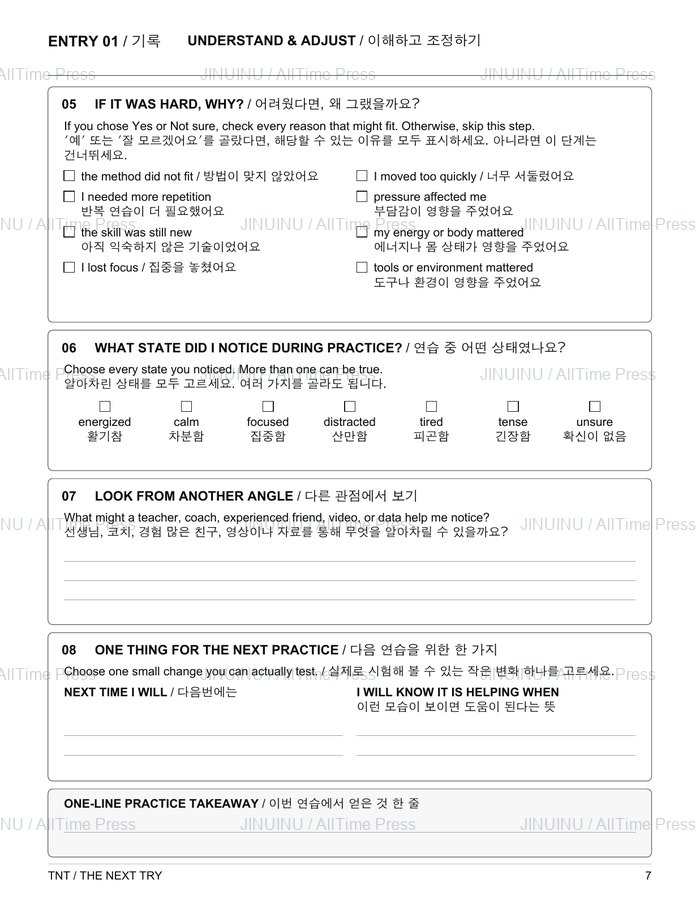
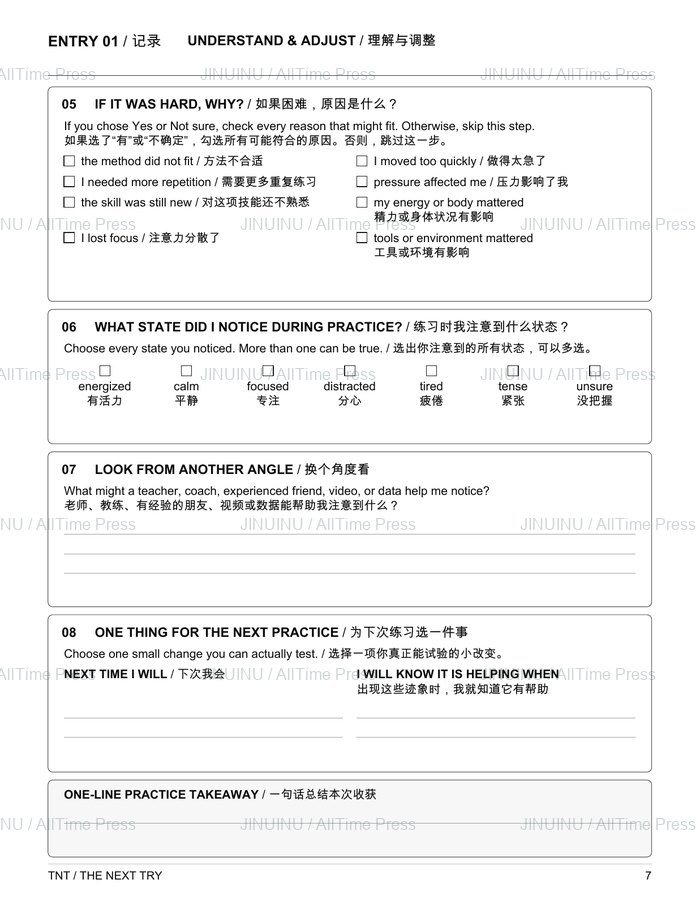
If you marked Yes or Not sure, consider method, repetition, newness, focus, pace, pressure, energy, or environment. Otherwise, skip this step.
Mark every state you noticed during practice, such as energized, calm, focused, distracted, tired, tense, or unsure. More than one can be true.
Imagine the advice a teacher, coach, teammate, or future version of you might give about this practice.
Write one specific cue, adjustment, question, or experiment to test, plus the sign that would show it is helping.
End the entry with one sentence that captures the most useful lesson from the session.
Use the same flow across different skills or one long-term skill. Consistency makes patterns easier to recognize.
Use the at-a-glance pages to mark what you practiced, what changed, and which themes repeated.
After the final review, sort what blocks progress, what matters later, where support would help, and what can be set aside.
Choose the skill or result, method, time and place, and feedback or support you want to test next.
Helpful noteWrite soon after practice while the evidence is fresh. A few precise notes are more useful than filling every line from memory later.
Matte paperback · 8.5 × 11 in · 130 B&W pages
Open this edition on AmazonMatte paperback · 8.5 × 11 in · 130 B&W pages
Open this edition on AmazonMatte paperback · 8.5 × 11 in · 130 B&W pages
Open this edition on AmazonMatte paperback · 8.5 × 11 in · 130 B&W pages
Open this edition on AmazonEach purchase button opens its matching 60-entry, 130-page language edition. Choose the language shown beside the cover and check the current Amazon price before buying.
Verified edition prices are shown in USD. Amazon may change price and availability. See the detailed protected interior pages and complete use guide at JINUINU.com.
Clear thinking and decisions
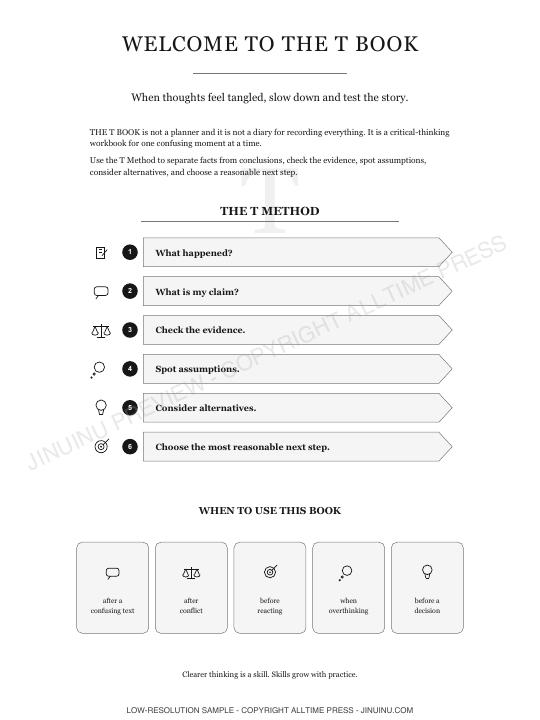
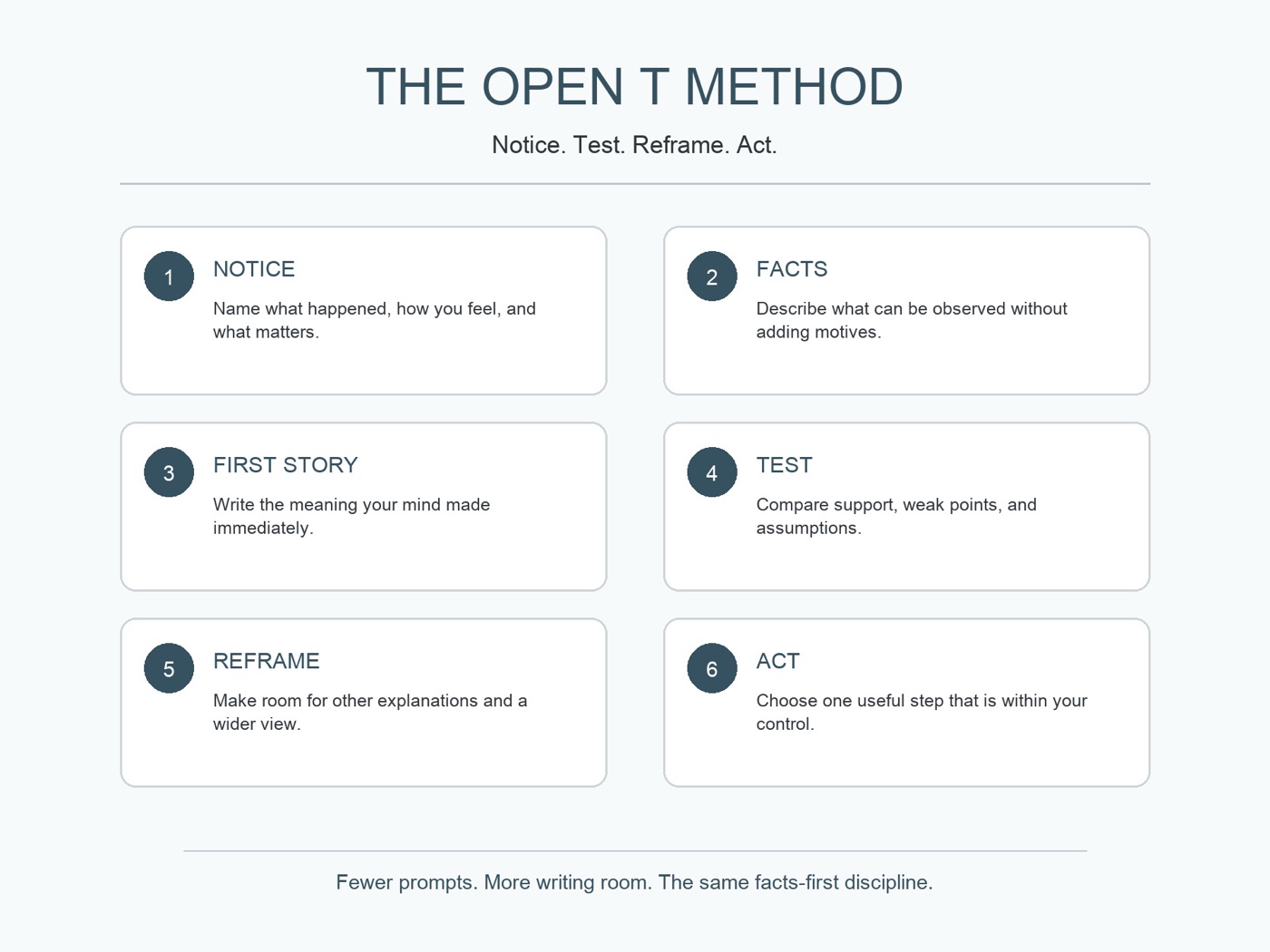
Separate facts from the first story, test evidence and assumptions, consider other explanations, and act with intention.
Slow down a tangled thought before it becomes a rushed conclusion or reaction.
A thoughtful gift for someone who wants a practical place to learn, create, reflect, or practice.
7.5 × 10 in · 126 black-and-white pages · 60 two-page entries · glossy cover. English, English + Korean, English + Simplified Chinese, and Spanish are available at $20.99 each.
Featured: English · Latest edition · Glossy paperback · 7.5 × 10 in · 126 B&W pages. Paid Amazon Associate link.
Low-resolution previews only. Original layouts and artwork are copyright protected.
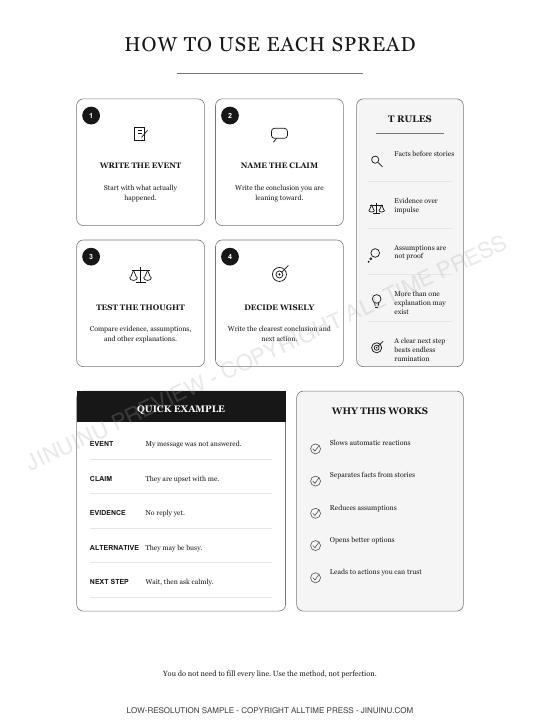
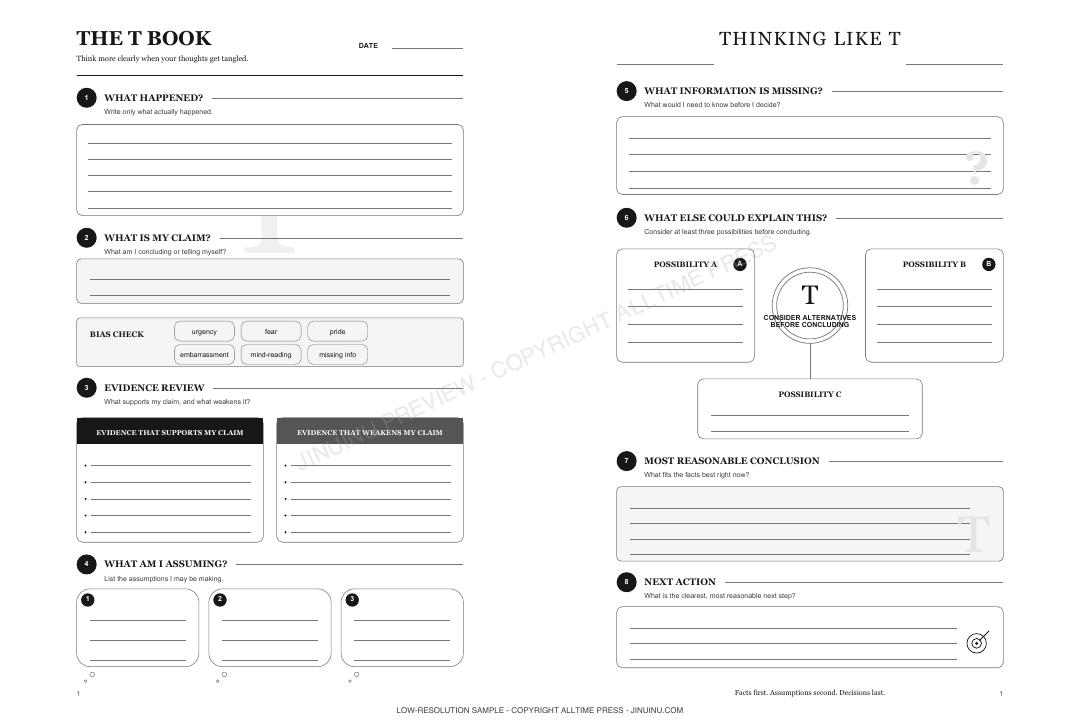
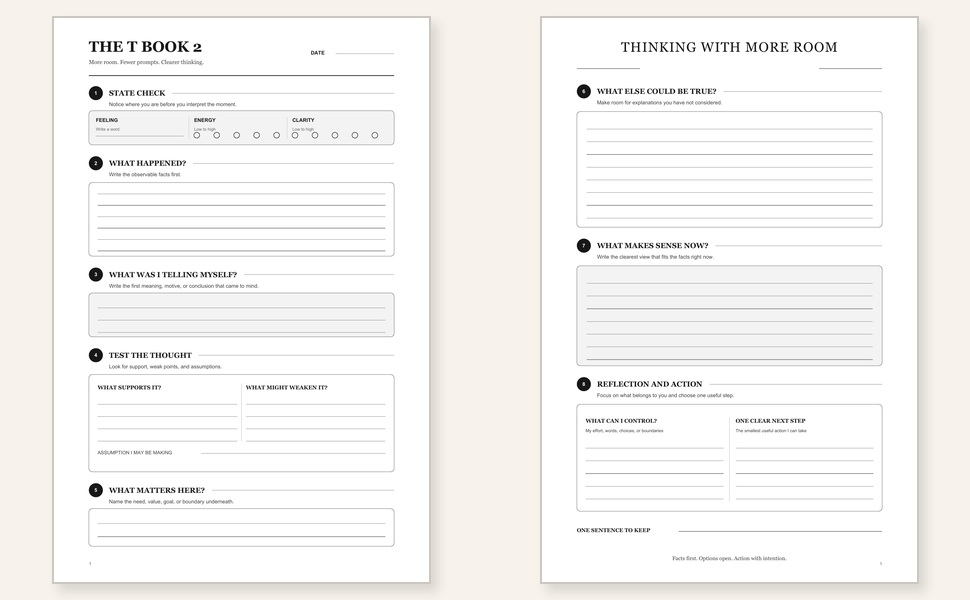
Open one spread when a thought feels tangled, after a conflict, before reacting, or when a decision deserves a slower look. Follow the order from facts to action.
Write only the observable event. Leave motives and guesses out of this first box.
Write the conclusion or story your mind formed about the event.
List what supports the claim and what weakens it. Include facts on both sides.
Name unproven ideas, including urgency, fear, pride, embarrassment, mind-reading, or missing information.
Write what you would need to know before making a confident decision.
Generate at least three possible explanations, including ones that are less personal or less extreme.
Choose the view that fits the known facts best right now. It can stay provisional.
Write one clear, useful step that is within your control.
Helpful noteUse the method, not perfection. A short factual entry is more useful than filling every line with guesses.
The featured cover and protected samples show the latest English paperback. Bilingual editions pair English with Korean or Simplified Chinese; the Spanish edition is in Spanish. Choose a latest paperback for the 60-entry layout.
Verified edition prices are shown in USD. Amazon may change price and availability. See the detailed protected interior pages and complete use guide at JINUINU.com.
Independent thinking practice
Keep the same facts-first reasoning habits with fewer instructions and more room to write your own analysis.
Keep the T method while taking more ownership of the analysis and the page.
A thoughtful gift for someone who wants a practical place to learn, create, reflect, or practice.
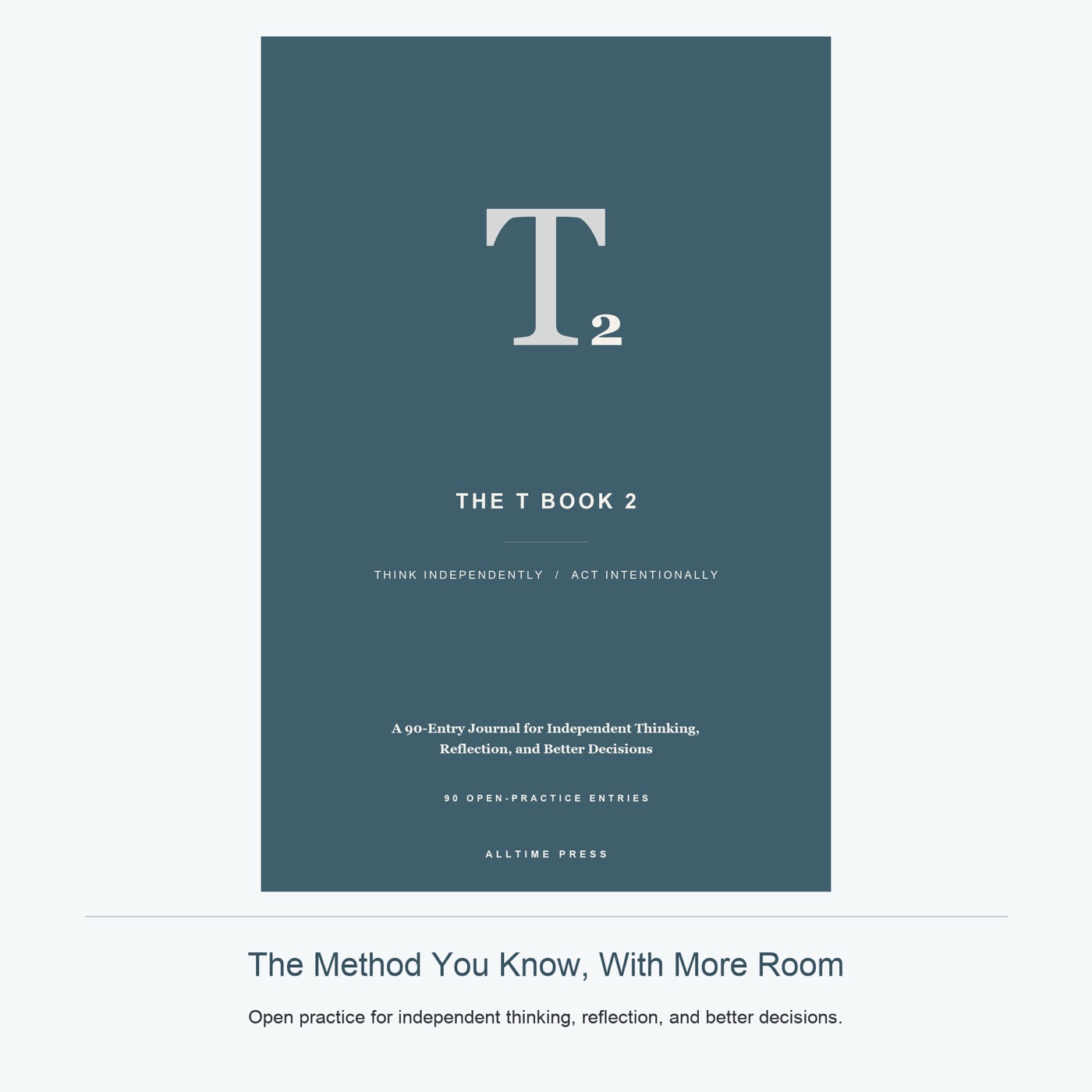
6 × 9 in · 184 black-and-white pages · 90 two-page entries · matte paperback. English and Japanese are available at $19.99 each.
A separate 8.5 × 11 in, 184-page layout has passed file QA but is not an Amazon edition yet.
Featured: English · Matte paperback · 6 × 9 in · 184 B&W pages. Paid Amazon Associate link.
The writing spread is from pages 4–5 of the current English paperback. Use both pages for one entry; this volume contains 90 entries.
Low-resolution previews only. Original layouts and artwork are copyright protected.
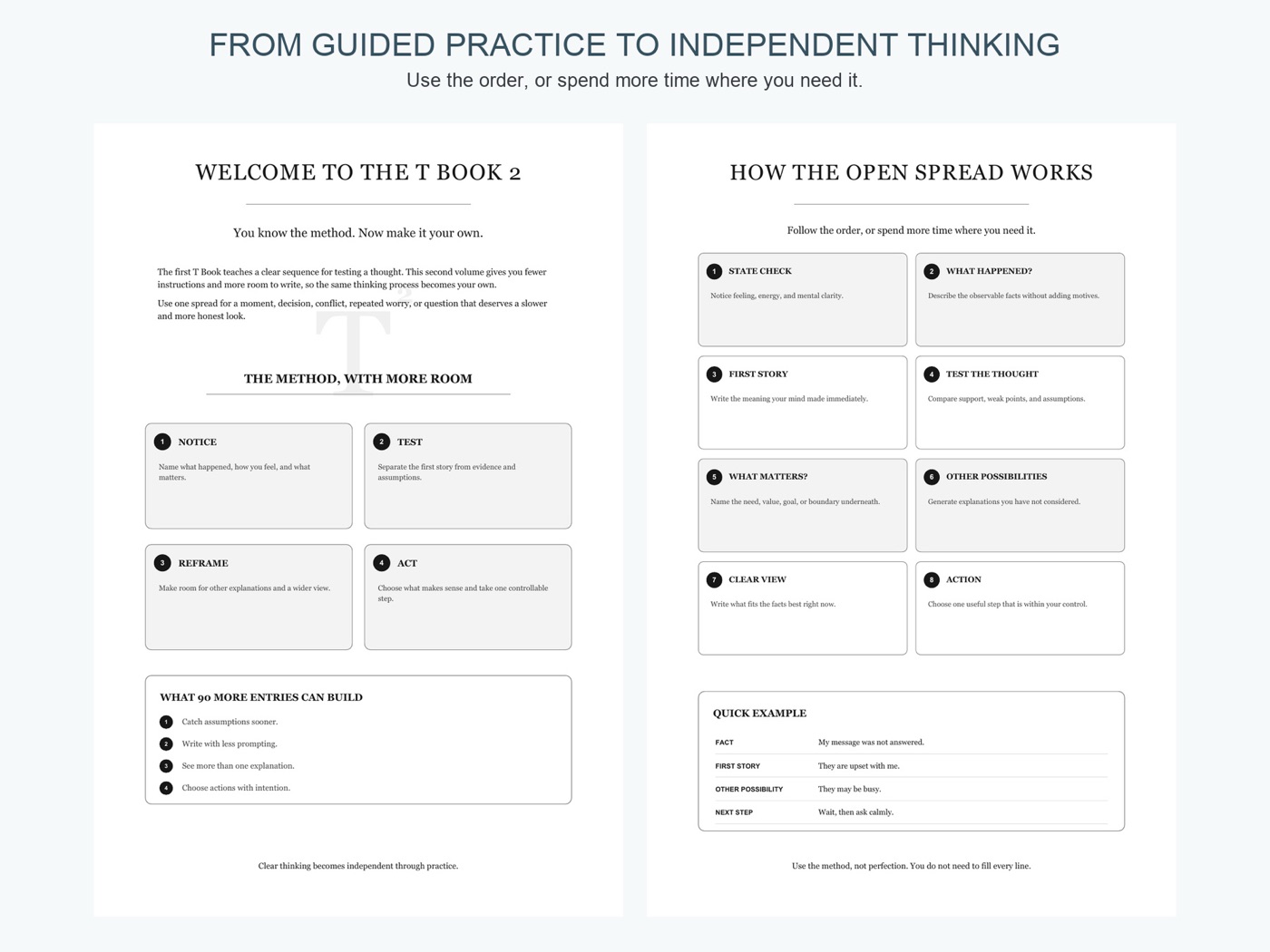
This volume keeps the facts-first discipline of The T Book but gives you more room and fewer instructions. Follow the order or spend longer on the part you need.
Briefly notice feeling, energy, and mental clarity before you begin.
Describe what could be observed without adding motives or conclusions.
Write the immediate meaning your mind gave the event.
Compare support, weak points, evidence, and assumptions.
Name the need, value, goal, or boundary underneath your reaction.
Make room for explanations or perspectives you have not considered.
Write the conclusion that fits the available facts best now.
Choose one useful next step that is inside your control.
Helpful noteThe T Book 2 can follow the first volume or stand alone. Leave sections blank when one area needs more space than the others.
Verified edition prices are shown in USD. Amazon may change price and availability. See the detailed protected interior pages and complete use guide at JINUINU.com.
Creative growth
Two ways to turn pictures, questions, and everyday moments into words.
Beginning writers
A colorful first diary with a large drawing area, weather choices, a draw-your-own mood face, and primary handwriting guides.
Turn one picture and a few words into a first diary routine that can grow with the writer.
A thoughtful gift for someone who wants a practical place to learn, create, reflect, or practice.
8.25 × 11 in · 80 full-color pages. This is already an A4-class drawing and writing area.
A separate 8.27 × 11.69 in, 80-page layout has passed file QA but is not an Amazon edition yet.
Featured: English · Color · Paperback · 8.25 × 11 in · 80 pages. Paid Amazon Associate link.
Low-resolution previews only. Original layouts and artwork are copyright protected.
A child can complete the page from top to bottom, or start with the picture and add words afterward. An adult may read the labels aloud without supplying the child’s answer.
Write the child’s name and look at the feeling characters together before the first entry.
Write the date in the roomy box. Any familiar date style is fine.
Circle the picture that matches the day: sunny, cloudy, rainy, windy, hot, cold, or another listed choice.
Draw eyes and a mouth on the blank character, then write one feeling word on the line.
Draw the event, idea, person, place, or feeling first. Details can help the words come later.
Use the solid and dotted guides to write a label, one sentence, or several sentences at the child’s current level.
Helpful noteSpelling and sentence length do not need to be perfect. Let the picture carry part of the story while writing confidence grows.
Verified edition prices are shown in USD. Amazon may change price and availability. See the detailed protected interior pages and complete use guide at JINUINU.com.
Draw, write, and wonder
A regular-ruled journal for making an idea visible, then developing it through questions, observations, stories, and reflection.
Give an unfinished idea a place to become visible before it disappears.
A thoughtful gift for someone who wants a practical place to learn, create, reflect, or practice.
80-page paperback · 6 × 9 in · black-and-white interior on white paper · matte cover.
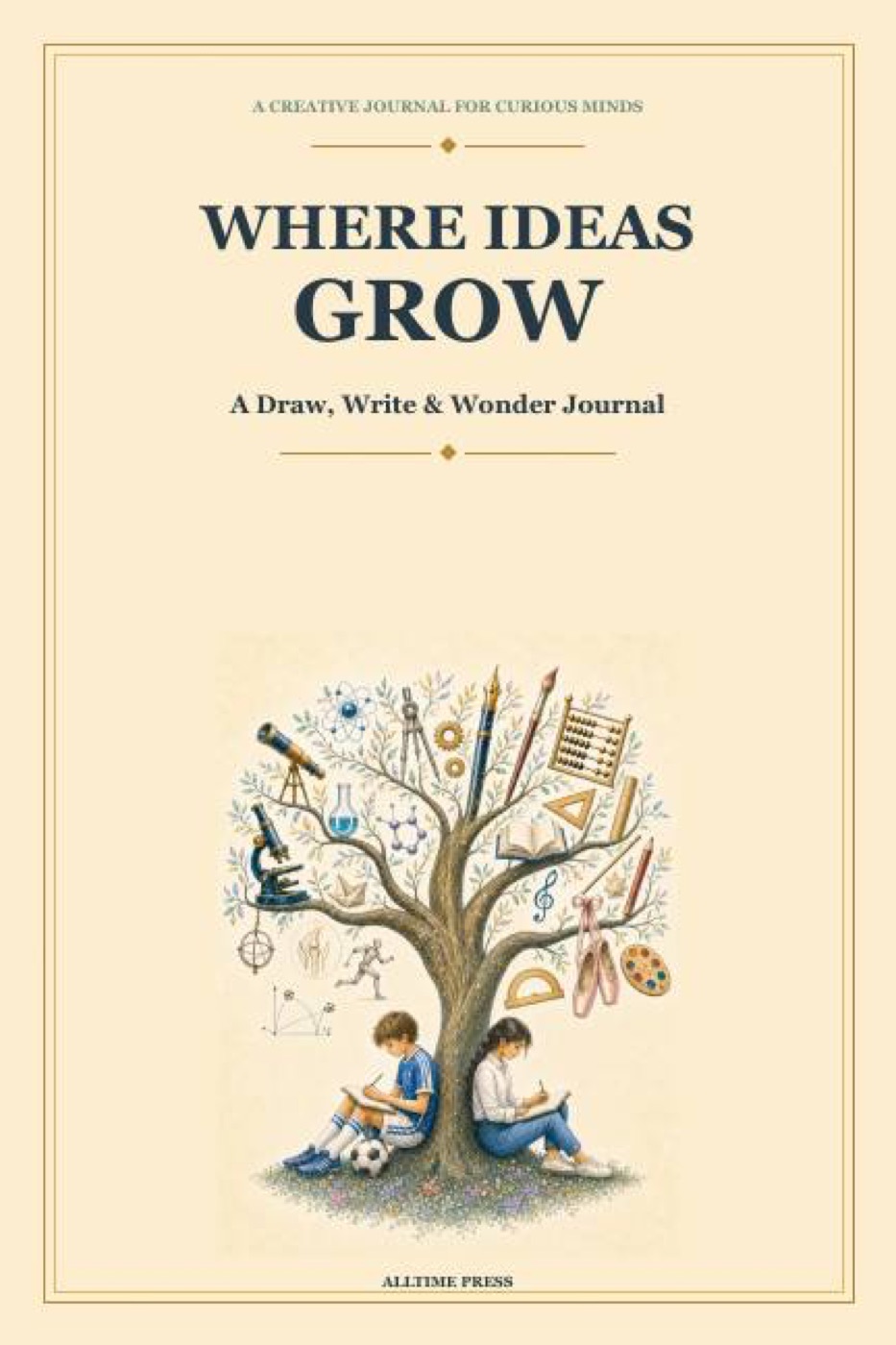
Featured: Where Ideas Grow · English · Paperback · 6 × 9 in · 80 pages. Paid Amazon Associate link.
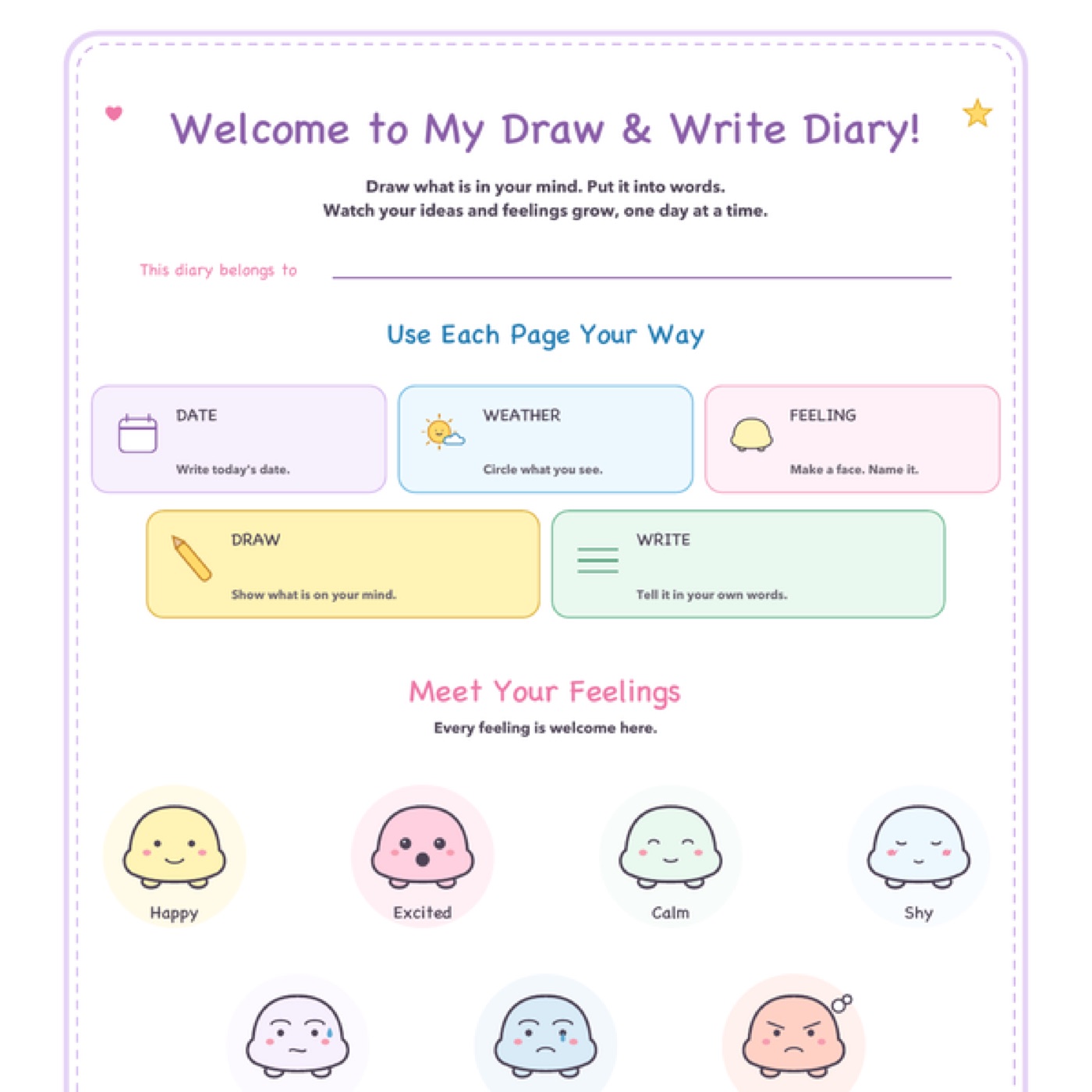
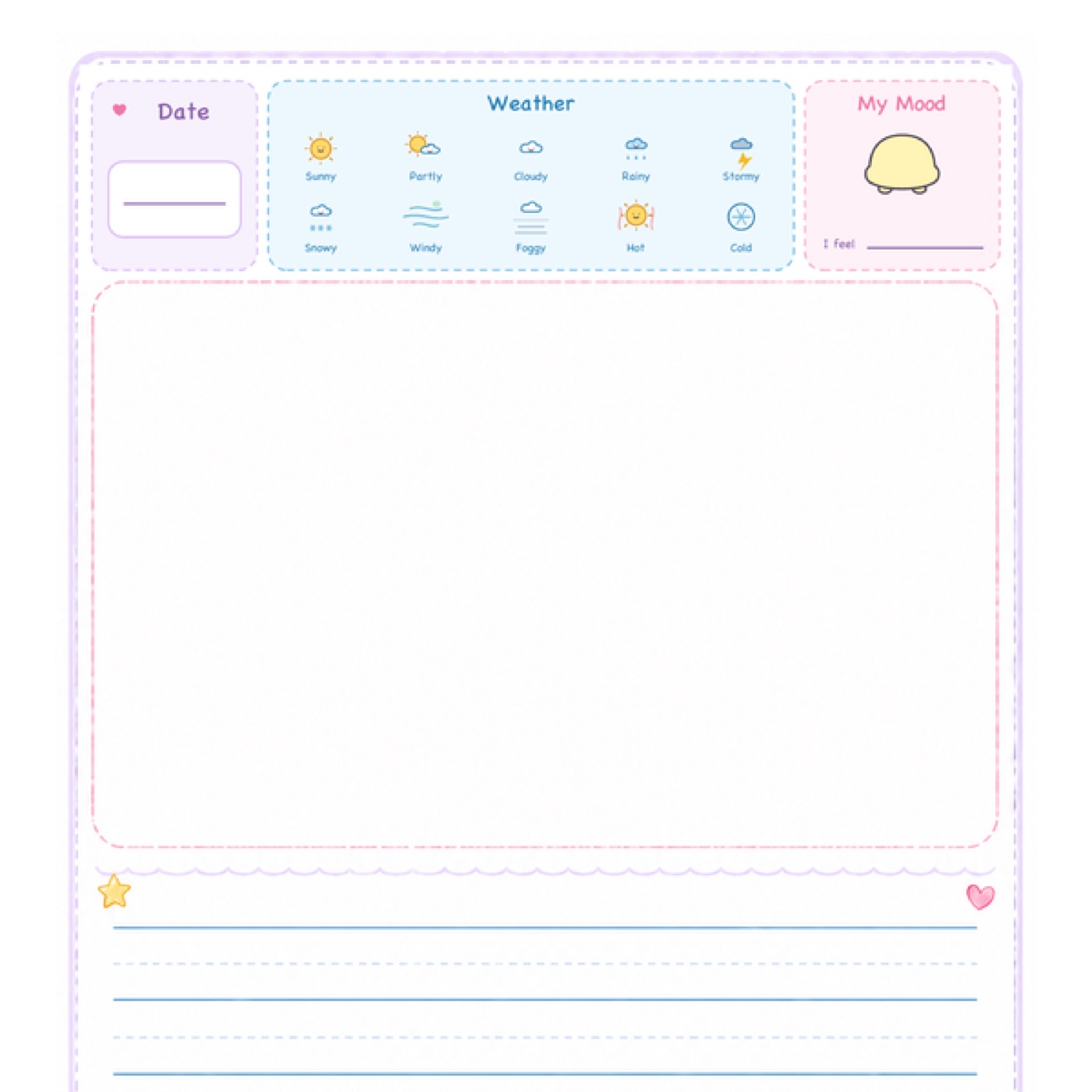
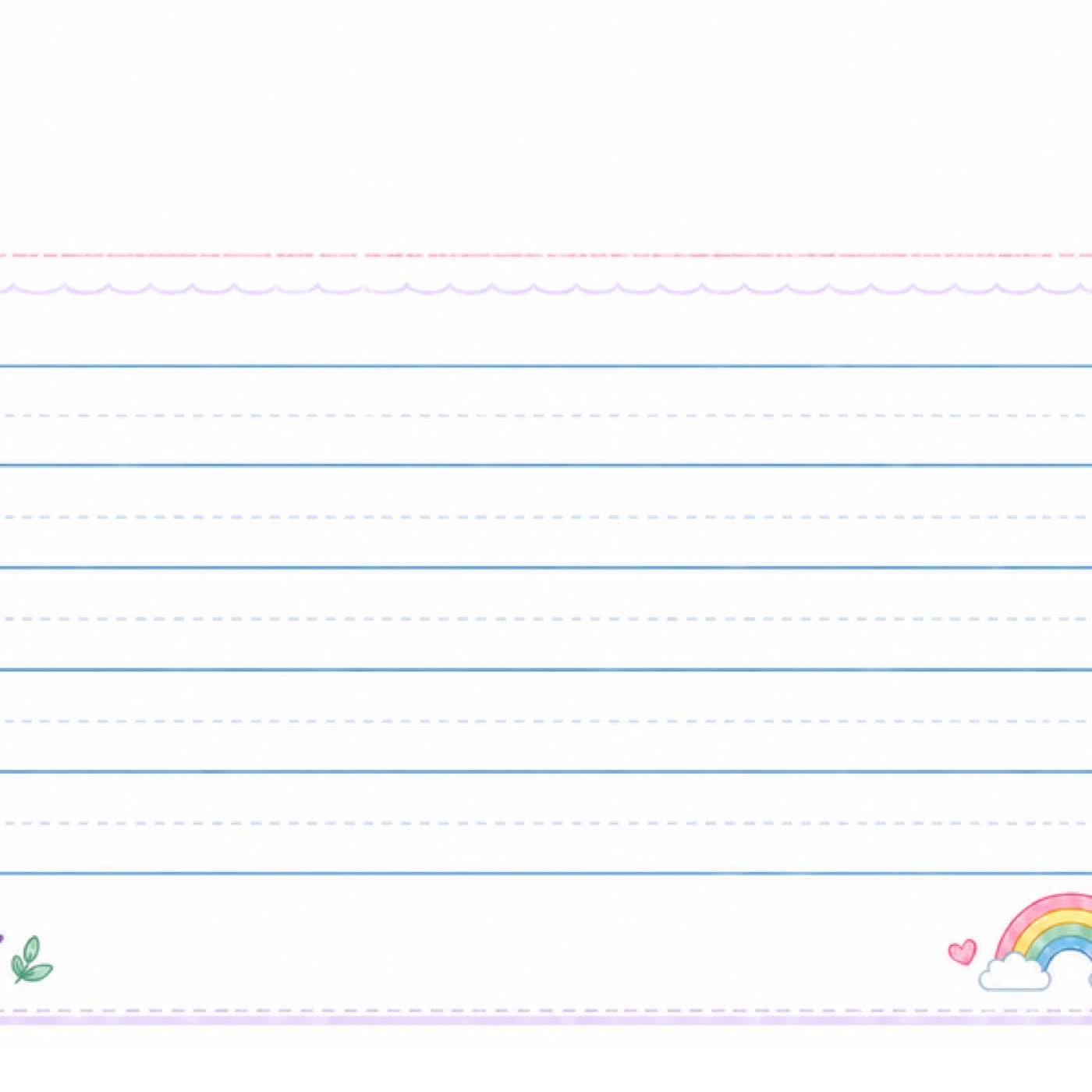
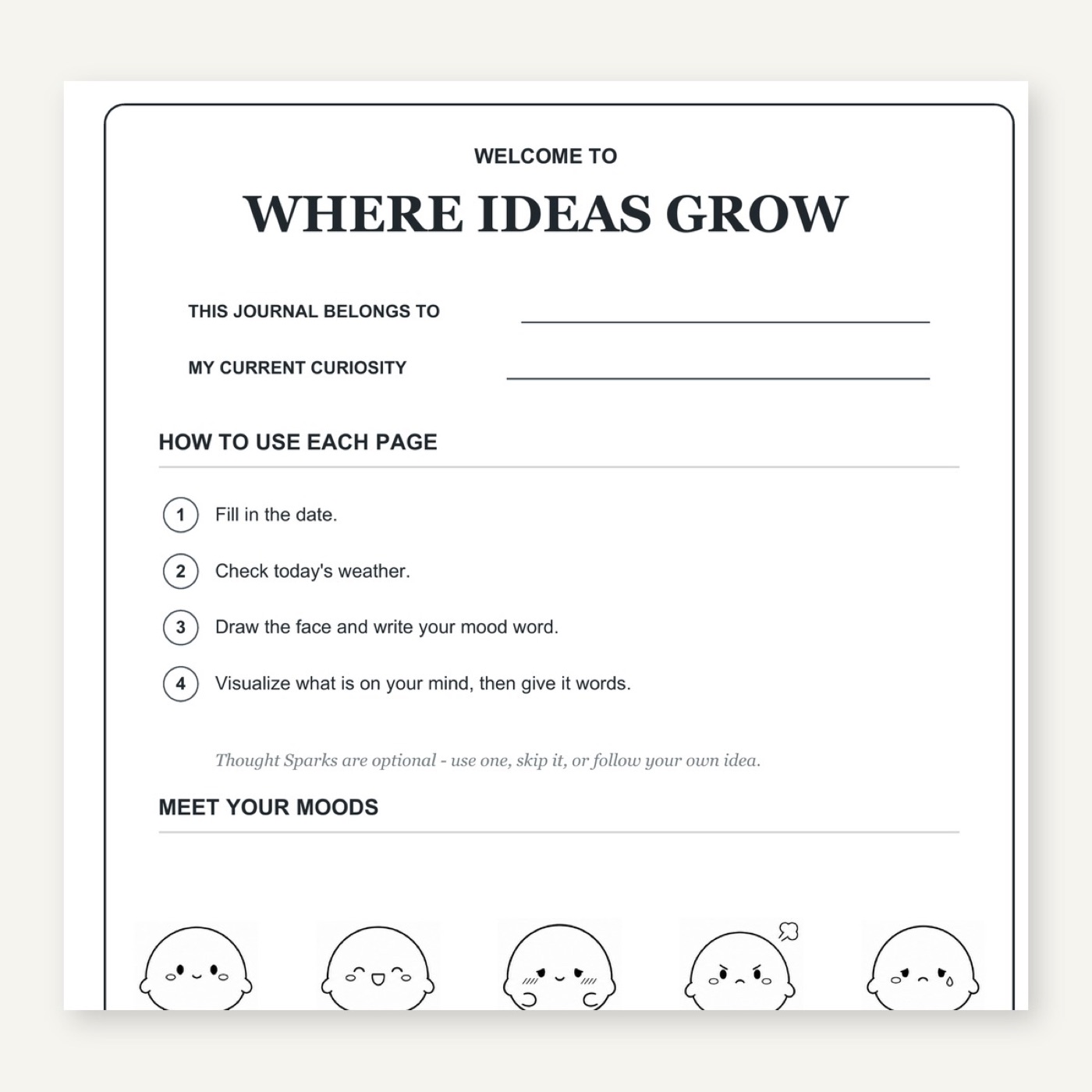
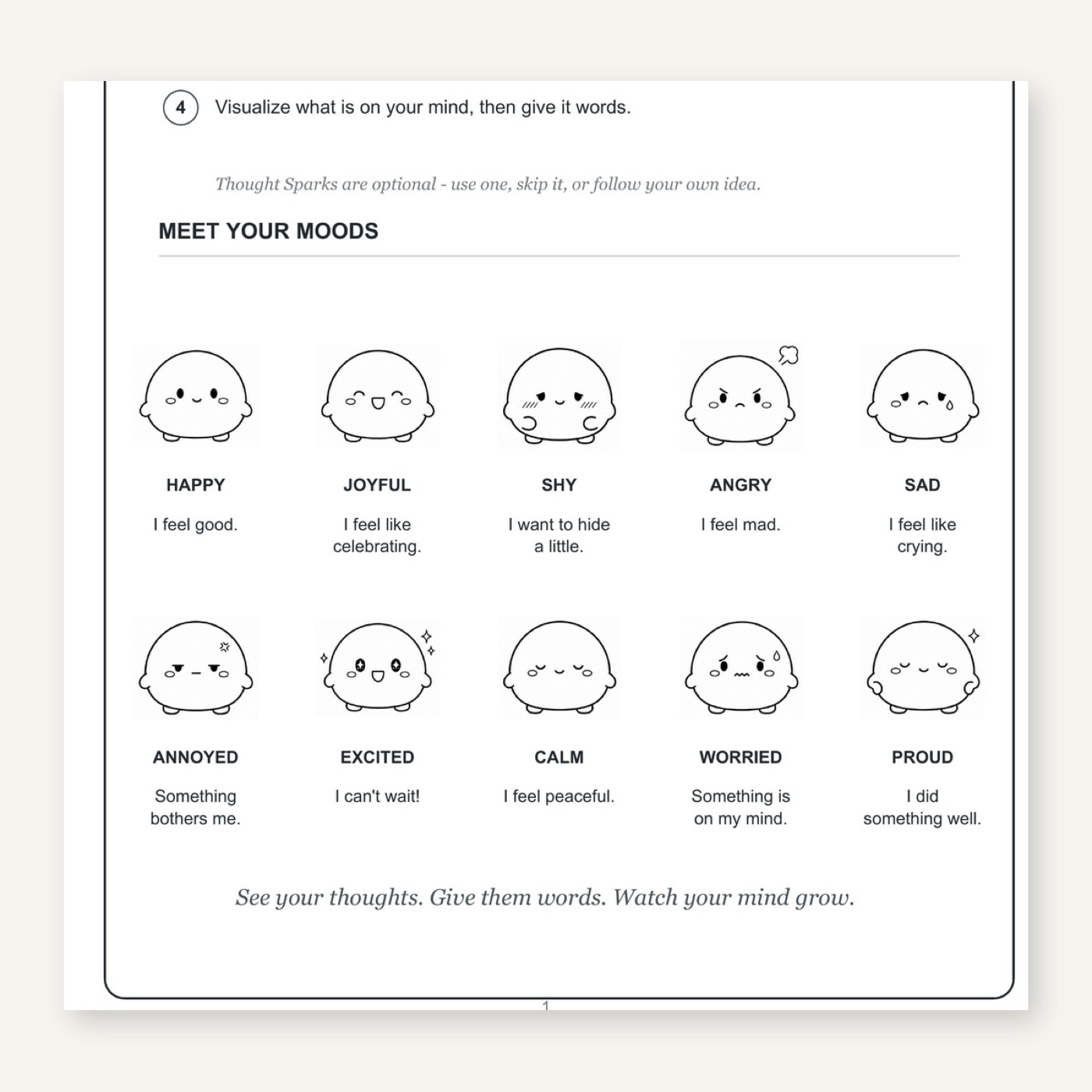
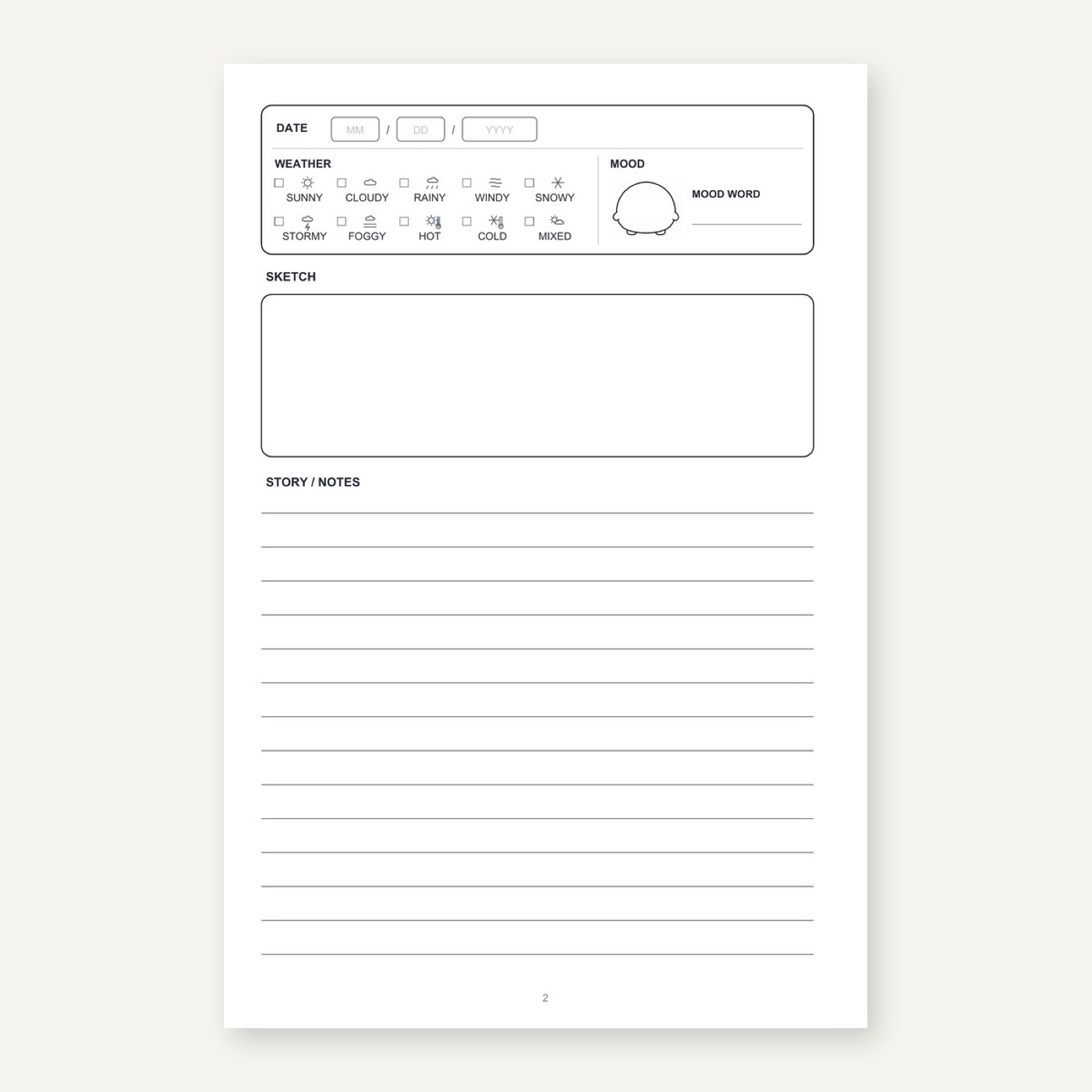
Protected previews of the Where Ideas Grow welcome page, mood characters, and daily draw-and-write layout.
Low-resolution previews only. Original layouts and artwork are copyright protected.
Use each page to make something in your mind visible and then give it words. The drawing and writing can support each other, but there is no required order.
Write the owner’s name and a current curiosity on the welcome page.
Add the date so ideas and changes can be revisited later.
Mark the day’s weather as a quick piece of context.
Draw the expression inside the character outline and name the feeling in your own word.
Sketch an idea, observation, design, scene, question, or memory in the drawing area.
Use the regular ruled lines for explanation, a story, questions, labels, or reflection.
Use an optional prompt when it helps, skip it when it does not, or follow a completely different idea.
Helpful noteA page can begin with one question, a rough diagram, or a single sentence. The purpose is to record how an idea grows, not to make finished art.
Available as an 80-page paperback. Amazon shows the current price and delivery estimate.
Verified edition prices are shown in USD. Amazon may change price and availability. See the detailed protected interior pages and complete use guide at JINUINU.com.
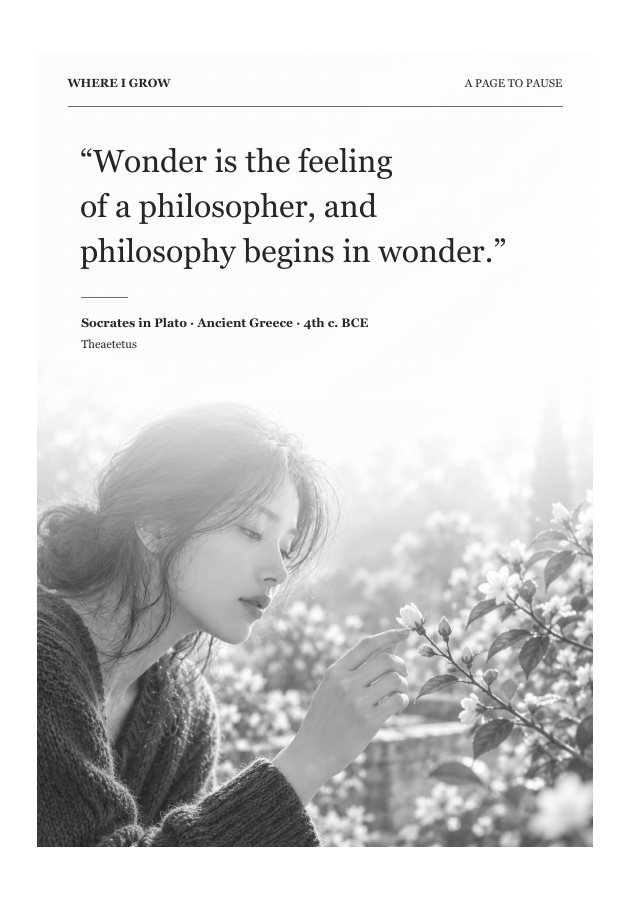
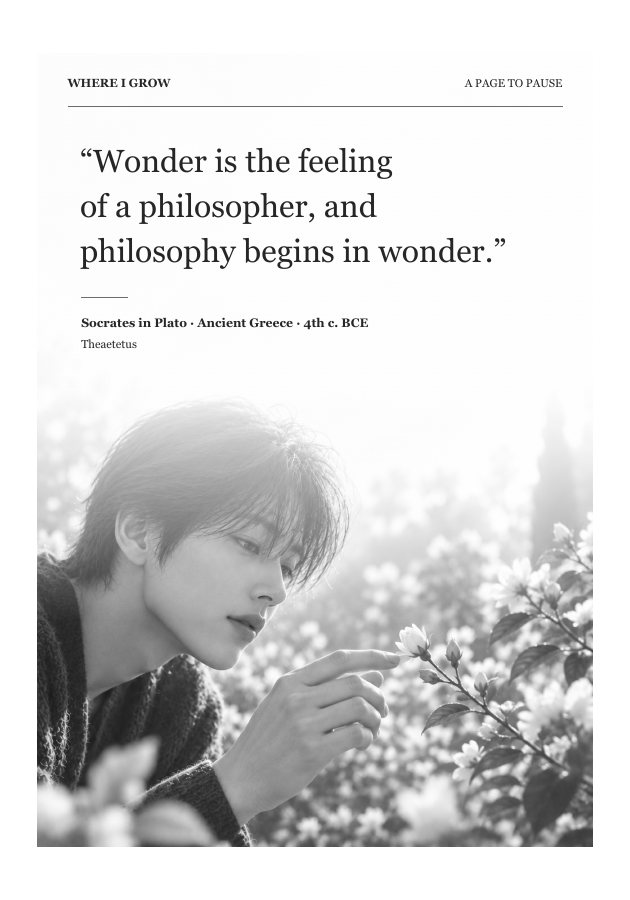
110 black-and-white pages · 92 reusable picture-diary pages · 10 illustrated quote pages · 7 × 10 in (17.78 × 25.4 cm)
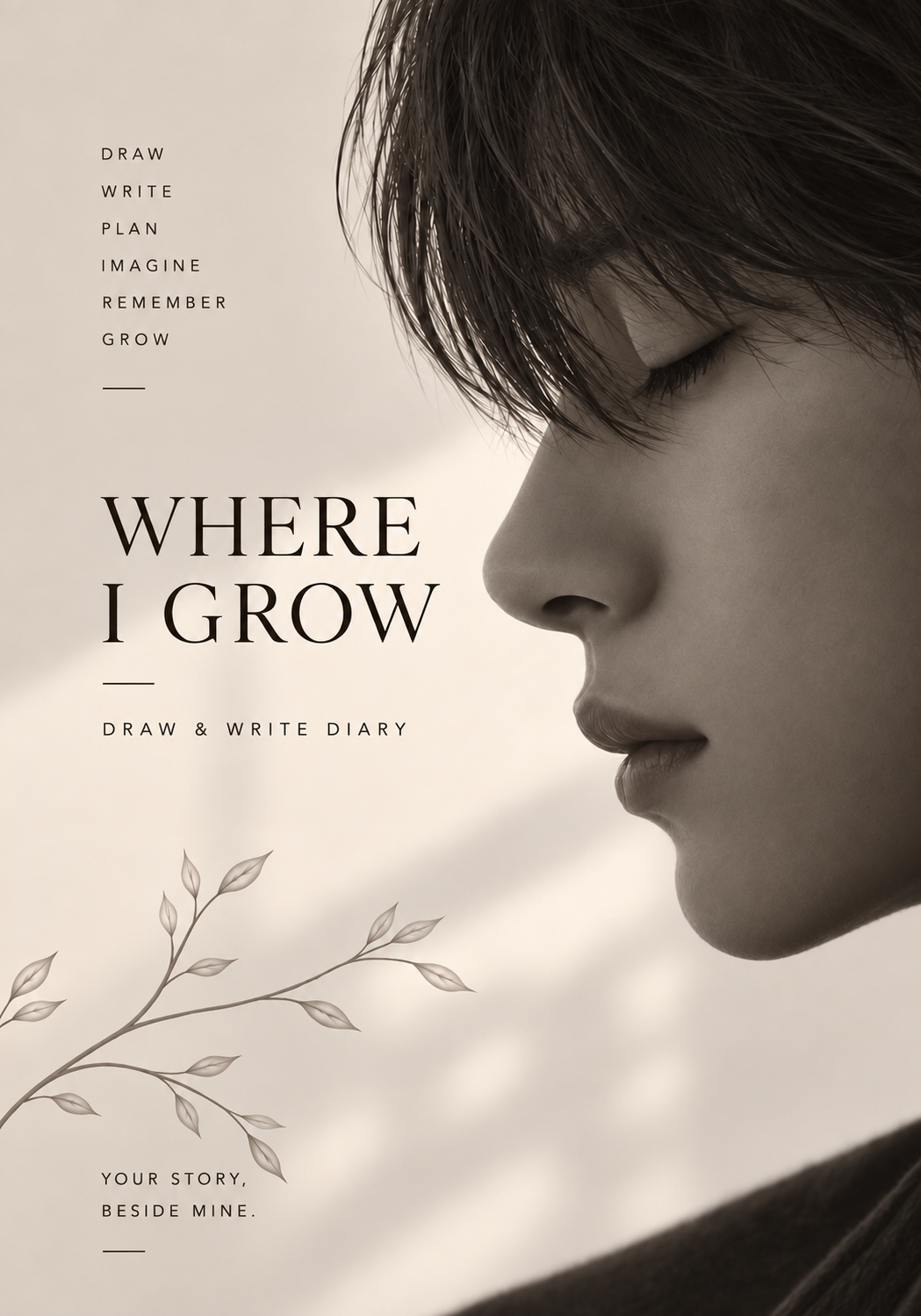
One drawing-and-writing diary, two cover choices
Draw a memory, sketch an idea, or describe something you noticed. Each reusable page pairs an open drawing space with thirteen writing lines. Choose the cover you like; both editions use the same drawing-and-writing format.
Give older kids room to record what they notice, remember, question, and grow into.
A thoughtful gift for someone who wants a practical place to learn, create, reflect, or practice.
Choose the woman-cover or man-cover edition. Each paperback is 7 × 10 in (17.78 × 25.4 cm) · 110 black-and-white pages, including 92 reusable picture-diary pages with thirteen writing lines each and 10 illustrated quote pages · white paper · glossy cover. Both editions are live on Amazon as of September 26, 2026.
$11.99 for the woman-cover edition and $11.99 for the man-cover edition.
Featured: Woman-cover edition · My Story, Beside Yours · Paperback · 7 × 10 in · 110 pages · 10 illustrated quote pages. Paid Amazon Associate link.
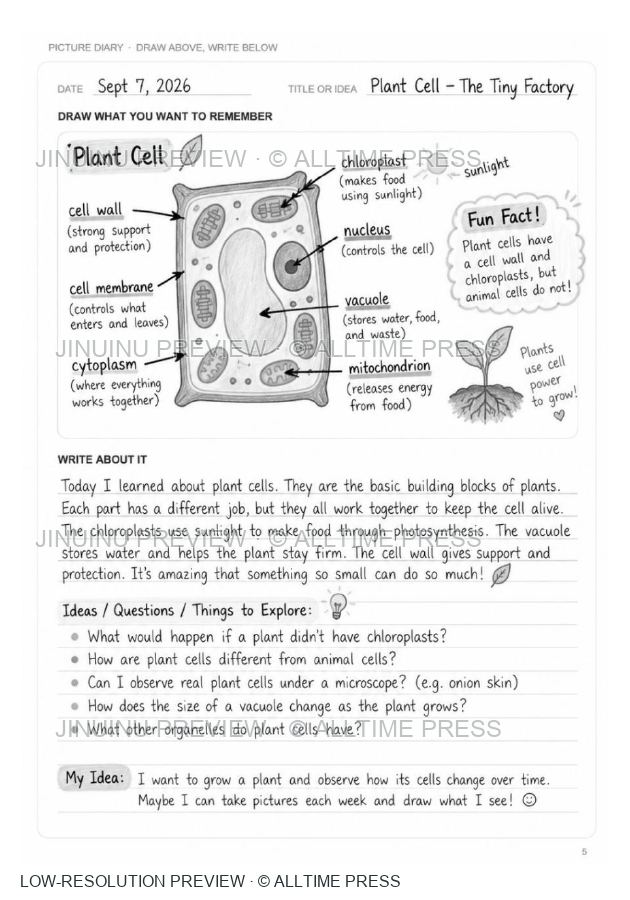
The first three pages show layouts retained in both editions. The last two show page 11 of the woman-cover and man-cover 110-page interiors. These are selected low-resolution previews, not the full interior.
Low-resolution previews only. Original layouts and artwork are copyright protected.
Add the date and a short title, draw what matters in the upper space, then use the thirteen lines below to explain what happened, what you learned, or what you want to remember.
Use a class lesson, story, observation, question, plan, trip, or everyday moment.
The date is optional and stays small so it does not control the page.
Use the open page for one large picture, a diagram, a comic, labels, or anything else that helps make the idea visible.
Use the thirteen lines below the drawing for facts, a short story, questions, explanations, or personal reactions.
Every reusable page keeps its picture and writing in one clear layout.
The completed sample labels the cell parts, explains the lesson in the child’s own words, records questions, and adds an idea for observing a growing plant.
The final open page collects favorite ideas, unfinished thoughts, and what the child wants to make next.
Helpful noteFor a class memory, ask only: What picture will help me remember this, and what one or two facts should I write beneath it?
MY STORY, BESIDE YOURS.
$11.99 USDMatching couple-cover editionOpen this edition on AmazonYOUR STORY, BESIDE MINE.
$11.99 USDMatching couple-cover editionOpen this edition on AmazonAmazon's older description still says 100 pages, but the current product details and KDP show 110 pages for each ASIN. Check the cover and the 110-page print length on Amazon before ordering.
Verified edition prices are shown in USD. Amazon may change price and availability. See the detailed protected interior pages and complete use guide at JINUINU.com.
Music practice
Choose guided weekly practice, lesson organization, or open manuscript paper.
120 pages · 59 two-page lesson-and-practice spreads · 8.5 × 11 in
Instrument bears, lesson notes, and weekly practice
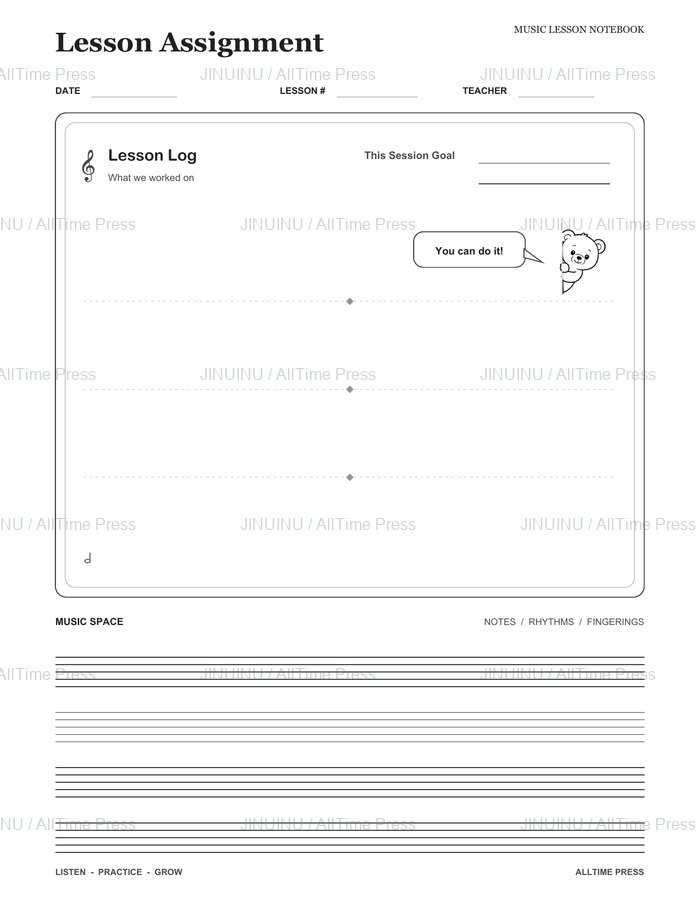
A new instrument-bear edition with a two-line goal, lesson notes, four staff systems, and a facing weekly practice tracker. See the actual submitted pages below.
Keep one lesson and its practice week together on facing pages.
A thoughtful gift for someone who wants a practical place to learn, create, reflect, or practice.
White paper · black-and-white interior · glossy paperback. The instrument-bear second edition has its own Amazon listing, separate from the earlier editions.
Featured: Second edition · White Paper · Glossy · English paperback · 120 pages · 59 spreads · 8.5 × 11 in. Paid Amazon Associate link.
Actual pages from the submitted second-edition interior. The earlier editions have different covers and page layouts.
Low-resolution previews only. Original layouts and artwork are copyright protected.
Write the lesson goal and assignments on the left page. Use the facing page throughout the week, then bring the spread back to the next lesson.
Write a small, specific goal in the two lines at the top of the lesson page.
Use the ruled lesson area for pieces, reminders, and practice instructions.
Use the four staff systems for a melody, rhythm, fingering, or correction.
Connect the five numbered rows to the assignments you want to track.
Each day offers ten marks per row. Use the marks in the way agreed with your teacher.
Mark the daily satisfaction check-in and review the week at the next lesson.
Helpful noteA few completed marks still show what happened. Use the record to guide the next lesson.
English paperback · 120 pages · 59 spreads · 8.5 × 11 in
Open this edition on AmazonThe instrument-bear second edition is available on Amazon with A+ interior previews. Choose this cover and ASIN B0HLD55NFX for the new edition; the earlier White Paper and Groundwood listings remain separate.
Verified edition prices are shown in USD. Amazon may change price and availability. See the detailed protected interior pages and complete use guide at JINUINU.com.
Updated 120-page listings. Older printed copies may still be delivered.
Updated 120-page listing · 59 two-page lesson-and-practice spreads · 8.5 × 11 in
Guided weekly music practice
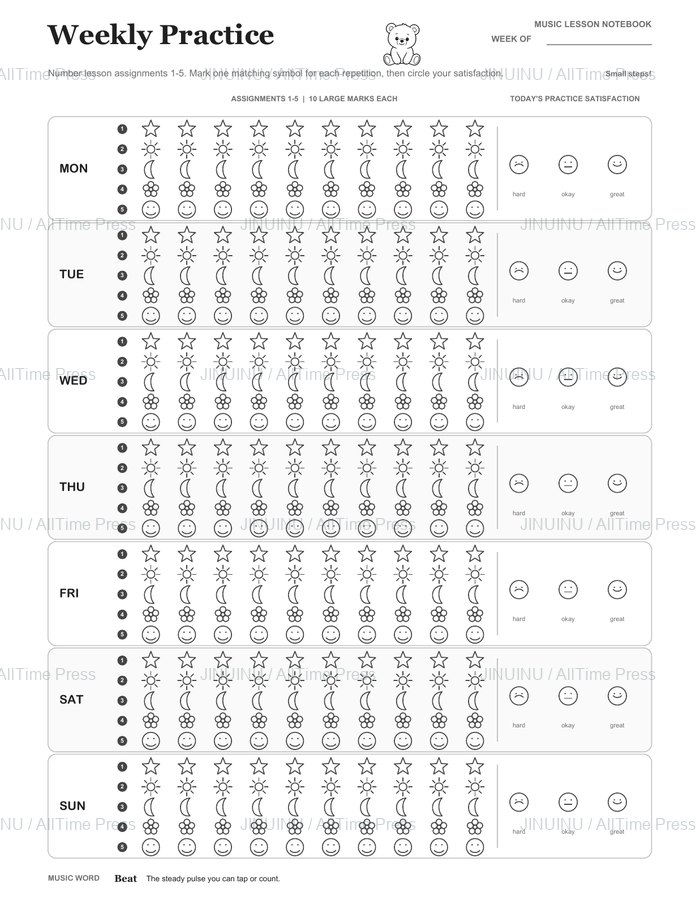
Keep lesson notes, a separate weekly goal, daily stars, practice marks, satisfaction check-ins, music words, and short notation examples together across each two-page spread.
Keep the weekly assignment, daily consistency, and short music examples together on two facing pages.
A thoughtful gift for someone who wants a practical place to learn, create, reflect, or practice.
Both Amazon product details show 120 pages, and the current White Paper KDP manuscript is the updated 120-page file. Groundwood's description still mentions the older 162-page layout. Older printed stock may still be supplied; a current order is not guaranteed to contain the updated interior.
Featured: White Paper · updated 120-page listing · Glossy paperback · 8.5 × 11 in · Amazon product details: 120 pages. Paid Amazon Associate link.
These protected samples show the approved 120-page update. A current retail order may still receive an older printed copy.
Low-resolution previews only. Original layouts and artwork are copyright protected.
Bring the notebook to the lesson, record the assignment on the first page, then use the facing weekly page to track repetitions and satisfaction through the week.
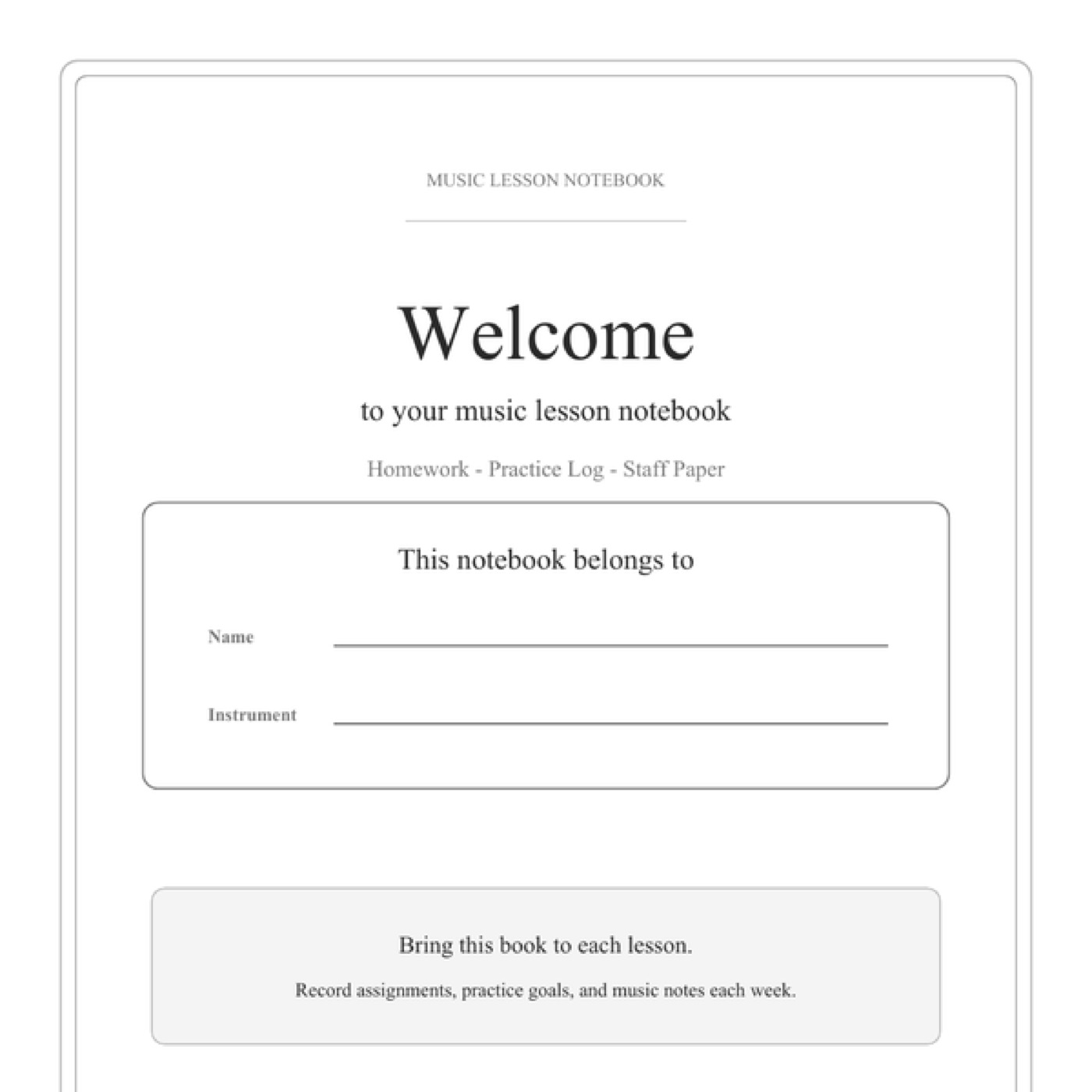
Write the student’s name, instrument, and teacher inside the front ownership area.
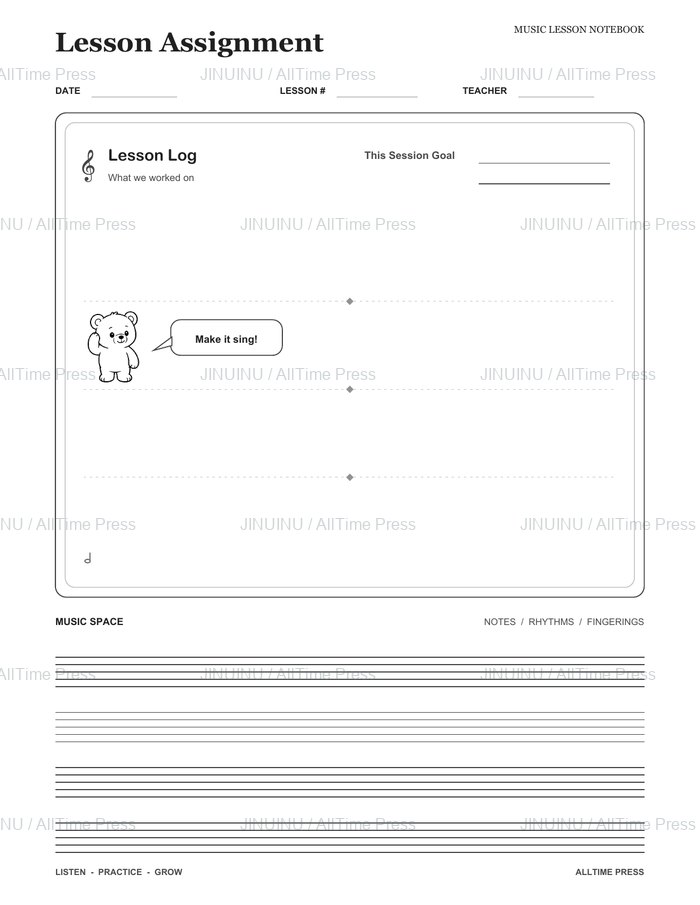
At the top of each page, add the date, lesson number, and teacher.
Record what was covered, the assigned pieces, reminders, tempo notes, or fingering details.
Write one goal in the separate panel and use one large star for each day Monday through Sunday.
Use the four evenly spaced staff systems for short melodies, rhythm examples, fingering, or lesson corrections.
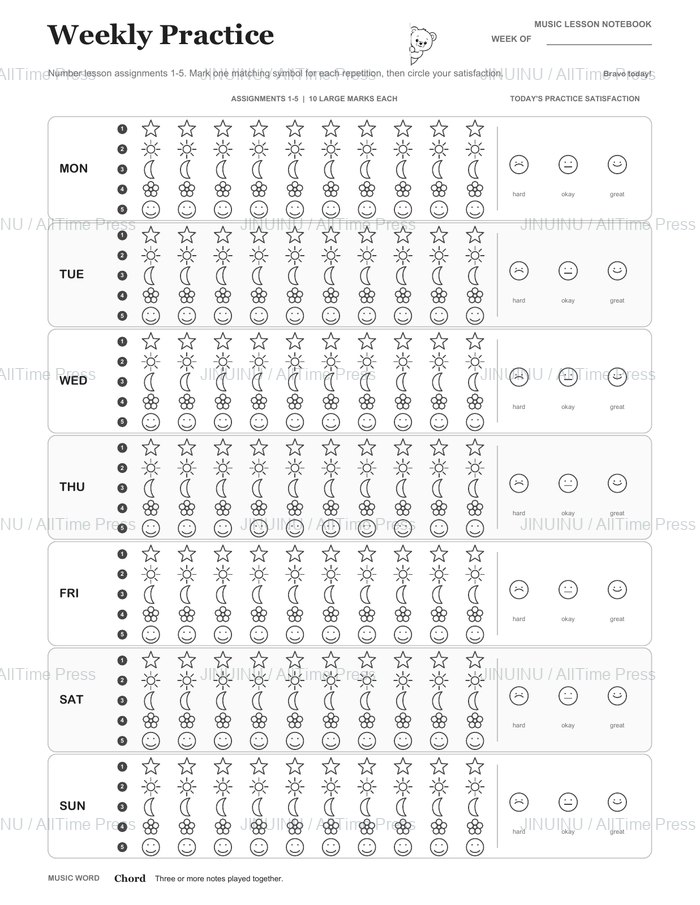
On the facing Weekly Practice page, match assignment numbers 1-5 to the teacher's five written tasks.
Each numbered row has ten symbols for every day. Across five assignments and seven days, one cycle provides 350 possible practice marks.
After each day's practice, circle hard, okay, or great. This records experience without turning it into a grade.
Read the short music term and definition at the bottom of the weekly page.
Start the next facing-page cycle after a new lesson so assignments, repetitions, satisfaction, and notation stay together.
Helpful noteThe tracker is for visibility, not punishment. A partially filled week still gives useful information for the next lesson.
Updated 120-page listing
$12.99 USDGlossy paperback · 8.5 × 11 in · Amazon product details: 120 pagesOpen this edition on AmazonUpdated 120-page listing
$12.99 USDMatte paperback · 8.5 × 11 in · Amazon product details: 120 pagesOpen this edition on AmazonBoth paper editions have a $12.99 U.S. publisher list price in KDP; Amazon may show a different offer price. The currently uploaded KDP files and Amazon product details indicate 120 pages. Groundwood's description still says 162 pages, and Amazon may supply older printed stock. The 120-page interior shown here is not guaranteed for a retail order. Check your delivered copy against the listing and contact Amazon for an order-specific issue.
Shown USD prices are publisher list prices. Amazon may show a lower current offer; check the exact edition before buying.
Assignments, goals, and staff paper
A clean place for teacher notes, homework, practice goals, and short notation examples between weekly lessons.
Carry the teacher’s most important instructions from the lesson room into the practice week.
A thoughtful gift for someone who wants a practical place to learn, create, reflect, or practice.
7 × 10 in · 120 black-and-white pages · matte cover. This is the corrected one-page lesson edition shown in the previews.
Featured: English · Compact · Paperback · 7 × 10 in · 120 pages. Paid Amazon Associate link.
Low-resolution previews only. Original layouts and artwork are copyright protected.
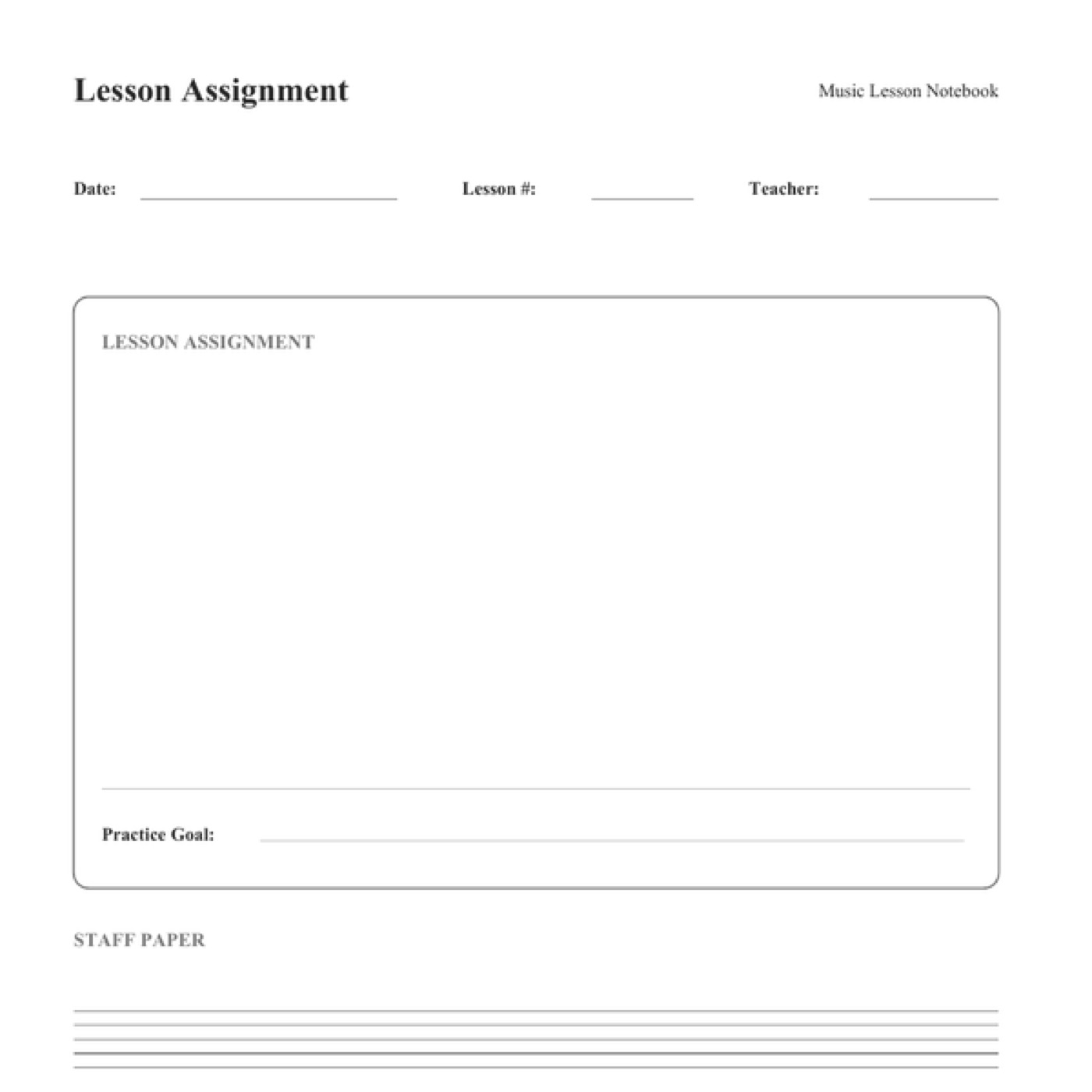
Keep the notebook with the instrument and bring it to every lesson. In the current 120-page paperback, each lesson page keeps assignments, one practice goal, seven daily minute totals, and four short music examples together.
Write the student’s name and instrument so the notebook is easy to identify.
Add the lesson date at the top of the weekly page.
Number the lesson or week so progress can be found quickly later.
Write the teacher’s name or initials when more than one instructor uses the book.
Use the large box for pieces, measures, tempo, technique, reminders, and homework.
Choose one clear focus for the week, such as even rhythm, relaxed hands, or a specific section.
Write one total beside Monday through Sunday so the week is visible without a separate log page.
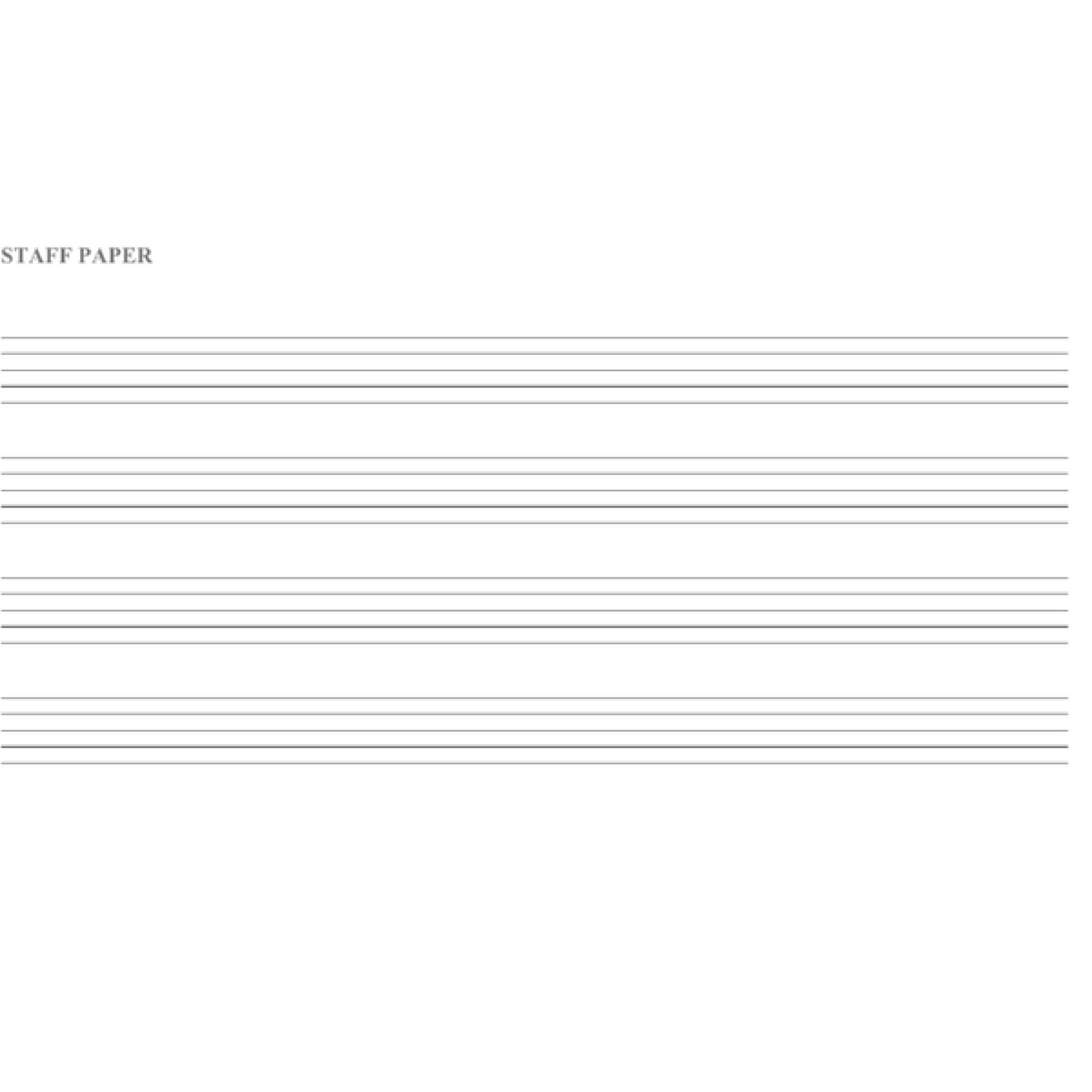
Use the evenly weighted staff lines for a melody, rhythm, chord, fingering, or teacher example.
At the end of the notebook, record what changed and one musical idea to carry forward.
Helpful noteWrite the most important instruction first. The goal line should be specific enough that the student knows what to listen or look for while practicing.
The earlier 8.25 × 11 in, 60-page paperback was unpublished on September 1, 2026 and is not offered here. The protected previews show the current 120-page compact paperback.
Verified edition prices are shown in USD. Amazon may change price and availability. See the detailed protected interior pages and complete use guide at JINUINU.com.
Open notation and composition
Roomy manuscript paper for composition, theory work, lesson examples, arranging, and handwritten notation.
Open to a clean page and start writing music without a preprinted exercise deciding the purpose.
A thoughtful gift for someone who wants a practical place to learn, create, reflect, or practice.
8.25 × 11 in · 80 black-and-white pages. This is already an A4-class manuscript-paper size.
Featured: English · Black & white · Paperback · 8.25 × 11 in · 80 pages. Paid Amazon Associate link.
Low-resolution previews only. Original layouts and artwork are copyright protected.
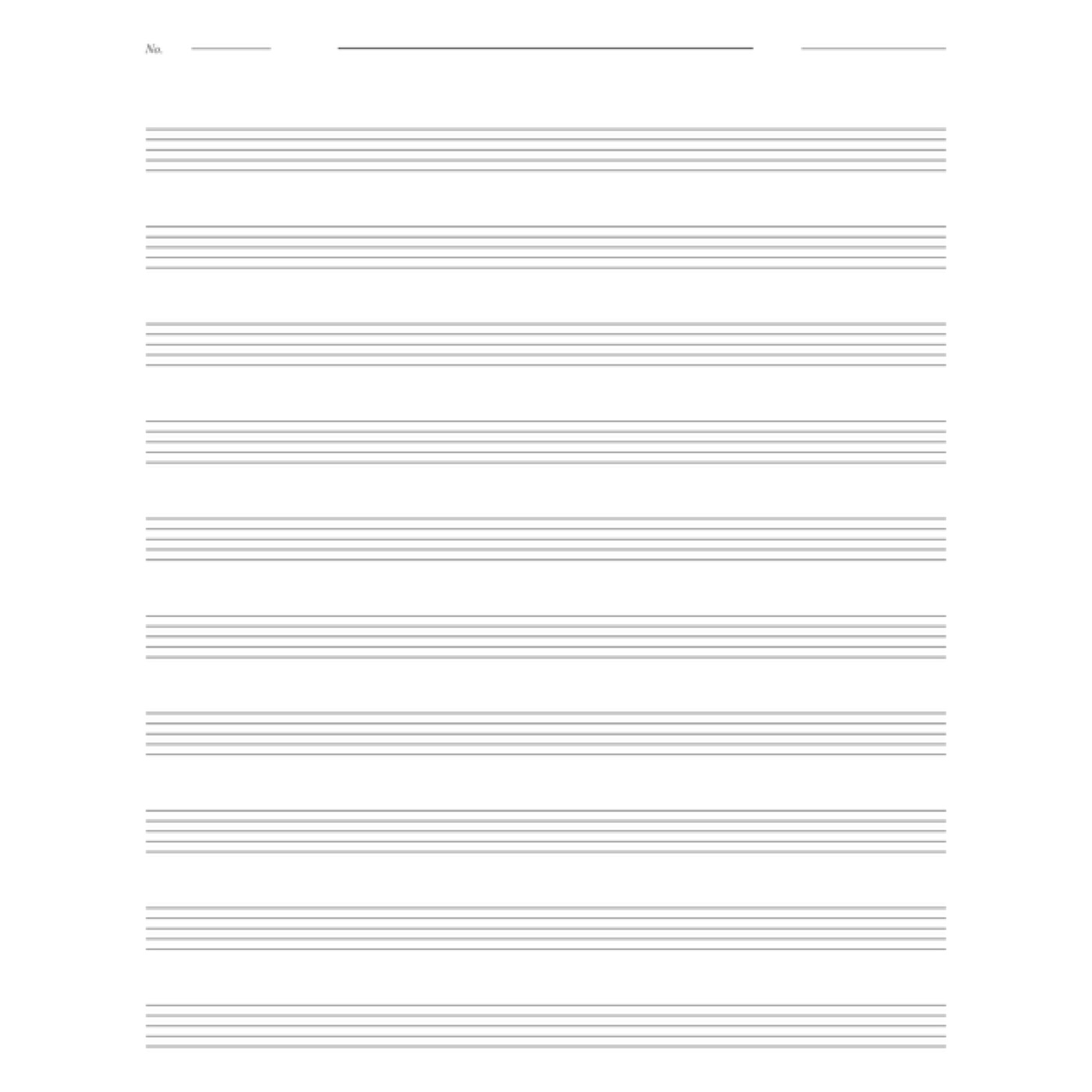
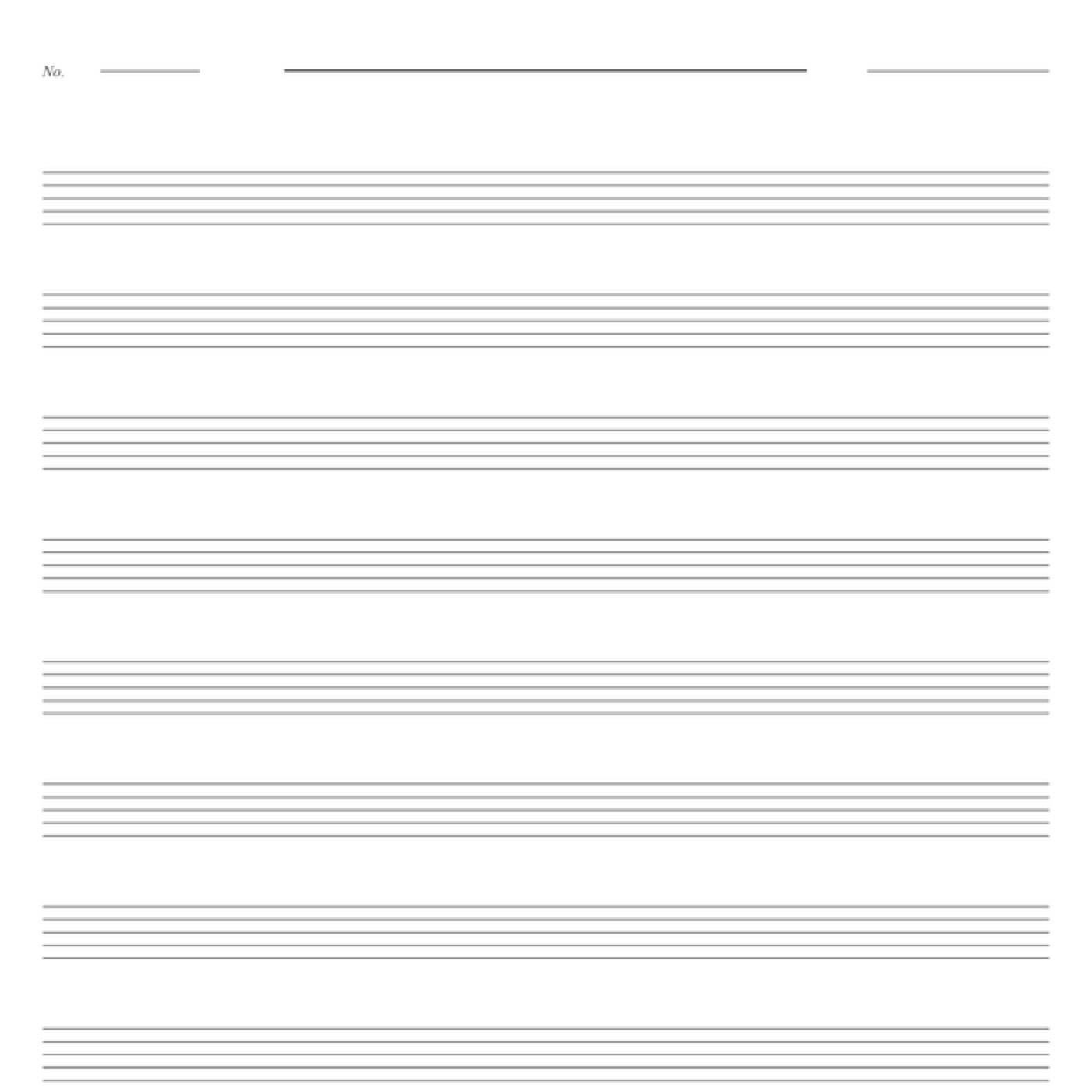
Use one page for a complete idea or continue across several pages. The header stays flexible so the same book can serve composition, theory, lessons, and arranging.
Use the short No. line for an exercise, composition, lesson, or page reference number.
Use the centered line for the piece, exercise, topic, or section name.
Use the right-hand line for date, composer, arranger, tempo, instrument, or any label you need.
Write notation across the roomy systems. Start a new phrase, part, or exercise on any system.
Use pages for melody, harmony, counterpoint, rhythm, dictation, theory examples, or lesson demonstrations.
Helpful noteLightly plan bar lines before writing dense notation. The consistent line weight keeps every staff equally readable.
Verified edition prices are shown in USD. Amazon may change price and availability. See the detailed protected interior pages and complete use guide at JINUINU.com.
JINUINU
JINUINU is the catalog home for thoughtfully designed books published by AllTime Press. Every book is made for real writing, reflection, practice, and repeat use away from a screen.