Try a short learning reflection
Use a scrap of paper first. These are suggested questions for this activity, not a transcription of any book page.
- Name one task and what a useful result would look like.
- Describe what you actually did and what happened.
- Separate what you observed from what you think it means.
- Choose one small change, then try the task again.
- Compare the next result with your first attempt. Keep, adjust or replace the change.
A complete worked reflection
The short passage and learner notes below were invented for this guide. They are not a student testimonial or a sample from a journal. Read the passage, close it, and try answering the question before looking at the notes.
The passage
Mina had packed her bag to leave the library. At the returns desk, a new helper was turning the same three books over, unable to find their shelf labels. Mina looked at the bus timetable, put down her bag, and showed the helper how to match each label to a shelf. She left after they had sorted the books together.
Why did Mina delay leaving? Support your answer with two details from the passage.
1. Set the task
I want to explain Mina's decision using two details. A character label on its own will not answer the question.
2. Record the first attempt
My first answer was: “Mina stayed because she is nice.” I wrote a conclusion, but included no detail from the passage. That is what I can observe; it does not establish that I am bad at reading.
3. Choose one change
I will find the problem Mina noticed and the action she took. Then I will close the passage and connect those details in one explanation, reopening it to check accuracy.
4. Try a revised answer
Mina delayed leaving because the new helper could not find the shelf labels. Although she had packed her bag, she put it down and showed the helper where the books belonged. Those details support an interpretation that helping mattered more to her at that moment than leaving immediately.
5. Check a later attempt
In this invented follow-up, I tried a different short passage the next day. I recalled one supporting detail and had to look back for the second. The explanation was more specific, but recalling both details still needs work. Next time I will pause to name the problem and response before closing the text.
What changed in the record?
The useful change is visible: a broad judgment became an explanation tied to the text. The later check also records what remained difficult. One improved answer does not prove that a strategy will work for every task or produce a better grade.
Use the same structure for your own attempt
Copy these five lines into a notebook or a document. Leave the last line open until you have actually tried again; do not fill it with the result you hope to get.
- Task and target: I want to…; I will check…
- First attempt: I did…; the observable result was…
- My interpretation: I think…; I still do not know…
- One change to try: next time I will…
- After trying again: what changed…; what stayed difficult…; my next decision…
Choose a format after you try the reflection
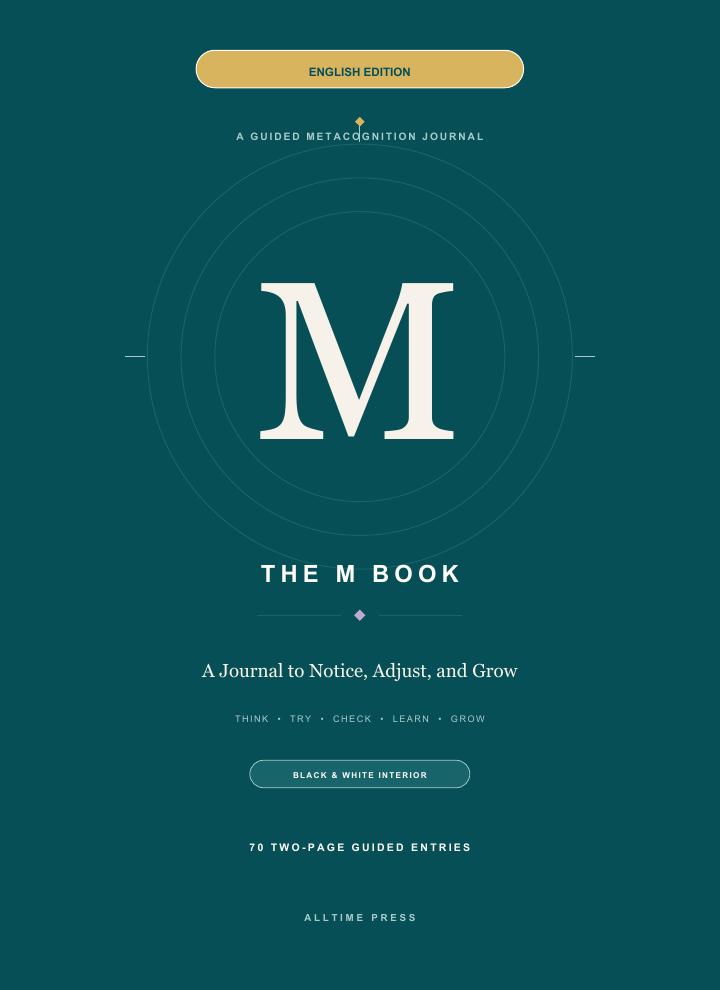
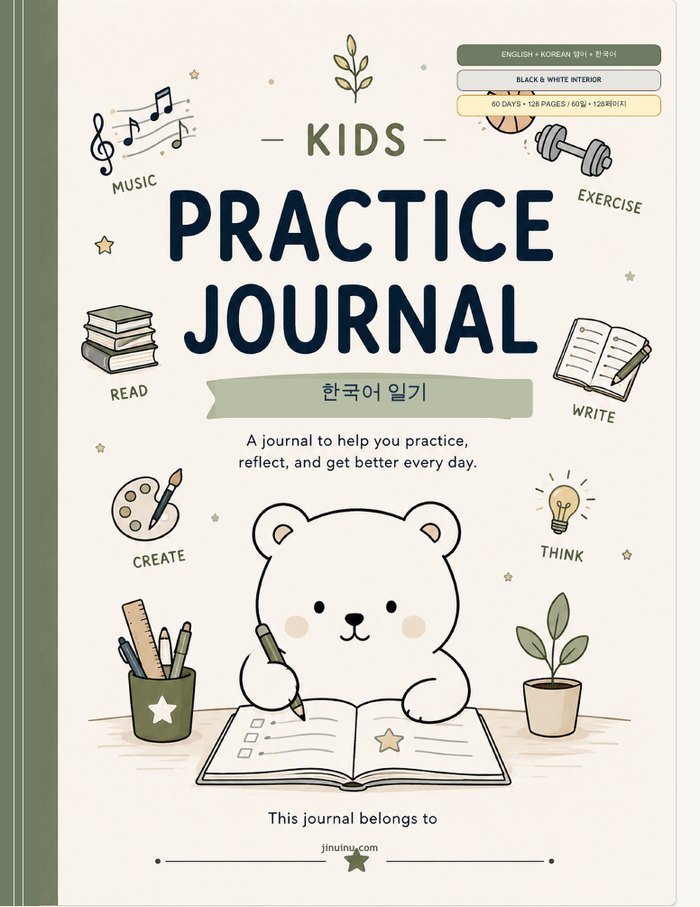
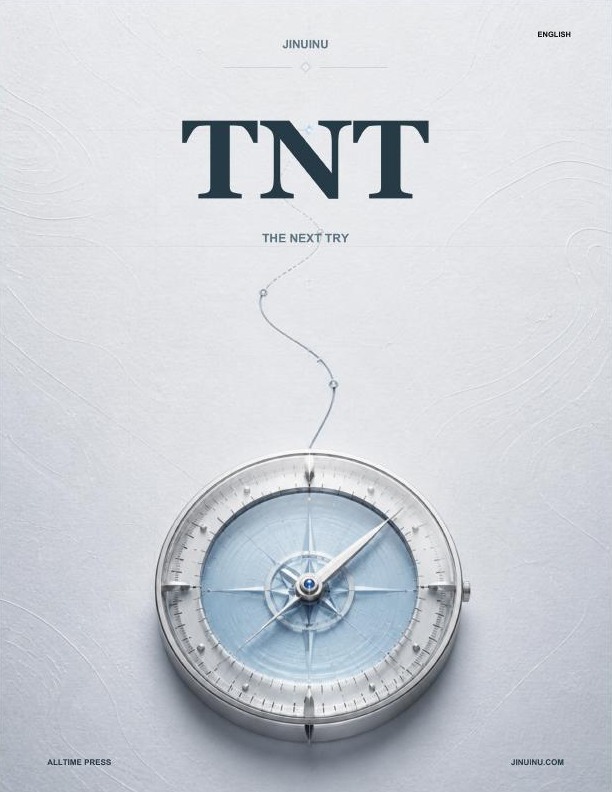
Look at the notes you wanted to make. If they concern an event and your interpretation, compare The M Book. If a young learner needs short writing or drawing prompts after practice, compare Kids Practice Journal. For a detailed session record with an adjustment to test, compare TNT. If a blank page already gives you enough structure, you can keep using it.
Check the edition before buying
Open the book guide to compare the actual cover, interior, language and print format. Some editions combine English with another language; others use one language. Select the matching edition, then check the current price and delivery on Amazon.
These are guided writing tools. They do not guarantee grades, learning speed or a clinical outcome. If you want an undirected diary, check whether the printed prompts leave the kind of space you need.
See all journals →